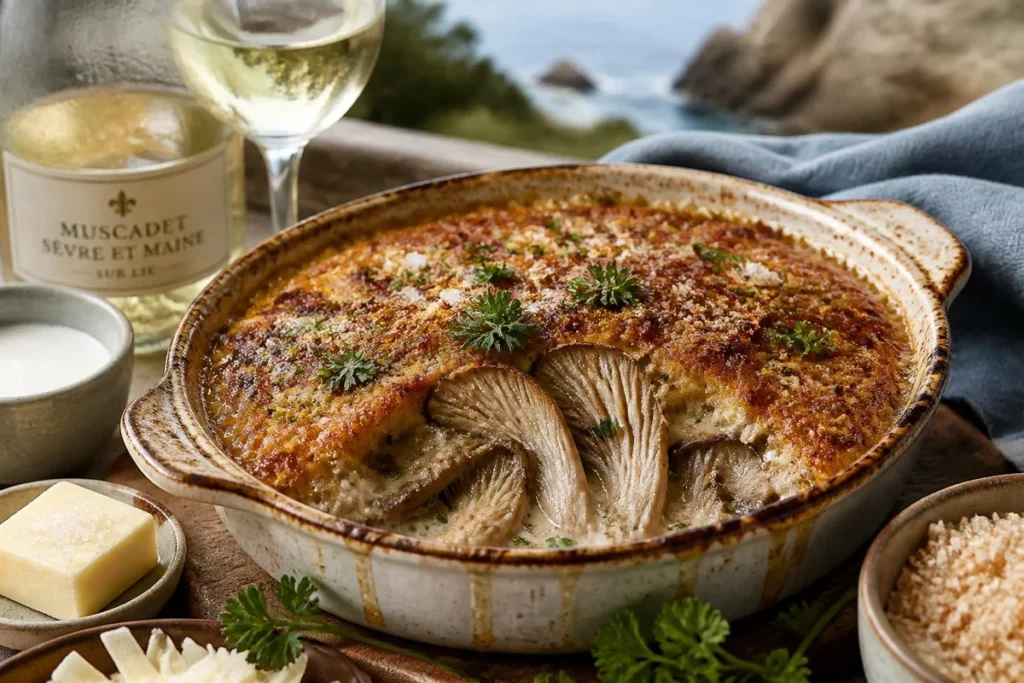
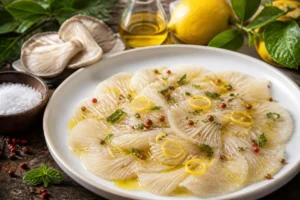
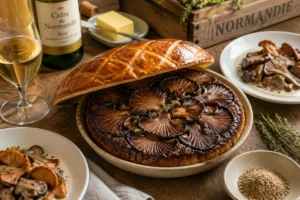
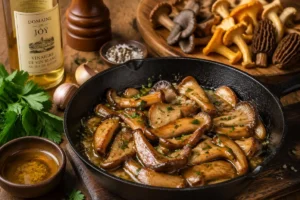
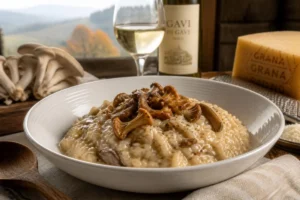
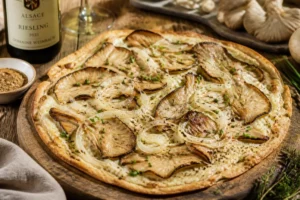
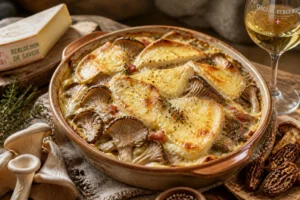
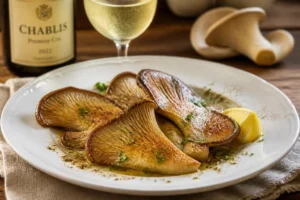
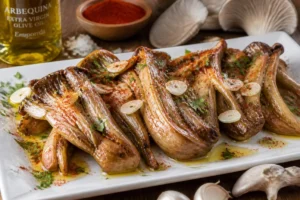
This coastal French interpretation of Pleurotus ostreatus utilizes a high-temperature crusting technique and molecular lipid-binding to create a sophisticated fungal gratin, reflecting the rugged maritime heritage of Brittany.
Breton Oyster Mushroom Gratin
In the windswept coastal reaches of Brittany, the Oyster Mushroom (Pleurotus ostreatus) is prized for its ability to withstand the moisture-rich environment of a classical "Gratin." By utilizing a high-fat dairy matrix, we facilitate the enzymatic breakdown of the mushroom's fibers while creating a protective, caramelized crust. Unlike the delicate Fairy Ring Mushroom, the Pleurotus ostreatus maintains its morphological definition even under the intense heat of the broiler, providing a substantial texture that mimics the local seafood for which the region is famous.
Terroir Narrative
The Breton terroir is defined by its granite-rich soil and the pervasive influence of the Atlantic Ocean. Local foragers often traverse the oak and beech forests of the interior to find Chanterelles and Porcini, but the Oyster mushroom is the preferred choice for this rustic yet technical gratin. This recipe pays homage to the salt-workers of Guérande, integrating the legendary "Fleur de Sel" to accentuate the mushroom's natural umami. Within our shop, you may find Caesar's Mushroom or Grey Chanterelle to diversify your fungal palette, but the structural integrity of Pleurotus ostreatus is the foundation of this Brittany-inspired dish.
Prep Time
Cook Time
Complexity
Calories
Region
20 min
25 min
Grand Officier
315 kcal
Brittany, France
The Culinary Physics of This Dish
The molecular core of the Gratin is the "Lipid-Crust Synergism." As the Pleurotus ostreatus caps are submerged in salted Breton butter and cream, the fats act as a heat-transfer medium that uniformly cooks the mushrooms while preventing dehydration. Simultaneously, the application of breadcrumbs and Gruyère on the surface initiates a rapid Maillard reaction, creating a "Sacrificial Barrier" that traps the aromatic steam within the dish. This ensures that the volatile terpene compounds of the fungi are re-absorbed into the cream, resulting in an exceptionally concentrated flavor profile.
Rub a shallow ceramic gratin dish with the cut side of the garlic. In a skillet, perform a "Flash Sauté" of the Pleurotus ostreatus in half of the butter just until they soften. Arrange the mushrooms in the prepared dish. Season with Fleur de Sel and pour the cream over the top. In a small bowl, mix the breadcrumbs with the remaining melted butter and cheese. Spread this mixture evenly over the mushrooms. Place under a broiler (Grill) at 220°C for 8-10 minutes until the crust is bubbling and deeply bronzed. Let rest for 4 minutes to allow the lipids to stabilize before serving.
Shop Integration
To enhance the maritime earthy notes, we recommend dusting the mushrooms with a powder made from our dried Morels or Porcini before adding the cream. This provides a "Forest Floor" foundation that complements the clean, oceanic notes of the Pleurotus ostreatus. For a refined texture, consider layering our Chanterelle or Grey Chanterelle mushrooms between the oyster mushroom slices. If you are looking for a unique aromatic profile, our Fairy Ring Mushrooms can be incorporated into the breadcrumb topping for a subtle, nutty finish.
The Umami Profile
The interaction between the l-glutamate in the mushrooms and the amino acids in the aged cheese creates a profound savory depth. This is further enhanced by the Fleur de Sel, which acts as a flavor amplifier, lowering the threshold for umami detection on the tongue. The cream provides the necessary viscosity to ensure these compounds coat the taste buds evenly.
Sommelier’s Choice
A Muscadet Sèvre et Maine is the mandatory pairing. The wine's "sur lie" aging provides a bready, yeasty character that matches the gratin's crust, while its high acidity and saline notes echo the coastal influence of the Breton terroir.
The Etymological Chronicle
The history of the name "Gratin" (from French: *gratter* [to scrape]) refers to the delicious crust scraped from the bottom of the pan:
French: Gratin | Italian: Gratinato | German: Auflauf | Spanish: Gratinado.
Pure Umami | Mycological Research & Culinary Arts | 2026
To provide the best experiences, we use technologies like cookies to store and/or access device information. Consenting to these technologies will allow us to process data such as browsing behavior or unique IDs on this site. Not consenting or withdrawing consent, may adversely affect certain features and functions.
Functional
Always active
The technical storage or access is strictly necessary for the legitimate purpose of enabling the use of a specific service explicitly requested by the subscriber or user, or for the sole purpose of carrying out the transmission of a communication over an electronic communications network.
Preferences
The technical storage or access is necessary for the legitimate purpose of storing preferences that are not requested by the subscriber or user.
Statistics
The technical storage or access that is used exclusively for statistical purposes.The technical storage or access that is used exclusively for anonymous statistical purposes. Without a subpoena, voluntary compliance on the part of your Internet Service Provider, or additional records from a third party, information stored or retrieved for this purpose alone cannot usually be used to identify you.
Marketing
The technical storage or access is required to create user profiles to send advertising, or to track the user on a website or across several websites for similar marketing purposes.