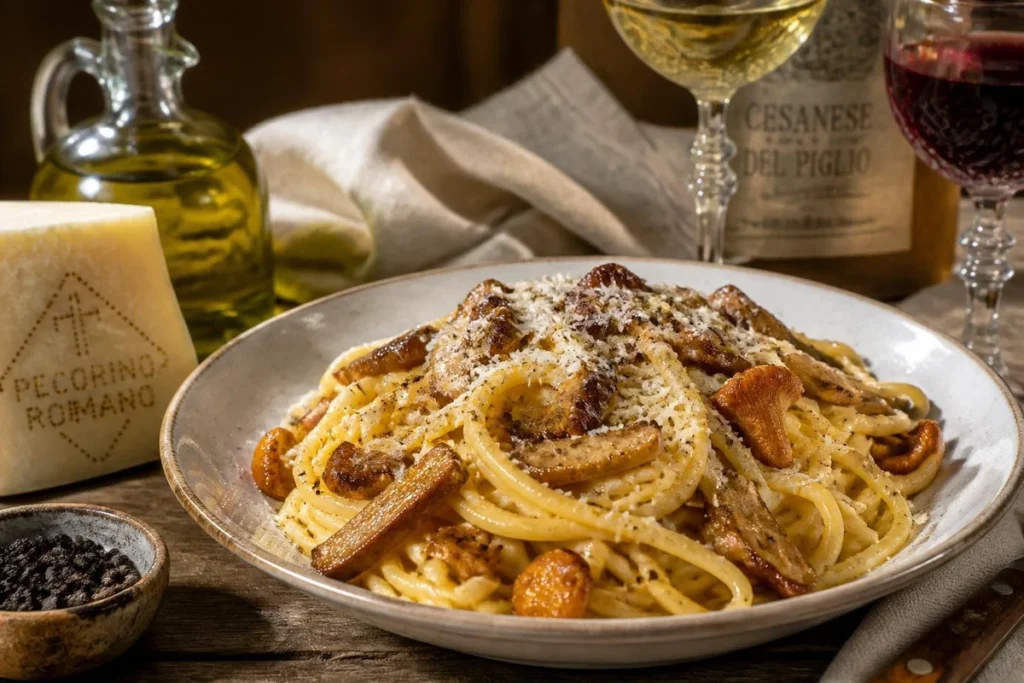
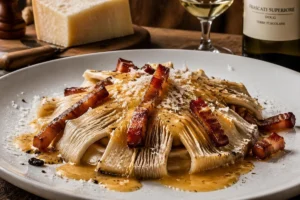
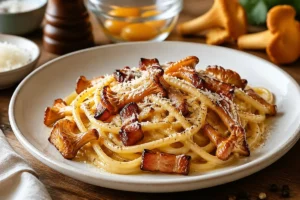
This sophisticated Roman-inspired deconstruction of Pleurotus ostreatus utilizes molecular lipid-protein binding and enzymatic synthesis to create a creamy emulsion without the use of dairy, honoring the traditional Carbonara structure.
Roman Oyster Mushroom Carbonara
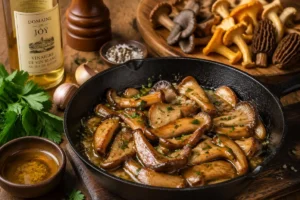
In the heart of Rome, the Oyster Mushroom (Pleurotus ostreatus) acts as a high-integrity biological substitute for traditional guanciale. By utilizing a "Dry-Curing" technique with sea salt and black pepper before searing, we replicate the dense, savory profile of cured pork. Unlike the softer Fairy Ring Mushroom or Caesar's Mushroom, the Pleurotus ostreatus maintains a resilient "al dente" texture that contrasts perfectly with the velvety egg-and-cheese emulsion. This recipe demonstrates how the structural proteins of the oyster mushroom can carry the intense, peppery aromatics of a true Roman classic.
Terroir Narrative
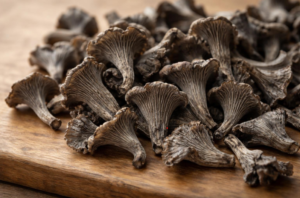
The Lazio region, particularly the mountainous areas surrounding Rome, is a fertile ground for mycological discovery. Local foragers often find Chanterelles and Porcini in the oak and chestnut groves, but the Oyster mushroom remains a professional favorite for its ability to absorb the sharp, salty notes of Pecorino Romano. This Carbonara is a tribute to the "Quinto Quarto" culinary tradition of Rome, focusing on maximizing flavor through humble yet expertly prepared ingredients. In our shop, you may explore the Grey Chanterelle or Morel for additional complexity, but the bold presence of Pleurotus ostreatus is essential for this technical masterpiece.
Prep Time
Cook Time
Complexity
Calories
Region
20 min
15 min
Grand Officier
480 kcal
Lazio, Italy
The Culinary Physics of This Dish
The molecular core of Carbonara is "Lipid-Egg Emulsification." When the Pleurotus ostreatus is seared at high temperatures, it undergoes a Maillard reaction that creates fat-soluble flavor compounds. We then introduce the pasta water—rich in starch—to create a bridge between the mushroom oils and the egg yolks. This creates a stable colloidal suspension that prevents the eggs from curdling (scrambling) while ensuring a glossy, "Nappé" finish. The high concentration of piperine in the black pepper serves as a catalyst, enhancing the perception of umami provided by the mushrooms.
Master Recipe (1:10 Rule)
400g Fresh Oyster Mushrooms (Pleurotus ostreatus), sliced into "lardons"
320g High-quality Spaghetti or Rigatoni
3 large Egg Yolks + 1 whole Egg
100g Pecorino Romano, freshly grated
2 tsp Whole Black Peppercorns, toasted and crushed
30ml Extra Virgin Olive Oil
A pinch of Smoked Salt (to mimic guanciale)
The Technique
Toss the Pleurotus ostreatus slices with smoked salt and let rest for 10 minutes. In a dry pan, sear the mushrooms until crisp and golden. Meanwhile, whisk the eggs and Pecorino into a thick paste. Cook the pasta in highly salted water until 1 minute before "al dente." Transfer the pasta directly into the pan with the mushrooms, adding a ladle of starchy pasta water. Remove the pan from the heat—this is critical for the "Cold Emulsion" phase. Pour in the egg mixture and stir vigorously. The residual heat will cook the eggs into a thick, creamy sauce without forming clumps. Finish with a heavy dusting of black pepper.
Shop Integration
To push the umami boundaries of this Roman dish, we suggest incorporating a fine powder made from our dried Porcini or Morels into the egg and cheese mixture. This adds a "Mycological Bass Note" that complements the seared Pleurotus ostreatus. For a refined texture, consider adding a few sautéed Chanterelles or Grey Chanterelles from our shop as a final garnish. If you are looking for a unique aromatic twist, our Fairy Ring Mushrooms can be used to infuse the olive oil before searing, providing a subtle, nutty undertone to the entire dish.
The Umami Profile
The interaction between the l-glutamate in the Oyster mushrooms and the inosinate-rich Pecorino Romano creates a synergistic flavor explosion. This biochemical partnership is the reason why Carbonara is one of the most satisfying dishes in the Italian repertoire. The egg yolks provide the necessary phospholipids to carry these flavors evenly across the taste buds.
Sommelier’s Choice
A Frascati Superiore or a light Cesanese del Piglio is the authentic choice. The Frascati's bright acidity and mineral finish cut through the creamy richness of the sauce, while the Cesanese offers a red fruit contrast that highlights the peppery notes of the seared mushrooms.
The Etymological Chronicle
The history of the name "Carbonara" (from Italian: *carbonaro* [charcoal maker]) hints at its rustic, smoky origins:
Italian: Carbonara | French: Carbonara | German: Köhlerart | Spanish: Carbonara.
Pure Umami | Mycological Research & Culinary Arts | 2026
To provide the best experiences, we use technologies like cookies to store and/or access device information. Consenting to these technologies will allow us to process data such as browsing behavior or unique IDs on this site. Not consenting or withdrawing consent, may adversely affect certain features and functions.
Functional
Always active
The technical storage or access is strictly necessary for the legitimate purpose of enabling the use of a specific service explicitly requested by the subscriber or user, or for the sole purpose of carrying out the transmission of a communication over an electronic communications network.
Preferences
The technical storage or access is necessary for the legitimate purpose of storing preferences that are not requested by the subscriber or user.
Statistics
The technical storage or access that is used exclusively for statistical purposes.The technical storage or access that is used exclusively for anonymous statistical purposes. Without a subpoena, voluntary compliance on the part of your Internet Service Provider, or additional records from a third party, information stored or retrieved for this purpose alone cannot usually be used to identify you.
Marketing
The technical storage or access is required to create user profiles to send advertising, or to track the user on a website or across several websites for similar marketing purposes.