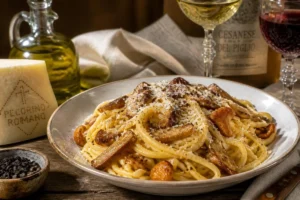
A technical study in high-viscosity egg-emulsion stabilization and the integration of fungal guanylates with cured-meat inosinates for maximum umami amplification.
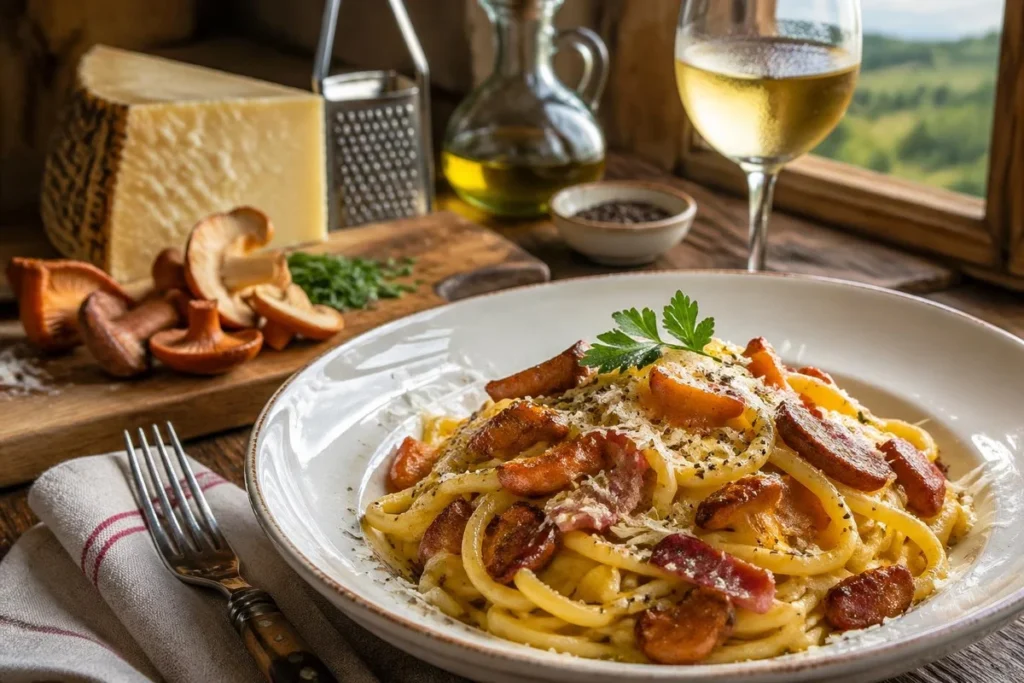
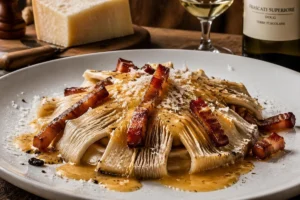
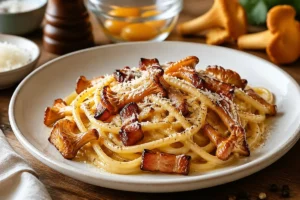
Lazio Saffron Milk Cap Carbonara with Guanciale and Pecorino Romano
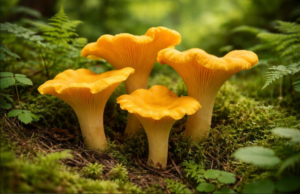
In the rustic yet refined kitchen of Lazio, the Saffron Milk Cap (Lactarius deliciosus) is integrated into the Roman "Big Four" pasta traditions. This version of Carbonara utilizes the mushroom's unique ability to stay firm under the weight of a heavy egg-and-cheese emulsion. Unlike the Boletus edulis (Boletus edulis), which would create a soft, mushy texture, the Lactarius provides a necessary "snap" that mirrors the crunch of perfectly rendered guanciale.
The "Terroir Narrative" of this dish connects the pine forests of the Apennine foothills with the sheep-grazing pastures of the Roman Campagna. By substituting part of the meat's volume with Saffron Milk Caps, we introduce a woody, peppery dimension that balances the intense salinity of Pecorino Romano DOP.
Prep Time
15 Minutes
Cook Time
12 Minutes
Complexity
Grand Officier
Calories
510 kcal per serving
Region
Lazio (Rome), Italy
The Culinary Physics of This Dish
The core of this dish is the Thermal Tempering of Egg Proteins. The goal is to reach a temperature between 62°C and 65°C, where the yolks thicken into a creamy sauce without scrambling. The Lactarius deliciosus is seared in the rendered fat of the guanciale, which acts as a flavor bridge. The mushroom's orange pigments are fat-soluble and bleed slightly into the pork fat, creating a vibrant, sunset-colored base that visually reinforces the "saffron" name of the mushroom while stabilizing the emulsion.
Master Recipe (1:10 Rule)
400g Saffron Milk Caps (Lactarius deliciosus), sliced into thick batons
320g Spaghetti alla Chitarra or Rigatoni
100g Guanciale (Cured Pork Cheek), sliced into strips
4 Large Organic Egg Yolks + 1 Whole Egg
60g Pecorino Romano DOP, finely grated
Freshly cracked Black Pepper (Toasted in the pan)
Salt (For pasta water only)
The Technique
1. Lipid Rendering: Place the guanciale in a cold pan and slowly bring up the heat. Once the fat is rendered and the pork is crisp, remove the meat but keep the fat in the pan.
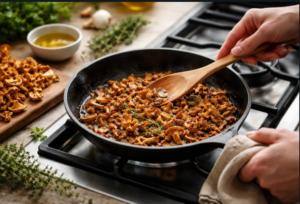
2. Fungal Sealing: Increase the heat and add the Lactarius deliciosus. Sear until golden-brown. This is a High-Heat Infusion; the mushrooms will absorb the pork aromatics while releasing their own savory essence.
3. The "Cremina": In a separate bowl, whisk the egg yolks, whole egg, and Pecorino Romano with a generous amount of toasted black pepper until a thick paste forms.
4. The Marriage: Add the al dente pasta to the pan with the mushrooms and guanciale. Toss with a splash of starchy pasta water to create a light emulsion.
5. The Mantecatura: Remove the pan from the heat entirely. Pour in the egg-cheese mixture. Stir rapidly and continuously. The residual heat of the pasta will cook the eggs into a Nappé sauce without clumping.
Shop Integration
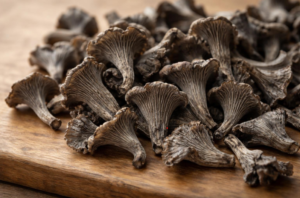
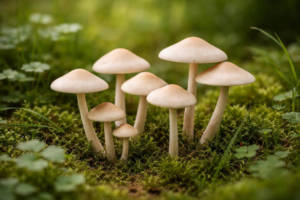
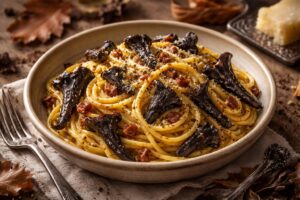
This Roman technique highlights the textural versatility of wild fungi. While the Saffron Milk Cap provides a rustic snap, our Boletus edulis (Boletus edulis) can be used for a much creamier, umami-dense version of carbonara. For a lighter, more floral experience, the Marasmius oreades (Marasmius oreades) is an excellent substitute. If you desire a more visual "forest" aesthetic, incorporating our Craterellus cinereus provides a dark, peppery contrast to the golden egg sauce.
The Umami Profile
The umami in this dish is "Synergistic." We pair the inosinates from the guanciale with the guanylates of the seared Saffron Milk Caps and the glutamates in the Pecorino. This chemical trio creates a flavor profile that is perceived by the brain as significantly more intense than any of the ingredients served alone.
Sommelier’s Choice
A structured white wine with good acidity, such as a **Frascati Superiore**, is the local choice. Alternatively, a light, acidic red like a **Cesanese del Piglio** works beautifully to cut through the richness of the egg yolk and pork fat.
The Etymological Chronicle
In the Lazio region, the names for this mushroom are as colorful as its latex. In Italian, it is the Sanguinello or Lattario. In French, Lactaire délicieux is the standard. In German, Edel-Reizker signifies its noble value. In Spanish, Níscalo is the common term, but in Rome, the mushroom is often celebrated in the autumn markets as a vital "ingredient of the land" (prodotto della terra).
Pure Umami | Mycological Research & Culinary Arts | 2026
To provide the best experiences, we use technologies like cookies to store and/or access device information. Consenting to these technologies will allow us to process data such as browsing behavior or unique IDs on this site. Not consenting or withdrawing consent, may adversely affect certain features and functions.
Functional
Always active
The technical storage or access is strictly necessary for the legitimate purpose of enabling the use of a specific service explicitly requested by the subscriber or user, or for the sole purpose of carrying out the transmission of a communication over an electronic communications network.
Preferences
The technical storage or access is necessary for the legitimate purpose of storing preferences that are not requested by the subscriber or user.
Statistics
The technical storage or access that is used exclusively for statistical purposes.The technical storage or access that is used exclusively for anonymous statistical purposes. Without a subpoena, voluntary compliance on the part of your Internet Service Provider, or additional records from a third party, information stored or retrieved for this purpose alone cannot usually be used to identify you.
Marketing
The technical storage or access is required to create user profiles to send advertising, or to track the user on a website or across several websites for similar marketing purposes.