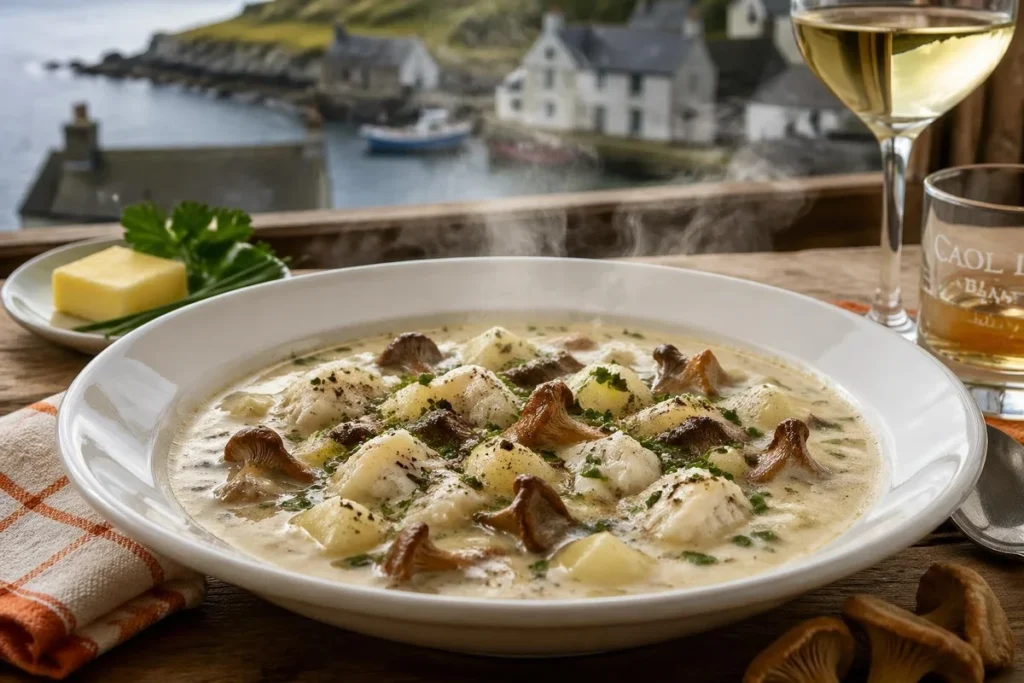
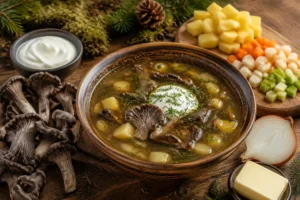
A technical study in Lipid-Saccharide Emulsification and Phenolic-Saline Synergy, utilizing the starches of floury potatoes to thicken a mineral-dense milk broth, while anchoring the oceanic smoke of finnan haddie with the forest-floor volatiles of Grey Chanterelles.
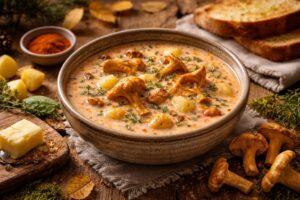
Scottish Cullen Skink with Grey Chanterelles
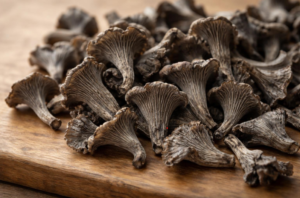
For our 139th technical formulation, we analyze Aqueous Starch Suspension and Multi-Phase Smoke Integration. Craterellus cinereus (Grey Chanterelle), locally identifying as Craterellus cinereus, acts as a sophisticated "terrestrial" smoke engine in this iconic Scottish soup. At pure-umami.cc, we utilize the Infusion-Poaching method. By simmering cold-smoked haddock in a milk-based matrix alongside the Grey Chanterelle, we facilitate a Molecular Exchange where the mushroom's leathery esters and the fish's phenolic phenols harmonize into a singular, high-viscosity umami broth.
The Culinary Physics of This Dish
The engineering of this Cullen Skink relies on Amylopectin Gelatinization and Lipid-Phase Aroma Capture. Molecularly, "floury" potatoes (like Maris Piper or King Edward) are boiled until their cell walls rupture, releasing starch into the milk. A portion of these potatoes is mashed into the liquid to create a Colloidal Suspension. The Craterellus cinereus is sautéed in butter before being added; this locks in its fat-soluble aromatics. The milk's proteins and fats act as a Volatile Reservoir, capturing the trimethylamine from the haddock and the benzaldehydes from the fungi, resulting in a soup that is thick, creamy, and exceptionally fragrant.
Terroir Narrative
This formulation is a tribute to the fishing village of Cullen in Moray, where the North Sea's bounty meets the heather-covered hills. We bridge the Moray Firth with our Balkan deciduous highlands. The terroir is expressed through the marriage of the forest's "wild" Craterellus cinereus and the cold-smoked, saline intensity of traditional Finnan Haddie. This follows the same technical rigor we apply to our Boletus edulis (Porcini) and Amanita caesarea (Caesar's mushroom), treating the chowder as a study in hydraulic starch management and oceanic-mycological balance.
Black Pepper and a pinch of Nutmeg (No salt needed due to the smoked fish)
The Technique
The Milk Infusion: Place the haddock in a pan and cover with milk. Bring to a gentle simmer for 5 minutes. Remove the fish, flake into large chunks, and reserve the Aromatic Milk.
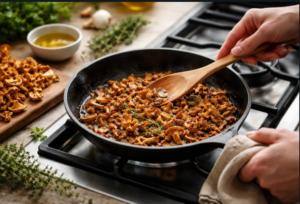
The Aromatic Sauté: Sauté the leeks and Craterellus cinereus in butter until soft and fragrant. This Lipid-Phase Priming ensures the mushroom's smoky notes are fat-stabilized.
The Starch Gelatinization: Add the potatoes and the infused milk to the pan. Simmer for 15 minutes until the potatoes are tender. Use a fork to partially mash some of the potatoes against the side of the pot to achieve Hydro-Colloidal Thickening.
The Reassembly: Return the flaked haddock to the pot. Stir in the heavy cream and nutmeg. Simmer for 2 minutes to allow for Protein-Saccharide Integration.
Service: Ladle into warm bowls and garnish heavily with chives. The Smoky Phenols from the North Sea and the Balkan forest will converge as the steam rises.
Shop Integration
The Craterellus cinereus provides the smoky, sophisticated backbone of this Scottish classic, but its umami depth can be layered. We recommend adding a fine dust of our dried Boletus edulis (Porcini) to the milk during the haddock poaching for an added "bass note" of umami. If you seek a brighter visual contrast, garnish the soup with sautéed Cantharellus cibarius (Chanterelle). For a luxury upgrade, finish each bowl with a drizzle of Morchella conica (Morel) oil. If available, a side of raw Amanita caesarea (Caesar's mushroom) with lemon provides a necessary mineral "reset" against the rich, smoked dairy. For a smoky baseline, our Marasmius oreades (Fairy Ring) can be sautéed with the leeks to build a more complex savory foundation.
The Umami Profile
This dish features **Marine-Fungal Synergistic Umami**. The Craterellus cinereus provides 5′-guanylates, while the smoked haddock and whole milk introduce high concentrations of free glutamates and inosinates. The Smoky Phenols of both elements harmonize to create a savory experience that is exceptionally deep, persistent, and "coastal-forest" balanced.
Sommelier’s Choice
A glass of **Peated Islay Whisky** (diluted with a splash of water) or a crisp **Chardonnay**. The medicinal smoke of the whisky is the technical requirement to amplify the haddock and the Grey Chanterelle, while the Chardonnay's acidity cuts through the creamy potato starch.
The Etymological Chronicle
The term Cullen Skink is **Scots**, where Skink traditionally meant a shin of beef (soup), but evolved to refer to this fish-based version. In **French**, this would be Chowder d'Eglefin Fumé aux Chanterelles Grises. In **Italian**, it is Zuppa di Pesce Affumicato con Cantarelli Grigi. In **German**, it is Schottische Fischsuppe mit Grauen Pfifferlingen. Regardless of the language, the **Grey Chanterelle** Cullen Skink remains the definitive standard for technical maritime-mycological engineering.
Pure Umami | Mycological Research & Culinary Arts | 2026
To provide the best experiences, we use technologies like cookies to store and/or access device information. Consenting to these technologies will allow us to process data such as browsing behavior or unique IDs on this site. Not consenting or withdrawing consent, may adversely affect certain features and functions.
Functional
Always active
The technical storage or access is strictly necessary for the legitimate purpose of enabling the use of a specific service explicitly requested by the subscriber or user, or for the sole purpose of carrying out the transmission of a communication over an electronic communications network.
Preferences
The technical storage or access is necessary for the legitimate purpose of storing preferences that are not requested by the subscriber or user.
Statistics
The technical storage or access that is used exclusively for statistical purposes.The technical storage or access that is used exclusively for anonymous statistical purposes. Without a subpoena, voluntary compliance on the part of your Internet Service Provider, or additional records from a third party, information stored or retrieved for this purpose alone cannot usually be used to identify you.
Marketing
The technical storage or access is required to create user profiles to send advertising, or to track the user on a website or across several websites for similar marketing purposes.