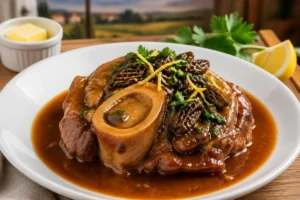
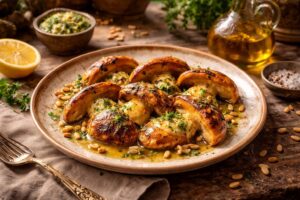
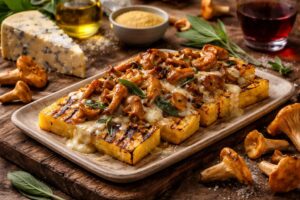
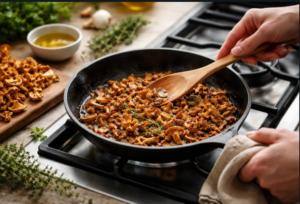
Description: Master this wild-harvested gourmet recipe. An Amanita caesarea culinary masterpiece featuring charred smoky depth and a vibrant, umami-rich herb finish.
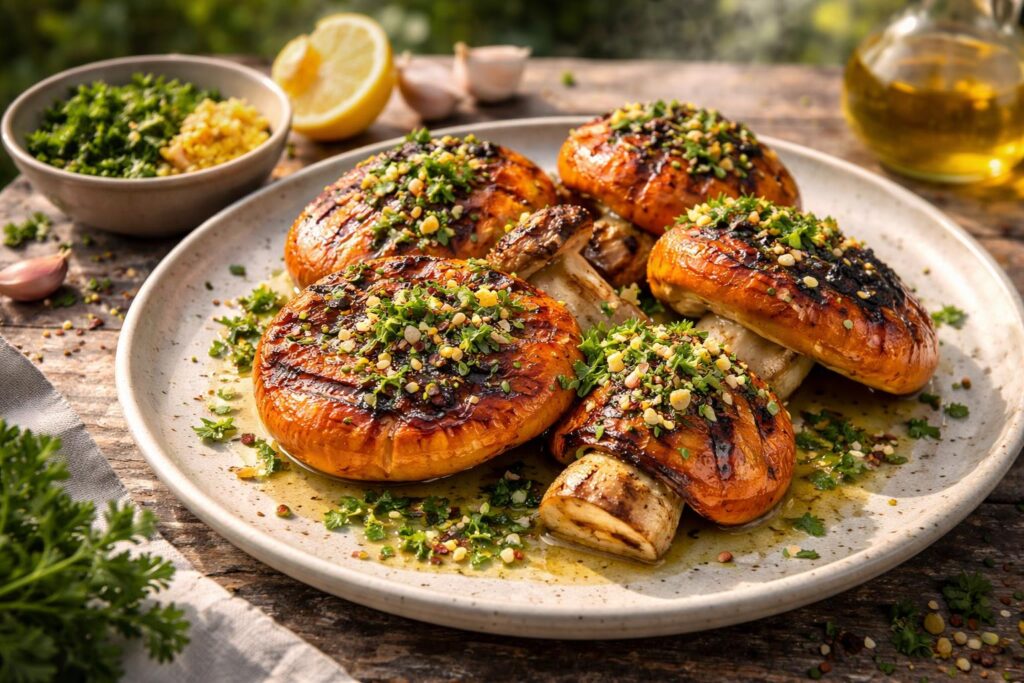
Grilled Amanita Caesarea with Gremolata
The Pyrogenic Transformation of the Imperial Fungi
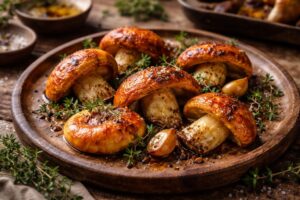
In the heat-baked terrain of the Mediterranean littoral, the Amanita caesarea often fruits alongside the parched vegetation of mid-summer. Historically, the simplest and most profound way to prepare these giants was over an open wood fire. Grilling the Caesar's mushroom is a radical departure from the delicate poaching or raw preparations; it is an act of pyrogenic alchemy. The intense, direct infrared heat of the charcoal causes a rapid contraction of the mushroom's cellular matrix, forcing out the moisture and leaving behind a concentrated, smoky essence.
This wild-harvested gourmet recipe utilizes a traditional Milanese Gremolata (lemon zest, garlic, and parsley) to provide a high-frequency aromatic contrast to the deep, bass notes of the charred fungi. The regional spirit here is one of high-summer outdoor dining, where the umami-rich profile of the mushroom is brightened by the volatile oils of citrus and fresh herbs. It is a culinary masterpiece that honors the mushroom's resilience and its historical role as a hearty, satisfying meal for the woodland traveler.
🌲 EXCLUSIVE FOREST HARVEST OFFER 🌲
Elevate your kitchen with the rarest Amanita caesarea, Morels, and Porcini.
Sensory & Foraging Profiles: Carbon and Lignin Aromatics
The Amanita caesarea lives in Mycorrhizal symbiosis with trees that produce high-tannin bark. When grilled, the mushroom's own sugars (trehalose) interact with the carbon from the smoke to create a complex aromatic profile. The sensory experience begins with the scent of "roasted forest"—a mixture of dried leaves, woodsmoke, and the mushroom's inherent hazelnut top notes.
Microbiology & Chemistry: Grilling triggers a specific microbiology within the mushroom; the high temperature breaks down chitin into more digestible units while simultaneously concentrating the glutamic acids. The addition of the raw garlic in the gremolata introduces allicin, which chemically sharpens the palate, making the savory depth of the wild-harvested mushroom feel even more pronounced.
Texture Analysis: The exterior develops a "snap"—a slightly tough, charred skin—while the interior remains soft and juicy. This is the "steak of the forest" experience, providing a satisfying chewing resistance that is unique among the Amanita family.
The Master Recipe: Grilled Caesar & Gremolata
Ingredients
400g Wild-Harvested Amanita caesarea (Large caps left whole, stems halved)
50ml Extra Virgin Olive Oil
For the Gremolata:
1 large bunch flat-leaf Parsley, finely chopped
Zest of 2 Organic Lemons
2 cloves Garlic, microplaned
1/2 teaspoon Red chili flakes (optional)
Maldon Sea Salt and Cracked Black Pepper
Culinary Steps
The Prep: Clean the mushrooms with a dry cloth. Do not use water, as any surface moisture will cause them to steam rather than sear on the grill.
The Marination: Brush the Amanita caesarea generously with olive oil and season with salt. Let sit for 10 minutes at room temperature.
The Gremolata: In a small bowl, mix the parsley, lemon zest, garlic, and chili. Keep this fresh and dry—do not add oil to the mixture.
The Fire: Prepare a charcoal or gas grill to high heat. Ensure the grates are clean and oiled.
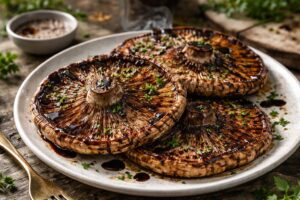
The Char: Place the mushrooms on the grill. For the caps, grill for 4 minutes gill-side up, then flip and grill for 2-3 minutes. You are looking for distinct black grill marks.
Assembly: Plate the hot mushrooms immediately. While still sizzling, shower them with the Gremolata. The heat from the mushroom will release the aromatic oils from the lemon and garlic.
Pro Technique: The “Infrared Crust”
The secret to grilling Amanita caesarea is the height of the heat. You want the highest possible temperature for a short duration. This creates an infrared crust—a rapid browning of the exterior that seals in the internal juices. If the heat is too low, the mushroom will lose its structural water and become limp. A professional "wild-harvested" grill should always result in a mushroom that stands firm on the plate.
The Umami Secret: Carbon-Glutamate Synergy
The charred bits on the edges of the Amanita caesarea are essentially concentrated amino acids and sugars. These carbonized points act as "umami anchors." When the tongue hits a charred edge followed by the zesty, acidic gremolata, it creates a flavor oscillation—the acidity clears the palate, allowing the smoky savory depth of the mushroom to hit with maximum impact in every single bite.
The Art of the Pairing
The smokiness of this dish calls for a wine with a touch of "flint" or "gunpowder" character. A Pouilly-Fumé (Sauvignon Blanc) or a German Riesling (Dry) from slate soils is the perfect match. For a non-alcoholic pairing, a smoked lapsang souchong iced tea with lemon mimics the grill's profile and provides a clean, tannin-rich finish.
Ancestral Nutrition
Grilled Amanita caesarea is an incredible source of Copper, Selenium, and Vitamin B5. The quick-fire method preserves the ergosterol, which the body converts into Vitamin D. Historically, these "fire-kissed" mushrooms were valued by ancient herdsmen for their high mineral density, providing a vital source of electrolytes during the peak of the summer heat.
Imperial Lexicon: Multi-Language Names for Amanita caesarea
The Caesar's Mushroom has a linguistic heritage as rich as its flavor. From the Roman "Boletus" to modern dialects, here is the most comprehensive regional guide for global identification:
To provide the best experiences, we use technologies like cookies to store and/or access device information. Consenting to these technologies will allow us to process data such as browsing behavior or unique IDs on this site. Not consenting or withdrawing consent, may adversely affect certain features and functions.
Functional
Always active
The technical storage or access is strictly necessary for the legitimate purpose of enabling the use of a specific service explicitly requested by the subscriber or user, or for the sole purpose of carrying out the transmission of a communication over an electronic communications network.
Preferences
The technical storage or access is necessary for the legitimate purpose of storing preferences that are not requested by the subscriber or user.
Statistics
The technical storage or access that is used exclusively for statistical purposes.The technical storage or access that is used exclusively for anonymous statistical purposes. Without a subpoena, voluntary compliance on the part of your Internet Service Provider, or additional records from a third party, information stored or retrieved for this purpose alone cannot usually be used to identify you.
Marketing
The technical storage or access is required to create user profiles to send advertising, or to track the user on a website or across several websites for similar marketing purposes.