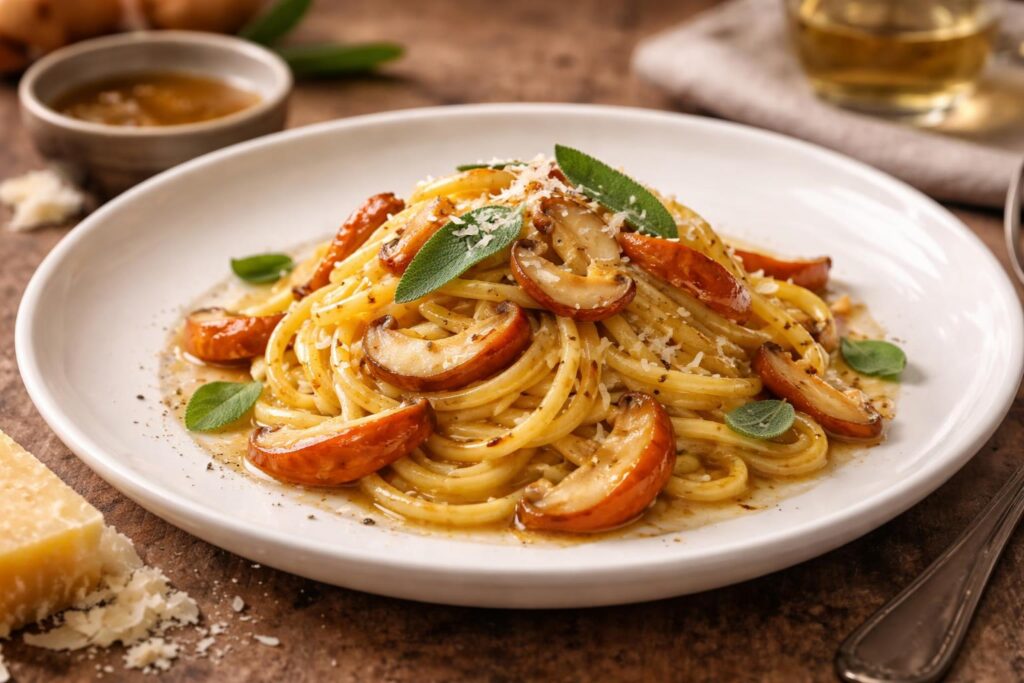
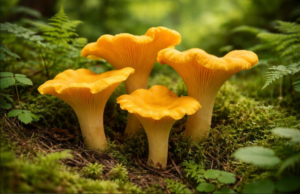
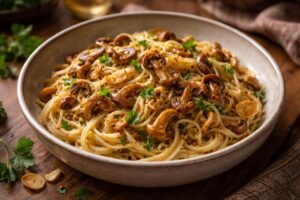
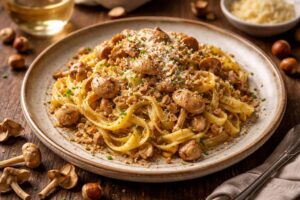
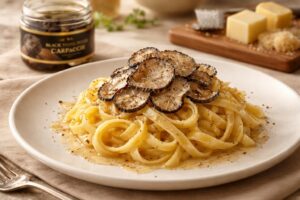
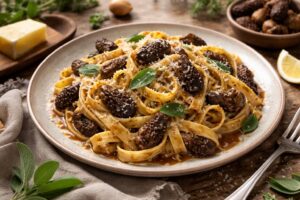
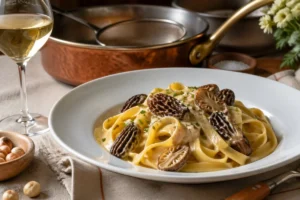
In the high culinary traditions of Northern Italy and the Balkan highlands, there is a seasonal window where the arrival of the Amanita caesarea coincides with the celebration of the wheat harvest. This dish, Tagliolini in Brown Butter, is the definitive expression of that moment. Historically, the "Golden Amanita" was considered the only mushroom delicate enough to share the plate with fresh Tajarin (high-egg-yolk pasta). The dish is not a sauce, but an emulsion; a liquid-gold suspension of forest essence and dairy.
This wild-harvested gourmet recipe relies on the principle of "chromatic flavor." The vibrant orange of the mushroom's cap mirrors the deep yellow of the pasta, signaling a shared richness. By using Beurre Noisette (brown butter), we create a flavor bridge to the mushroom's inherent hazelnut-like sweetness. It is a culinary masterpiece of texture and restraint, where the umami-rich profile of the fungi is amplified by the nutty, toasted proteins of the butter.
🌲 EXCLUSIVE FOREST HARVEST OFFER 🌲
Elevate your kitchen with the rarest Amanita caesarea, Morels, and Porcini.
Sensory & Foraging Profiles: Esters and Lipid Bonding
The Amanita caesarea thrives in Mycorrhizal symbiosis with ancient trees, absorbing rare trace elements that manifest as a unique olfactory profile. Unlike the heavy "sulfuric" notes of a truffle, the Caesar is dominated by sweet esters and aliphatic aldehydes, giving it a scent reminiscent of roasted nuts and apricot.
Microbiology & Chemistry: During the browning of the butter, the Maillard reaction produces melanoidins, which are chemically attracted to the nucleotides in the mushroom. This microbiology of the pan creates a compound umami effect. Because the wild-harvestedAmanita caesarea has a high water-retention capacity, it partially releases its juices into the butter, creating a natural, self-thickening emulsion that glazes the pasta without the need for heavy cream.
Texture Analysis: The tagliolini provides a silken, yielding base, while the mushrooms offer a crisp, meaty resistance. This "al dente" duality is essential to the experience, ensuring that the fungi remain the focal point of every forkful.
The Brown Butter: In a wide skillet, melt the butter over medium heat. Add the sage leaf. Cook until the butter stops foaming and the milk solids turn a deep "hazelnut" brown. Discard the sage.
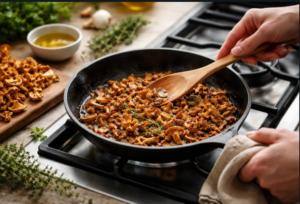
The Mushroom Sauté: Immediately add the Amanita caesarea slices to the brown butter. Sauté for exactly 3 minutes. The orange color will slightly tint the butter.
The Pasta: Boil the tagliolini in salted water. Remove 1-2 minutes *before* al dente.
The Emulsion: Transfer the pasta directly into the skillet with the mushrooms. Add the pasta water.
The Mantecatura: Toss vigorously over high heat. The starch from the water and the brown butter will form a glossy, golden glaze.
The Finish: Remove from heat. Fold in the Parmesan and white pepper. Serve on warmed plates.
Pro Technique: The “Starch-Fat Bridge”
The secret to a world-class Amanita caesarea pasta is the inclusion of the "liquide di cottura" (pasta water). The dissolved amylopectin in the water acts as a molecular bridge between the lipid-rich brown butter and the wild-harvested mushroom juices. Without this bridge, the butter would simply sit at the bottom of the plate; with it, the flavor is perfectly distributed and adheres to the surface of the pasta.
The Umami Secret: Lactone and Glutamate Synergy
The brown butter is rich in lactones, which provide a creamy, coconut-like aroma. When these combine with the L-glutamates in the Amanita caesarea, it creates a "stealth umami"—a savory sensation that feels natural and light rather than heavy. This allows the floral notes of the mushroom to persist on the palate long after the meal is finished.
The Art of the Pairing
The hazelnut notes of the brown butter demand a white wine with "nutty" age or volcanic minerality. An Arneis from Roero or a Soave Classico is the sommelier's selection. For a non-alcoholic pairing, a chilled infusion of roasted oolong tea provides the necessary toasted notes to match the brown butter and the mushroom's earthiness.
Ancestral Nutrition
This preparation is an excellent source of Vitamin B12, Selenium, and Manganese. The Amanita caesarea contributes potent antioxidants that remain stable during the quick sauté. Historically, this high-energy meal was consumed to celebrate the end of the summer harvest, providing a rich source of fat-soluble vitamins and minerals for the autumn ahead.
Imperial Lexicon: Multi-Language Names for Amanita caesarea
The Caesar's Mushroom has a linguistic heritage as rich as its flavor. From the Roman "Boletus" to modern dialects, here is the most comprehensive regional guide for global identification:
To provide the best experiences, we use technologies like cookies to store and/or access device information. Consenting to these technologies will allow us to process data such as browsing behavior or unique IDs on this site. Not consenting or withdrawing consent, may adversely affect certain features and functions.
Functional
Always active
The technical storage or access is strictly necessary for the legitimate purpose of enabling the use of a specific service explicitly requested by the subscriber or user, or for the sole purpose of carrying out the transmission of a communication over an electronic communications network.
Preferences
The technical storage or access is necessary for the legitimate purpose of storing preferences that are not requested by the subscriber or user.
Statistics
The technical storage or access that is used exclusively for statistical purposes.The technical storage or access that is used exclusively for anonymous statistical purposes. Without a subpoena, voluntary compliance on the part of your Internet Service Provider, or additional records from a third party, information stored or retrieved for this purpose alone cannot usually be used to identify you.
Marketing
The technical storage or access is required to create user profiles to send advertising, or to track the user on a website or across several websites for similar marketing purposes.