Morel Mushroom Bruschetta: Elegant Italian Appetizer Recipe
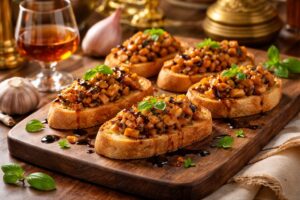
A sophisticated Italian antipasto featuring the prestigious, honeycomb-textured Morchella atop crusty artisanal bread with a hint of garlic and cream.
The Vernal Antipasto
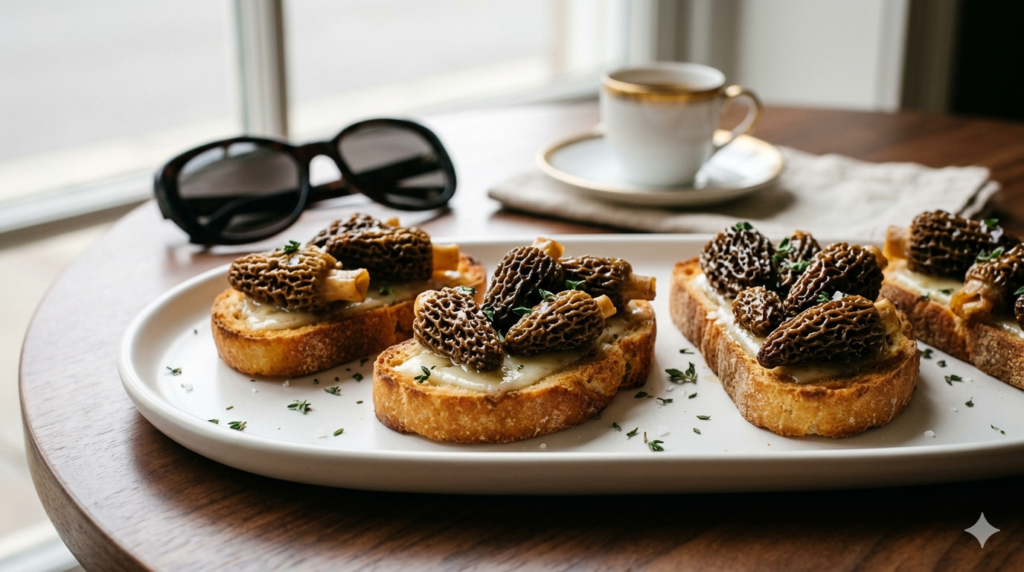
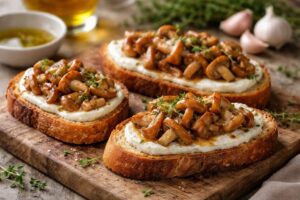
Wild Morels Sautéed in Butter and White Wine over Garlic-Rubbed Altamura Bread
The Historical Prelude
The Bruschetta—derived from the Roman dialect bruscare, meaning "to roast over coals"—is a culinary tradition that originated as a way for olive oil producers to taste their fresh pressings. However, the "Bruschetta ai Funghi" (Mushroom Bruschetta) evolved in the high-altitude regions of Northern Italy and the Dolomites, where the local peasantry sought to elevate foraged forest treasures into a sophisticated appetizer for the regional nobility.
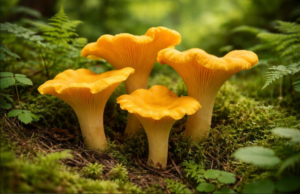
The Morchella (Morel) was historically considered the "Truffle of the Sun," appearing briefly in early spring. In the aristocratic hunting lodges of the House of Savoy, morels were sautéed in artisanal alpine butter and served on thick slices of grilled sourdough. This dish represents the perfect marriage of Cucina Povera and Haute Cuisine—taking the simple, charred bread of the laborer and crowning it with a mushroom once reserved for the tables of French and Italian monarchs.
The objective of a gourmet bruschetta is "Harmonized Contrasts." The bread must provide a structural, charred "crunch" to oppose the silken, spongy texture of the morels. Our philosophy emphasizes the Lipid Absorption Technique: morels are hollow vessels designed to trap garlic-infused butter, ensuring that every bite releases a burst of concentrated forest umami.
Sensory & Foraging Profile
Nomenclature:Morchella esculenta (Yellow Morel) and Pane di Altamura (Durum Wheat Bread).
Terroir: The finest morels for bruschetta are sourced from the Atlantic Fringes and the limestone-rich valleys of the Pyrenees. These regions produce mushrooms with a distinct smoky-hazelnut aroma that pairs perfectly with the fermented notes of high-quality sourdough.
Professional Protocol: Morels must be inspected for "internal clarity." We slice each cap lengthwise to ensure the hollow interior is pristine. We strictly follow the "Leave No Trace" harvesting method, utilizing mesh baskets to facilitate sporal dispersal as we move through the forest clearings.
Essential Equipment
Cast Iron Grill Pan: For achieving the iconic charred ridges on the bread.
Stainless Steel Sauté Pan: For precise control over the butter-wine reduction.
Natural Bristle Brush: For cleaning the intricate honeycomb pits of the fresh morels.
Master Recipe
Stage 1: The Bread Architecture
Slice a sourdough baguette or Pane di Altamura on a sharp diagonal.
Grill over high heat until charred. While still hot, rub a halved clove of raw garlic directly onto the surface of the bread. The heat will "melt" the garlic essential oils into the crust.
If using 30g Dried (300g Fresh equivalent), rehydrate in warm water and reserve the liquid.
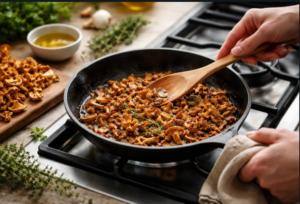
Sauté the morels in 30g of cultured butter with 1 finely minced shallot. Cook until the honeycomb edges are slightly golden.
Stage 3: The Emulsion & Assembly
Deglaze the pan with 50ml of dry white wine (preferably a Pinot Grigio from the Dolomites).
Add 2 tablespoons of heavy cream and a teaspoon of fresh thyme leaves. Simmer until the sauce thickens and glazes the morels.
Spoon the mushroom mixture generously onto the garlic-rubbed bread. Finish with a drizzle of cold-pressed extra virgin olive oil and a whisper of Fleur de Sel.
The Umami Secret: The 1:10 Molecular Glaze
The "Pure Umami" experience is achieved through the 1:10 Extraction. If using 30g of dried morels, the rehydration liquid contains concentrated guanylates. Reduce this liquid by 80% until it becomes a dark, syrupy "mushroom nectar." Whisk this into the cream at the final stage. This ensures the flavor density of 300g of fresh mushrooms is physically bonded to the bread's surface.
Pro Technique: The “Ghost Garlic” Rub
Do not mince garlic into the mushrooms. Instead, the "rub" on the hot bread provides a subtle, background aromatic note that complements rather than competes with the morels. This allows the mushroom's delicate nuttiness to remain the primary focus of the palate.
The Art of Pairing
Sommelier's Choice: A Franciacorta or a dry Prosecco Superiore. The effervescence and acidity are necessary to cleanse the palate from the rich butter-cream emulsion.
Non-Alcoholic: A sparkling infusion of white grape juice and elderflower, served chilled.
Ancestral Nutrition
Morels are an exceptional source of Iron, Copper, and Vitamin D. Historically, in the Italian Alps, this appetizer was served to "restore the blood" after the dormant winter months, providing a metabolic boost for the coming agricultural season.
Micro-FAQ
Q: Why is the 1:10 ratio critical for bruschetta? A: Because bruschetta bread is porous. 30g of dried morels provide a much more stable, concentrated flavor that won't make the bread soggy, unlike the high water content of too many fresh mushrooms.
Q: Can I use olive oil instead of butter? A: For morels, butter is the superior carrier for their specific fat-soluble volatiles. If you must use oil, choose a high-quality, buttery extra virgin variety.
To provide the best experiences, we use technologies like cookies to store and/or access device information. Consenting to these technologies will allow us to process data such as browsing behavior or unique IDs on this site. Not consenting or withdrawing consent, may adversely affect certain features and functions.
Functional
Always active
The technical storage or access is strictly necessary for the legitimate purpose of enabling the use of a specific service explicitly requested by the subscriber or user, or for the sole purpose of carrying out the transmission of a communication over an electronic communications network.
Preferences
The technical storage or access is necessary for the legitimate purpose of storing preferences that are not requested by the subscriber or user.
Statistics
The technical storage or access that is used exclusively for statistical purposes.The technical storage or access that is used exclusively for anonymous statistical purposes. Without a subpoena, voluntary compliance on the part of your Internet Service Provider, or additional records from a third party, information stored or retrieved for this purpose alone cannot usually be used to identify you.
Marketing
The technical storage or access is required to create user profiles to send advertising, or to track the user on a website or across several websites for similar marketing purposes.