Description: Master this wild-harvested gourmet recipe. Succulent roasted lamb chops paired with a deep Morel demi-glace—an umami-rich culinary masterpiece of forest flavors.
In the high pastures of the Rhodope Mountains and the limestone cliffs of the Alps, the arrival of the spring lamb coincides perfectly with the peak season of the Morchella (Morel). This pairing is no mere coincidence; it is a biological and regional synchronicity that has defined mountain gastronomy for centuries. Historically, shepherds would forage for morels while tending to their flocks, creating simple but profound meals over open fires that combined the fatty, grassy richness of lamb with the smoky, mineral intensity of the forest.
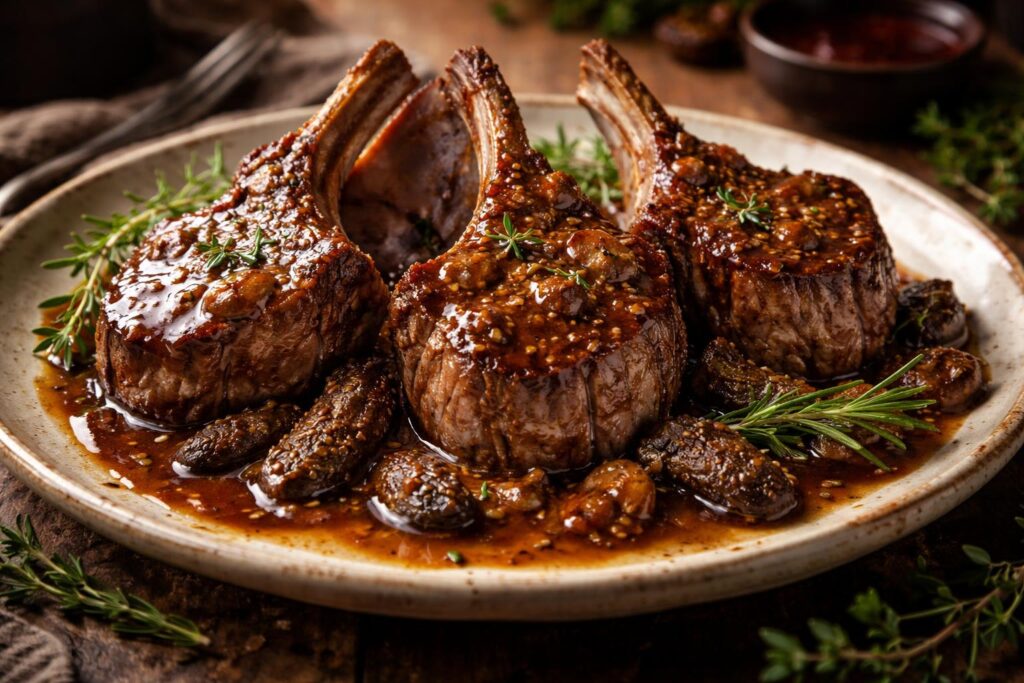
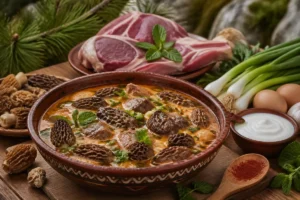
This wild-harvested recipe elevates that tradition into the realm of the high-end kitchen. The secret lies in the Morel demi-glace—a slow-reduced sauce where the honeycomb structure of the mushroom acts as a sponge for the collagen-rich meat stock. As the sauce thickens, the morels release their hidden "smoke" into the liquid, creating a glaze that clings to the lamb chops like a silken velvet robe. This is a dish of deep, resonant power, designed to honor the wild wilderness and the ancestral cycles of the spring harvest.
Sensory & Foraging Profiles: The Smoke and the Soil
The Morchella is often found in disturbed soils—after forest fires or near old apple trees—where it forms a complex Mycorrhizal symbiosis. This environment imbues the mushroom with a unique aromatic profile dominated by phenolic compounds. These are the same molecules that give smoked meats their character, explaining why morels feel so instinctively "meaty" even before they are cooked.
Aroma & Texture: A fresh wild morel smells of damp woodsmoke, hazelnuts, and sun-warmed earth. Once cooked in a demi-glace, its texture becomes uniquely "spongy-firm," providing a fascinating textural contrast to the tender, flaking fibers of the roasted lamb.
Microbiology: From a microbiological perspective, morels contain high levels of Vitamin D2 and ergosterol. When sautéed, these compounds undergo a molecular transformation that enhances the "savory" receptors on the human tongue. In a demi-glace, the morel's honeycomb exterior increases its surface area, allowing for a higher concentration of the L-glutamates found in the veal or lamb stock to bond to the mushroom's surface, resulting in an umami-saturation point that cultivated mushrooms can never reach.
The Master Recipe: Lamb with Morel Demi-Glace
Ingredients
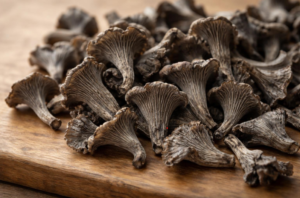
200g Wild-Harvested Morchella elata (Black Morels, cleaned and halved)
4-6 Lamb Loin Chops (thick-cut)
300ml High-quality Veal or Lamb Stock
100ml Dry Red Wine (e.g., Cabernet Sauvignon)
2 Shallots, minced
2 cloves of Garlic, smashed
30g Cold Grass-fed Butter (cubed)
Fresh Rosemary and Thyme
Sea Salt and Cracked Black Pepper
Culinary Steps
The Sear: Season lamb chops with salt and pepper. In a heavy skillet over high heat, sear the lamb for 3-4 minutes per side with garlic and rosemary until a deep crust forms. Remove lamb and let it rest.
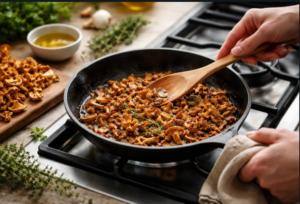
The Mushroom Sauté: In the same pan, add the Morchella. Sauté in the lamb fat for 5 minutes until they begin to brown and smell nutty. Add shallots and cook until soft.
The Deglaze: Pour in the red wine, scraping up the caramelized bits (fond) from the pan. Reduce by half.
The Reduction: Add the stock and any juices from the resting lamb. Simmer on medium-high until the sauce coats the back of a spoon.
The Mantecatura: Turn off the heat. Whisk in the cold butter cubes one by one. This will create a glossy, thick demi-glace.
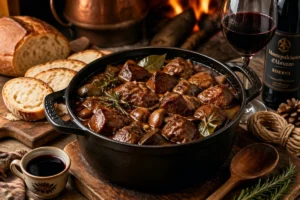
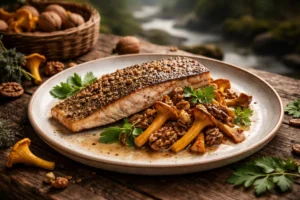
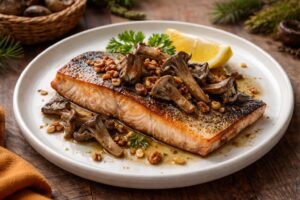
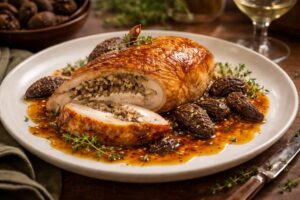
Assembly: Plate the lamb chops and spoon the morels and sauce generously over the top.
Pro Technique: The Fat Infusion
For the most intense flavor, do not clean the pan after searing the lamb. The rendered lamb fat (suet) contains volatile aromatic compounds that are the perfect solvent for the morel's flavor molecules. By sautéing the Morchella directly in the lamb fat before adding any liquid, you create an "aromatic seal" around the mushroom, ensuring that its internal moisture stays trapped while its exterior becomes a vehicle for the sauce.
The Umami Secret: Collagen and Chitin Bonding
The collagen in the demi-glace reduction and the chitin in the wild morel's cell walls create a unique physical synergy. Chitin has a high affinity for proteins; as the sauce reduces, it physically binds to the mushroom's surface. When you add the L-Glutamate from the stock, the result is a "layered umami" experience where the savoriness is both structural and chemical, providing a long-lasting, deep-forest finish on the palate.
The Art of the Pairing
The bold, gamey notes of lamb and the smoky morels demand a wine with significant structure. A Northern Rhône Syrah (Hermitage or Côte-Rôtie) is the ultimate choice, with its notes of black pepper and smoked meat. Alternatively, a Bordeaux from the Left Bank provides the tannins to cut through the fat. For a non-alcoholic pairing, a strong black tea (Lapsang Souchong) offers a smoky, tannic profile that mirrors the morels perfectly.
Ancestral Nutrition
This dish is a nutritional powerhouse of the highlands. Morchella is one of the highest plant-based sources of Iron and Vitamin D, while lamb provides essential B12 and Zinc. Historically, this combination was essential for mountain dwellers to combat "spring fatigue," providing the heme-iron and metabolic catalysts needed to thrive in thin air and rugged terrain.
To provide the best experiences, we use technologies like cookies to store and/or access device information. Consenting to these technologies will allow us to process data such as browsing behavior or unique IDs on this site. Not consenting or withdrawing consent, may adversely affect certain features and functions.
Functional
Always active
The technical storage or access is strictly necessary for the legitimate purpose of enabling the use of a specific service explicitly requested by the subscriber or user, or for the sole purpose of carrying out the transmission of a communication over an electronic communications network.
Preferences
The technical storage or access is necessary for the legitimate purpose of storing preferences that are not requested by the subscriber or user.
Statistics
The technical storage or access that is used exclusively for statistical purposes.The technical storage or access that is used exclusively for anonymous statistical purposes. Without a subpoena, voluntary compliance on the part of your Internet Service Provider, or additional records from a third party, information stored or retrieved for this purpose alone cannot usually be used to identify you.
Marketing
The technical storage or access is required to create user profiles to send advertising, or to track the user on a website or across several websites for similar marketing purposes.