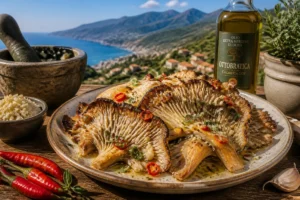
A technical study in capsaicin-mediated flavor amplification and the contrast between thermo-stable fungal lipids and cold-emulsion dairy fats.
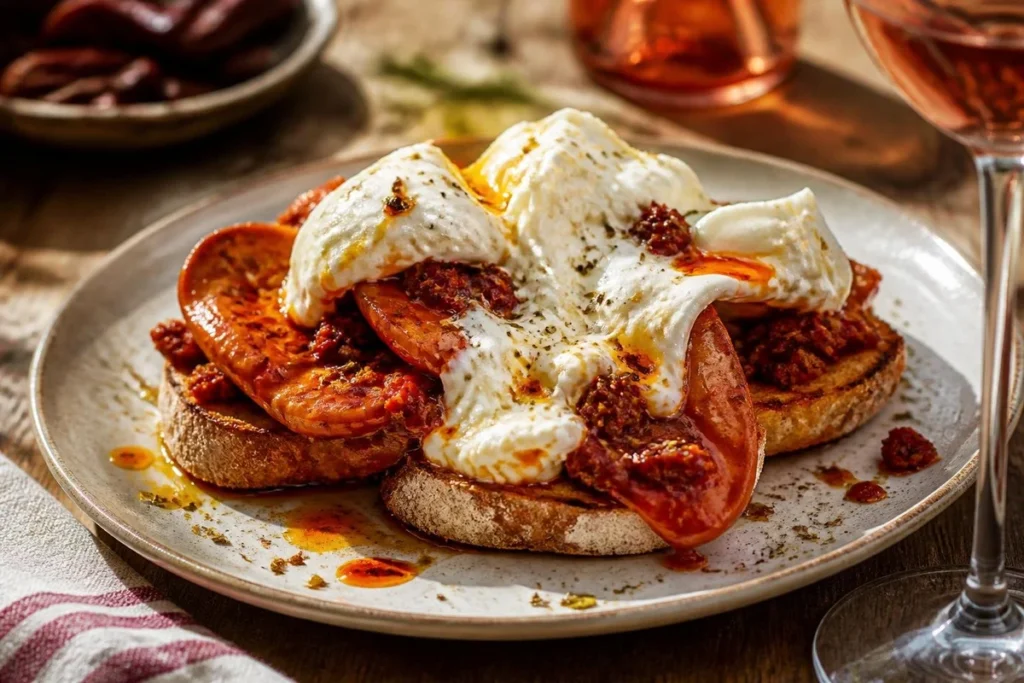
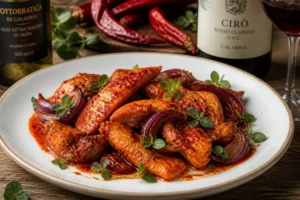
Calabrian Spicy Saffron Milk Caps with ‘Nduja and Burrata
In the sun-baked landscapes of Calabria, the Saffron Milk Cap (Lactarius deliciosus) is one of the few fungi robust enough to compete with the region's aggressive spice profiles. This dish is an exercise in extreme contrast. The mushroom's firm, resinous structure acts as a heat-shield for the palate, providing a textural anchor against the spreadable, fiery 'Nduja (fermented pork salumi). Unlike the Boletus edulis (Boletus edulis), which would absorb too much spice and lose its identity, the Lactarius retains its woody character even in the presence of intense chili.
The "Terroir Narrative" of this recipe celebrates the "Coast of the Gods." By pairing the Saffron Milk Cap with 'Nduja di Spilinga and cold Burrata, we create a thermal and chemical rollercoaster: the heat of the chili, the warmth of the seared mushroom, and the ice-cold, creamy heart of the cheese.
Prep Time
15 Minutes
Cook Time
10 Minutes
Complexity
Grand Officier
Calories
365 kcal per serving
Region
Calabria, Italy
The Culinary Physics of This Dish
This dish centers on Capsaicin-Lipid Solubilization. The capsaicin in the 'Nduja is fat-soluble; as the pork fat renders, it coats the Saffron Milk Cap. Because the mushroom's surface is porous yet firm, it holds the spicy lipids in its gills without becoming soggy. The introduction of cold Burrata serves a functional purpose: the milk proteins (casein) act as a biological detergent, binding to the capsaicin receptors on the tongue and "washing" away the heat, allowing the mushroom's guanylates to be tasted in the finish.
60g 'Nduja di Spilinga (authentic spicy spreadable pork)
250g Fresh Burrata Pugliese (kept chilled)
30ml Extra Virgin Olive Oil (Calabrian)
2 Garlic cloves, crushed
Dried Oregano and a splash of Red Wine Vinegar
Toasted Pane di Altamura for serving
The Technique
1. The Infusion: Heat olive oil in a skillet with garlic. Once fragrant, add the 'Nduja and break it up with a spoon until it melts into a vibrant red oil.
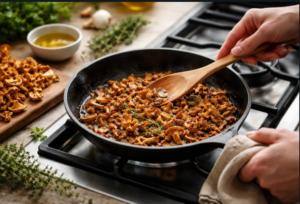
2. High-Heat Searing: Increase the heat and add the Lactarius deliciosus. Toss rapidly so the mushrooms are fully coated in the spicy pork fat. Sear for 5-7 minutes until the mushrooms are tender but still have a "snap."
3. Acid Flash: Add a splash of red wine vinegar at the final moment. This Deglazing step cuts through the heavy fat and brightens the chili's fruitiness.
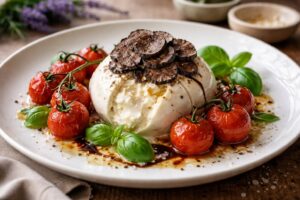
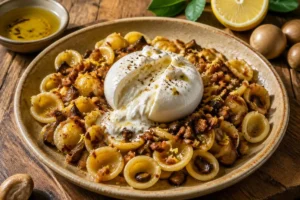
4. Thermal Assembly: Place the hot mushrooms on toasted bread. Immediately break the cold Burrata over the top. The "stracciatella" interior will spill out over the spicy fungi.
Shop Integration
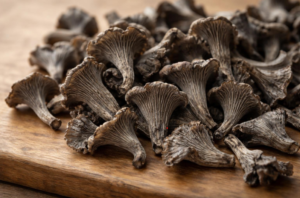
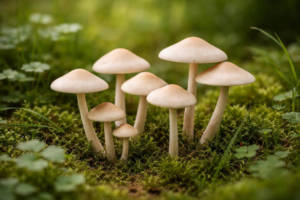
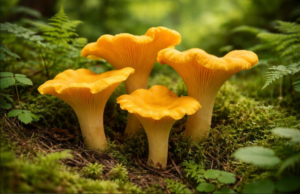
The bold flavors of Calabria are an excellent testing ground for our fungi. While the Saffron Milk Cap provides a peppery resilience, our Boletus edulis (Boletus edulis) can be prepared this way for a much richer, "meatier" experience. For a visually stunning contrast, the Craterellus cinereus pairs exceptionally well with the red 'Nduja oil. If you prefer a lighter heat, the Chanterelle (Chanterelle) offers a fruity counterpoint to the chili, while our Marasmius oreades (Marasmius oreades) can be used to add a concentrated forest aroma to the spicy base.
The Umami Profile
The umami is "Explosive." We combine the fermented umami of the 'Nduja with the fungal umami of the Saffron Milk Cap and the lactic umami of the Burrata. The chili acts as a Palate Stimulant, increasing blood flow to the taste buds and making the nucleotides in the mushrooms feel more intense and immediate.
Sommelier’s Choice
A powerful, chilled Rosé or a light-bodied red with high acidity, such as a Cirò Rosso (Gaglioppo), is necessary. The wine's tannins must be low to avoid clashing with the chili, while its fruitiness provides a necessary balance to the 'Nduja's heat.
The Etymological Chronicle
The names of this mushroom in Southern Italy emphasize its "bleeding" nature. In Italian, it is the Sanguinello or Fungo del Sangue. In French, Lactaire délicieux is the culinary standard. In German, Edel-Reizker denotes its noble status. In Spanish, Níscalo is the common term, but in Calabria, the mushroom is respected as a "warrior of the woods," capable of standing up to the region's fiercest ingredients.
Pure Umami | Mycological Research & Culinary Arts | 2026
To provide the best experiences, we use technologies like cookies to store and/or access device information. Consenting to these technologies will allow us to process data such as browsing behavior or unique IDs on this site. Not consenting or withdrawing consent, may adversely affect certain features and functions.
Functional
Always active
The technical storage or access is strictly necessary for the legitimate purpose of enabling the use of a specific service explicitly requested by the subscriber or user, or for the sole purpose of carrying out the transmission of a communication over an electronic communications network.
Preferences
The technical storage or access is necessary for the legitimate purpose of storing preferences that are not requested by the subscriber or user.
Statistics
The technical storage or access that is used exclusively for statistical purposes.The technical storage or access that is used exclusively for anonymous statistical purposes. Without a subpoena, voluntary compliance on the part of your Internet Service Provider, or additional records from a third party, information stored or retrieved for this purpose alone cannot usually be used to identify you.
Marketing
The technical storage or access is required to create user profiles to send advertising, or to track the user on a website or across several websites for similar marketing purposes.