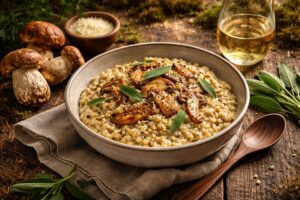
Description: Master the art of the perfect wild-harvested gourmet risotto. This King Bolete and truffle oil infusion is a culinary masterpiece, umami-rich and crafted for the ultimate mycological gastronomy experience.
In the mist-covered valleys of the Piedmont and the high-altitude forests of the Balkans, the arrival of the Boletus edulis signals the peak of the culinary calendar. Risotto is perhaps the most honest medium for the King Porcini; it provides a neutral, starchy canvas that allows the mushroom's complex aromatics to bloom without distraction. Historically, this dish was a labor of love, requiring the constant, rhythmic stirring of local short-grain rice to coax out the starches that create its signature velvet texture.
This recipe is a masterclass in wild-harvested excellence. By utilizing a dual-stage mushroom infusion—using both fresh seared caps and a concentrated mushroom-infused stock—we achieve a depth of flavor that a simple sauté cannot replicate. The addition of a high-quality truffle oil at the final "mantecatura" stage acts as a high-frequency aromatic, elevating the deep, earthy bass notes of the Porcini into a multi-dimensional sensory experience. This is forest-floor luxury served in a shallow bowl.
Sensory & Foraging Profiles: The Starch-Fungal Symbiosis
The Boletus edulis is biologically predisposed to the risotto technique. Its cell walls are rich in polysaccharides, which, when gently simmered, contribute to the creaminess of the sauce. Wild specimens, found in Mycorrhizal symbiosis with pines and oaks, develop a nutty, toasted-hazelnut profile that cultivated mushrooms lack.
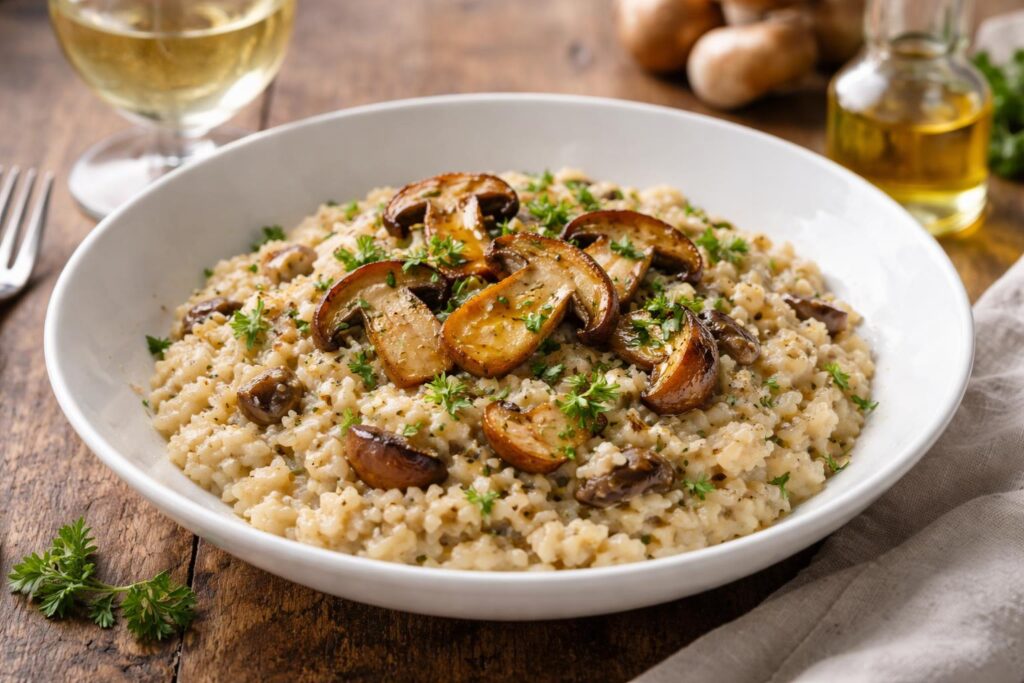
Aroma & Texture: The aroma is a heady mixture of damp pine, musk, and aged cheese. The texture is the hallmark of the dish: "all'onda" (like a wave)—fluid, silken, and rich, with the firm, meaty bite of the seared Porcini providing a necessary structural counterpoint.
Microbiology: Wild Boletes contain high concentrations of L-Glutamate and guanylic acid. When cooked slowly with rice, these compounds leach into the starch molecules, effectively "flavoring" the rice from the inside out. This molecular transfer is what creates the long-lasting savory finish that defines a true gourmet risotto.
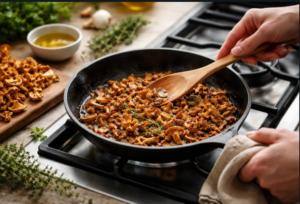
The Mushroom Sear: In a wide, heavy pan, heat olive oil. Add the Boletus edulis caps. Sear until golden and crispy. Remove half the caps for garnish; leave the rest and add the diced stems.
The Base: Add the shallots to the pan and sauté until translucent. Add the rice and toast for 2-3 minutes until the grains are translucent at the edges and smell nutty.
The Deglaze: Pour in the wine. Stir constantly until it has completely evaporated, scraping the bottom of the pan to incorporate the mushroom essence.
The Rhythmic Stir: Add one ladle of hot stock at a time. Stir continuously and only add more stock once the previous ladle has been absorbed. This agitation releases the starch.
The Mantecatura: When the rice is "al dente" (approx. 18 min), turn off the heat. This is the most critical stage. Vigorously beat in the cold butter and Parmigiano-Reggiano.
The Final Polish: Stir in the white truffle oil and parsley. Cover and let rest for 2 minutes.
Assembly: Plate the risotto and top with the reserved crispy Porcini caps.
Pro Technique: The “All’Onda” Movement
A professional risotto should never be a stiff pile of rice. It must move like a "wave" (all'onda) when the plate is shaken. To achieve this, ensure you add one final splash of hot stock along with the cold butter during the mantecatura. The temperature shock between the cold fat and the hot liquid, combined with vigorous stirring, creates a stable, glossy emulsion that mimics the texture of heavy cream without the heaviness.
The Umami Secret: Amylopectin Saturation
The amylopectin starch released by arborio rice acts as a molecular "glue" for umami. As the Boletus edulis releases its natural juices, the starch molecules trap the savory compounds. Because the rice is stirred constantly, these compounds are evenly distributed throughout the dish, ensuring that the umami intensity is consistent from the first bite to the last.
The Art of the Pairing
The creaminess of a risotto requires a wine with "spine." A Barolo or Barbaresco (Nebbiolo grape) is the classic regional pairing, offering high tannins and acidity that cut through the butter while its "tar and roses" aromatics match the truffle oil. For white wine lovers, a full-bodied Gavi di Gavi provides a crisp mineral finish. For a non-alcoholic pairing, a **chilled sparkling water with a twist of lemon and a dash of bitters** provides the necessary palate cleanse.
Ancestral Nutrition
Wild Boletus edulis is an exceptional source of B-vitamins (B2, B3, B5) and Copper. The slow-cooked rice provides easily digestible complex carbohydrates. Together with the healthy fats from grass-fed butter, this dish provides sustained energy release and supports metabolic health, honoring the traditional diets of the Italian Alps.
To provide the best experiences, we use technologies like cookies to store and/or access device information. Consenting to these technologies will allow us to process data such as browsing behavior or unique IDs on this site. Not consenting or withdrawing consent, may adversely affect certain features and functions.
Functional
Always active
The technical storage or access is strictly necessary for the legitimate purpose of enabling the use of a specific service explicitly requested by the subscriber or user, or for the sole purpose of carrying out the transmission of a communication over an electronic communications network.
Preferences
The technical storage or access is necessary for the legitimate purpose of storing preferences that are not requested by the subscriber or user.
Statistics
The technical storage or access that is used exclusively for statistical purposes.The technical storage or access that is used exclusively for anonymous statistical purposes. Without a subpoena, voluntary compliance on the part of your Internet Service Provider, or additional records from a third party, information stored or retrieved for this purpose alone cannot usually be used to identify you.
Marketing
The technical storage or access is required to create user profiles to send advertising, or to track the user on a website or across several websites for similar marketing purposes.