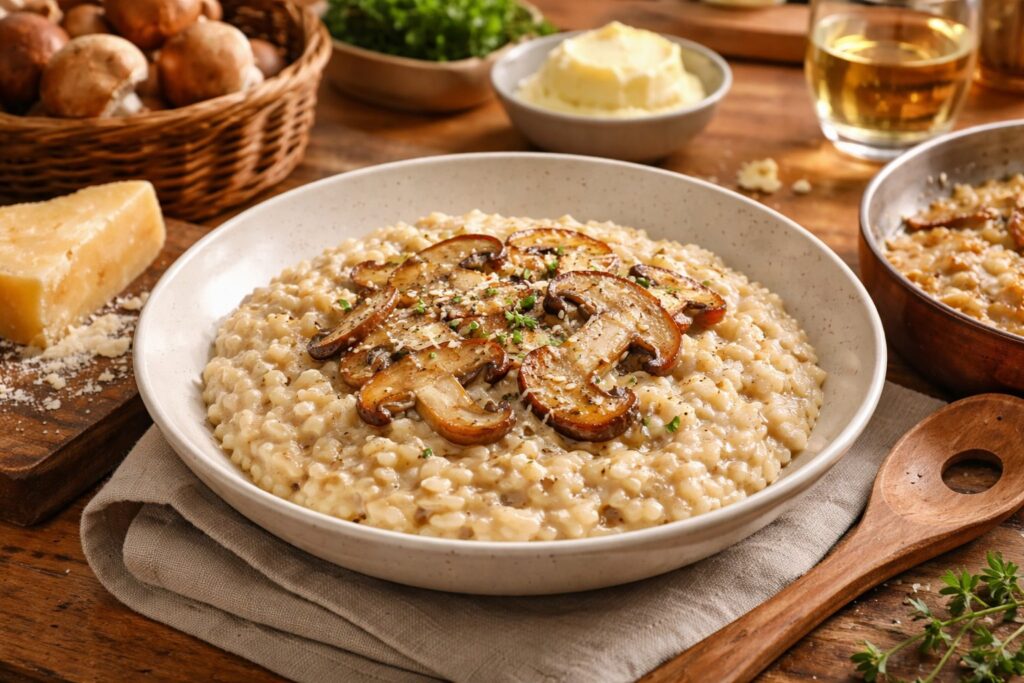
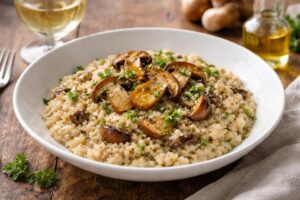
Master the authentic Italian Porcini Risotto. A professional gourmet recipe featuring wild Boletus edulis, Carnaroli rice, and the traditional mantecatura for pure forest umami.
The Carnaroli Standard: Authentic Porcini Risotto
A Masterclass in Mantecatura and the Nutty Terroir of the King Bolete
In the rice-growing heartlands of Piedmont and Lombardy, the union of Carnaroli rice and the Boletus edulis (Porcini) is considered a culinary masterpiece of chemistry. This is not merely a dish, but a process of extraction—where the starch of the grain and the pure umami of the fungi are fused into a velvety cloud. It is the definitive taste of the European wilderness brought to the refined Italian table.
By utilizing wild-harvested Porcini at the peak of their season, we tap into a depth of flavor that store-bought varieties cannot replicate. The secret lies in the mantecatura—the final, vigorous beating of cold butter and Parmigiano into the rice—which creates a silken suspension that amplifies the mushroom's earthy, toasted-bread aromatics.
Sensory & Foraging Profiles: The Shaded Conifer Floor
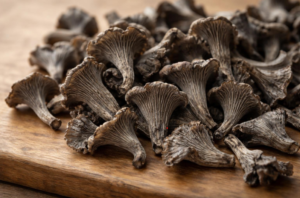
The Boletus edulis thrives under the canopy of spruce and beech. Its profile is characterized by a creamy, dense flesh and a cap that tastes of hazelnuts and dark soil.
Starch & Scent: The porcini's unique proteins react with the rice's amylopectin starch during the slow addition of broth, creating a naturally thick, savory sauce without the need for cream.
Ethical Harvesting: When foraging in the Italian Dolomites, always use a basket. This allows the mycorrhizal spores to settle back into the moss as you move, ensuring the King's reign continues in the European wilderness.
Essential Equipment
Heavy-bottomed wide pan (copper or stainless steel)
Separate saucepan for simmering stock
Wooden spoon with a center hole (girariso)
The Master Recipe: Porcini Risotto
Ingredients
400g Fresh Boletus edulis (sliced)
320g Carnaroli Rice (The "King" of risotto rice)
1.2L Light Mushroom or Vegetable Stock (kept at a simmer)
120ml Dry White Wine (e.g., Gavi or Pinot Grigio)
1 small Shallot (finely minced)
60g Cold Cultured Butter
60g Parmigiano Reggiano (aged 24 months, grated)
Fleur de Sel & Freshly cracked black pepper
Culinary Steps
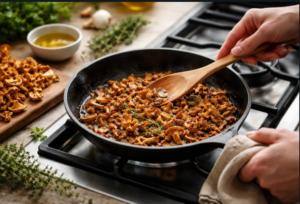
The Mushroom Foundation: In your main pan, sauté the sliced Porcini with a touch of oil over high heat for 4 minutes until golden-brown. Remove half for garnishing later.
The Tostatura: Add the shallot and rice to the pan with the remaining mushrooms. Toast the rice for 2 minutes until the edges are translucent and the grains are hot to the touch.
The Deglaze: Pour in the white wine. Stir until the alcohol has completely evaporated and the rice has absorbed the liquid.
The Rhythmic Addition: Add the hot stock one ladle at a time. Stir constantly; wait for each ladle to be absorbed before adding the next. This friction releases the starch.
The Mantecatura: When the rice is al dente (approx. 18 min), remove from heat. Add the cold butter and Parmigiano. Beat vigorously with a wooden spoon for 60 seconds to create the "onda" (wave-like) texture.
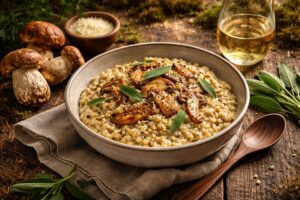
The Service: Plate immediately. Top with the reserved sautéed Porcini and a final crack of black pepper.
Substitutions & Variations
If Carnaroli is unavailable, Vialone Nano is an excellent alternative for a creamier finish. For an extra layer of pure umami, add a teaspoon of dried Porcini powder to the stock. Replace butter with a high-quality Extra Virgin Olive Oil for a lighter, Mediterranean version.
Pro Technique: The “Cold-Fat” Emulsion
Always ensure your butter is ice-cold when starting the mantecatura. The temperature difference between the hot rice and the cold fat creates a more stable, glossy emulsion. This is the difference between a greasy risotto and a culinary masterpiece that feels like silk on the palate.
The Umami Secret: Amylopectin-Glutamate Binding
The Boletus edulis contains high levels of guanylates, which significantly amplify the glutamates already present in the rice and Parmesan. As you stir, the amylopectin starch acts as a carrier, "trapping" these molecules in a creamy suspension. This ensures that the pure umami doesn't just sit on the surface but is chemically integrated into every grain.
The Art of the Pairing
A classic Porcini risotto calls for a Barolo or a Barbaresco. The tannins and forest-floor notes of the Nebbiolo grape are the mirror image of the Boletus edulis. Non-alcoholic: A chilled, earthy Pu-erh tea mirrors the mushroom's depth.
Storage & Reheating
Risotto is best eaten fresh. To reuse: Shape leftovers into balls, stuff with mozzarella, and fry to create Arancini di Porcini—a second culinary masterpiece.
Ancestral Nutrition
The Boletus edulis is a potent source of B-complex vitamins and dietary fiber. In the European wilderness tradition, this combination of complex carbs and fungal minerals has long been used as a restorative meal for long mountain winters.
Micro-FAQ
Q: Why use Carnaroli rice? A: It has a higher starch content and a firmer core than Arborio, making it much harder to overcook.
Q: Should I wash the Porcini? A: Never. Use a brush. Water makes them mushy and dilutes the pure umami intensity.
Q: Can I use dried Porcini? A: Yes, but rehydrate them first and use the soaking liquid as part of your stock for an incredible flavor boost.
To provide the best experiences, we use technologies like cookies to store and/or access device information. Consenting to these technologies will allow us to process data such as browsing behavior or unique IDs on this site. Not consenting or withdrawing consent, may adversely affect certain features and functions.
Functional
Always active
The technical storage or access is strictly necessary for the legitimate purpose of enabling the use of a specific service explicitly requested by the subscriber or user, or for the sole purpose of carrying out the transmission of a communication over an electronic communications network.
Preferences
The technical storage or access is necessary for the legitimate purpose of storing preferences that are not requested by the subscriber or user.
Statistics
The technical storage or access that is used exclusively for statistical purposes.The technical storage or access that is used exclusively for anonymous statistical purposes. Without a subpoena, voluntary compliance on the part of your Internet Service Provider, or additional records from a third party, information stored or retrieved for this purpose alone cannot usually be used to identify you.
Marketing
The technical storage or access is required to create user profiles to send advertising, or to track the user on a website or across several websites for similar marketing purposes.