A technical examination of lipid-polysaccharide emulsification and the stabilization of fungal umami within a high-heat, clay-vessel braising environment.
Balkan “Kavarma” with Morels (Thracian Style)
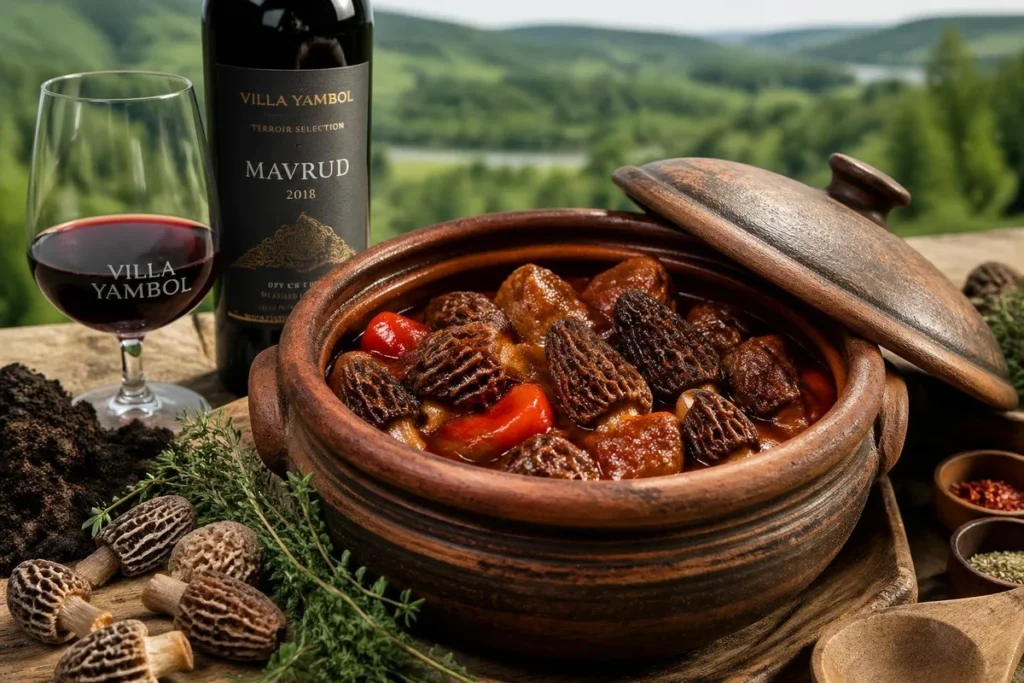
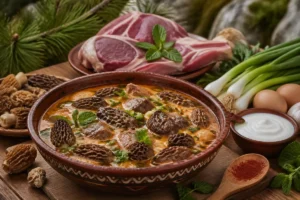
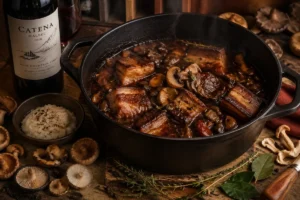
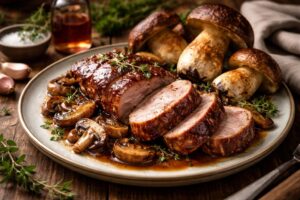
In the culinary heritage of the Thracian Valley, the Kavarma is a study in slow-thermal saturation. Traditionally a stew of pork or chicken cooked in a sealed clay pot (Gyuvetch), this professional iteration integrates Morels to utilize the mushroom's alveolar architecture. This is a technical exercise in aromatic entrapment; as the clay pot retains heat, it creates a pressurized micro-environment where the mushroom's woody terpenes are forced into the cellular structure of the meat, resulting in a protein that is "pre-smoked" by the fungus itself.
The Culinary Physics of This Dish
The core scientific principle is Hydrophobic-Lipid Bonding. Morels are naturally porous and act as a biological sponge. During the high-heat searing phase (the "Kavardisvane"), the meat releases its fats. When the Morels are introduced, they absorb these lipids, which are rich in inosinate. As the clay pot is sealed, the internal steam facilitates a nucleotide-exchange: the mushroom's guanylate migrates into the sauce, while the meat's fats migrate into the mushroom. The result is a stabilized, high-density flavor emulsion that does not separate even at the high temperatures of the oven.
Furthermore, the porous clay walls of the vessel allow for a controlled "breathability," concentrating the sauce while maintaining a 100% humidity environment. This ensures that the chitinous ridges of the Morels remain resilient and "snappy" rather than dissolving into the liquid, providing a critical textural contrast to the tender, slow-cooked meat.
Terroir Narrative
The Thracian Valley is defined by its black earth (Chernozem) and rolling hills. The morels gathered in the riparian forests along the Maritsa River in late spring are particularly large and robust. This dish represents the "Duh na Zemyata" (Spirit of the Earth)—a culinary dialogue between the domestic hearth and the wild forest. It is a celebration of the season where the cellar's winter stores of peppers and wine meet the first, high-value foraged treasures of the spring.
Prep Time
Bake Time
Complexity
Calories
Region
30 min
45 min
Grand Officier
430 kcal
Thracian Valley, Bulgaria
Master Recipe (1:10 Rule)
Following the 1:10 rule of professional Kavarma, the ratio of the thick tomato-pepper "sofrito" to the total volume ensures a concentrated sauce that glazes the morels without drowning their delicate, nutty profile.
600 g Pork neck or Chicken thigh (cut into 2cm cubes)
300 g Fresh Morels (kept whole for maximum flavor capture)
2 Red Bell Peppers (roasted and diced)
100 ml Dry Red Wine (Mavrud or Merlot)
50 g Pork Lard or Butter (for the Kavardisvane)
1 Large Onion, finely chopped
To taste Savory (Chubritsa), Paprika, and Sea salt
The Technique
The Kavardisvane (Searing): In a heavy skillet, sear the meat in lard until golden. Add the onions and cook until caramelized. This creates the "brown" aromatic base necessary for the morels to shine.
The Fungal Sauté: Add the Morels and peppers to the pan. Sauté for 3 minutes until the mushrooms are coated in the savory fats and the paprika has released its oils.
The Deglaze: Pour in the wine and reduce by half. This removes the harsh ethanol and leaves behind the concentrated fruit and tannins that will bond with the mushroom's earthiness.
The Clay Transfer: Transfer the mixture into individual clay pots (Gyuvecheta). Add a splash of stock if needed, but the meat and mushrooms should provide most of the liquid.
The Seal: Cover with the clay lid (or a dough seal for a traditional "Dush" effect). Bake at 200°C for 45 minutes. The internal pressure will infuse the morels with the meat's essence.
The Finish: Serve directly in the clay pot to maintain the temperature and the concentrated forest aromatics.
"In Thrace, the clay pot is the mountain, and the Kavarma is the forest. The Morel is the hunter that brings them both together." – Chef de Cuisine, Plovdiv
The Umami Profile
The umami profile of Morchella is exponentially boosted by the lipid-rich pork fat and the lycopene-concentrated tomato base. This interaction creates a deep, "earthy-sweet" profile that is a hallmark of Balkan technical excellence. Pure Umami offers the highest quality wild-harvested specimens for your regional masterpieces.
Discover the intensity of the Balkan soil with our Thracian-Grade Morels, selected for their uniform size and intense flavor density.
Sommelier’s Choice
A wine with significant tannins and dark fruit is required to match the intensity of the braise. A Bulgarian Mavrud is the essential technical pairing, offering the structure and spicy notes to complement the Morels. For a more elegant approach, choose a Melnik 55; its velvety tannins resonate perfectly with the smoky, clay-baked mushrooms.
The Etymological Chronicle
In the Bulgarian tradition (Post B), the word Kavarma comes from the Turkish kavurma (to fry/sear). Historically, Morels found in the valley were called "Mayki" in some regions, referencing their appearance in May. This dish represents the "searing of the forest"—a technical and seasonal fusion that has defined Bulgarian luxury for generations.
To provide the best experiences, we use technologies like cookies to store and/or access device information. Consenting to these technologies will allow us to process data such as browsing behavior or unique IDs on this site. Not consenting or withdrawing consent, may adversely affect certain features and functions.
Functional
Always active
The technical storage or access is strictly necessary for the legitimate purpose of enabling the use of a specific service explicitly requested by the subscriber or user, or for the sole purpose of carrying out the transmission of a communication over an electronic communications network.
Preferences
The technical storage or access is necessary for the legitimate purpose of storing preferences that are not requested by the subscriber or user.
Statistics
The technical storage or access that is used exclusively for statistical purposes.The technical storage or access that is used exclusively for anonymous statistical purposes. Without a subpoena, voluntary compliance on the part of your Internet Service Provider, or additional records from a third party, information stored or retrieved for this purpose alone cannot usually be used to identify you.
Marketing
The technical storage or access is required to create user profiles to send advertising, or to track the user on a website or across several websites for similar marketing purposes.