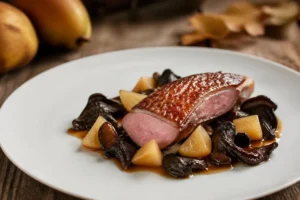
A technical examination of lycopene-capsaicin complexing and the stabilization of fungal umami within a high-viscosity vegetable-sugar reduction.
Morels & “Lutenitsa” reduction (Modern Balkan Style)
In the evolving culinary landscape of the Balkans, the iconic Lutenitsa—a preserve of roasted peppers and tomatoes—is reimagined as a technical gastrique. Pairing Morels with this reduction is a study in acid-sugar-umami balancing. The natural sweetness of the roasted peppers mirrors the morel's nuttiness, while the slight capsaicin heat act as a flavor catalyst, accelerating the perception of the mushroom's earthy terpenes on the palate.
The Culinary Physics of This Dish
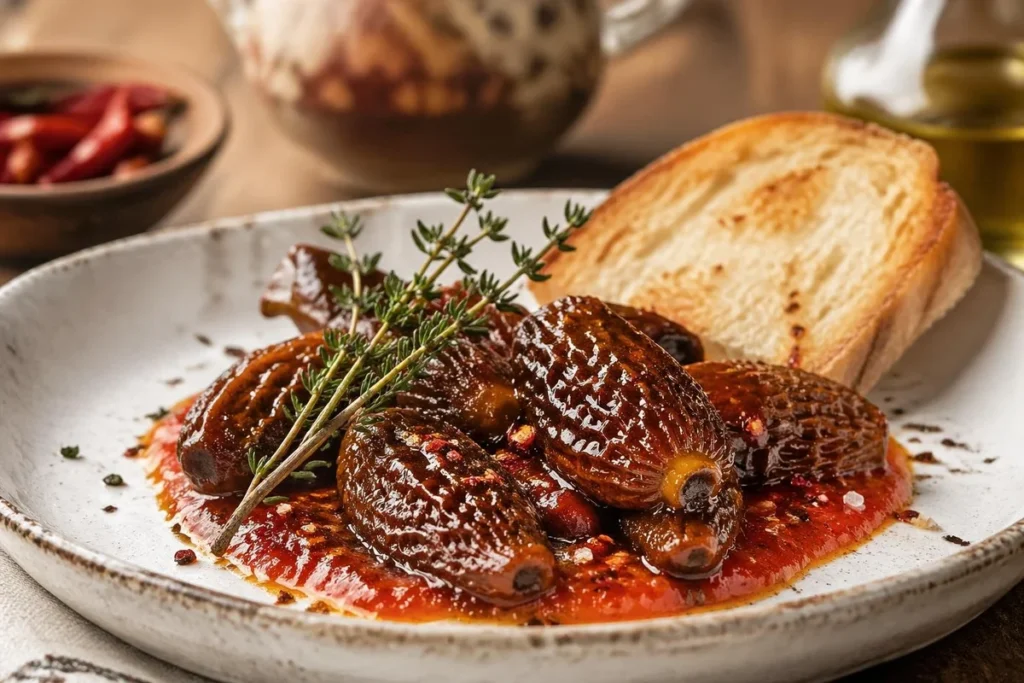
The core scientific principle is Lycopene-Terpene Emulsification. Roasted tomatoes and peppers are dense in lycopene, which, when reduced with a lipid (butter or lard), creates a stable carrier for the morel's fat-soluble aromatics. The Morchella's honeycomb surface acts as a capillary capture system, drawing the thick, red reduction into its internal chambers. This prevents the sauce from simply coating the exterior, ensuring the intense "roasted" profile of the vegetables and the "woodland" profile of the fungus are delivered as a single, homogenous unit.
Furthermore, the high-pectin content of the pepper reduction provides a natural glaze. When the morels are tossed in this reduction over high heat, the sugars undergo a secondary caramelization, bonding with the mushroom's chitinous ridges to create a "lacquered" finish that is characteristic of high-end modern Balkan bistros. This technique eliminates the need for starch-based thickeners, keeping the flavor profile sharp and technically "clean."
Terroir Narrative
The Balkan plains are synonymous with the smell of roasting peppers in the autumn, but this dish brings that smoky essence into the spring. The morels from the Danubian plain meet the concentrated essence of last year's pepper harvest. This dish represents "Vrazka na Vremeto" (Connection of Time)—a bridge between the preservation techniques of the past and the fresh foraging of the present. It is a celebration of the unique "smoky" DNA that defines Bulgarian gastronomy across all seasons.
Prep Time
Cook Time
Complexity
Calories
Region
15 min
10 min
Grand Officier
210 kcal
Modern Bulgaria
Master Recipe (1:10 Glaze Ratio)
Following the 1:10 rule of modern Balkan glazing, the ratio of the vegetable reduction to the morel mass ensures a high-intensity finish that respects the mushroom's structural "snap."
400 g Fresh Morels (kept whole for maximum glaze retention)
100 ml Concentrated Pepper & Tomato reduction (strained Lutenitsa base)
50 g Cultured Butter
1 tsp Apple Cider Vinegar (for the gastrique effect)
1 Sprig of Thyme
To taste Smoked salt and a hint of chili
The Technique
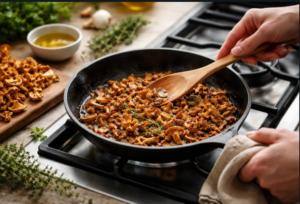
The Sauté: Sauté the Morels in butter with thyme until golden. The ridges must be slightly crisp to provide textural resistance to the thick sauce.
The Gastrique: Add the vinegar to the vegetable reduction. The acidity is crucial to "cut" through the density of the peppers and tomatoes.
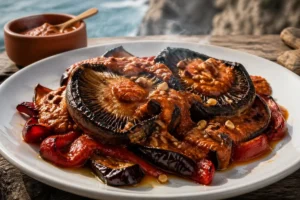
The Glaze: Add the reduction to the pan with the morels. Toss vigorously over medium-high heat. The sugars in the peppers will begin to bubble and "lacquer" the mushrooms.
The Emulsion: Add a cold knob of butter at the very end (Monter au beurre). This emulsifies the remaining liquids into a glossy, scarlet sauce that clings to the morels.
The Assembly: Serve as a sophisticated side dish or atop a slice of toasted artisanal "Beli Leb" (white bread) to absorb the concentrated juices.
"In the modern Balkan kitchen, we don't just eat Lutenitsa; we use it as a paint for the forest's greatest treasures." – Chef de Cuisine, Sofia
The Umami Profile
The umami profile of Morchella is significantly amplified by the concentrated lycopene and the roasted sweetness of the peppers. This interaction creates a vibrant, "red" savory profile that is a hallmark of Balkan technical innovation. Pure Umami offers the highest quality wild-harvested specimens for your modern culinary concepts.
Experience the precision of the modern Balkan spring with our Balkan-Grade Morels, selected for their aromatic clarity and structural resilience.
Sommelier’s Choice
A wine with high acidity and bright fruit is required to balance the sweetness of the pepper glaze. A Bulgarian Rosé (from Broad-leaved Melnik Vine) offers the strawberry notes and spicy finish needed. For a more structured alternative, choose a Gamza; its light tannins and high acidity resonate perfectly with the smoky morels and the tangy reduction.
The Etymological Chronicle
In the Bulgarian tradition (Post B), the word Lutenitsa comes from lyut (spicy/hot). Historically, Morels were seen as a rare "gift of the rain." This dish represents the meeting of the "Spicy One" and the "Rain Gift"—a technical and seasonal fusion that has defined modern Bulgarian luxury for generations.
To provide the best experiences, we use technologies like cookies to store and/or access device information. Consenting to these technologies will allow us to process data such as browsing behavior or unique IDs on this site. Not consenting or withdrawing consent, may adversely affect certain features and functions.
Functional
Always active
The technical storage or access is strictly necessary for the legitimate purpose of enabling the use of a specific service explicitly requested by the subscriber or user, or for the sole purpose of carrying out the transmission of a communication over an electronic communications network.
Preferences
The technical storage or access is necessary for the legitimate purpose of storing preferences that are not requested by the subscriber or user.
Statistics
The technical storage or access that is used exclusively for statistical purposes.The technical storage or access that is used exclusively for anonymous statistical purposes. Without a subpoena, voluntary compliance on the part of your Internet Service Provider, or additional records from a third party, information stored or retrieved for this purpose alone cannot usually be used to identify you.
Marketing
The technical storage or access is required to create user profiles to send advertising, or to track the user on a website or across several websites for similar marketing purposes.