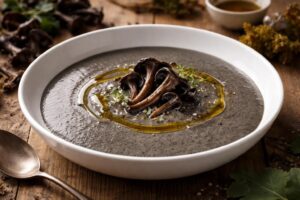
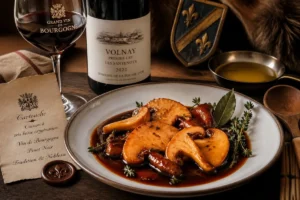
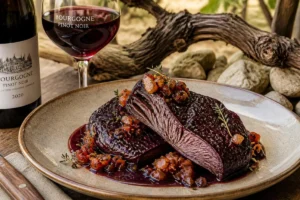
A sophisticated technical guide to Provençal sautéing techniques using Marasmius oreades. This article breaks down the molecular stabilization of essential oils in herbs when paired with fungal trehalose.
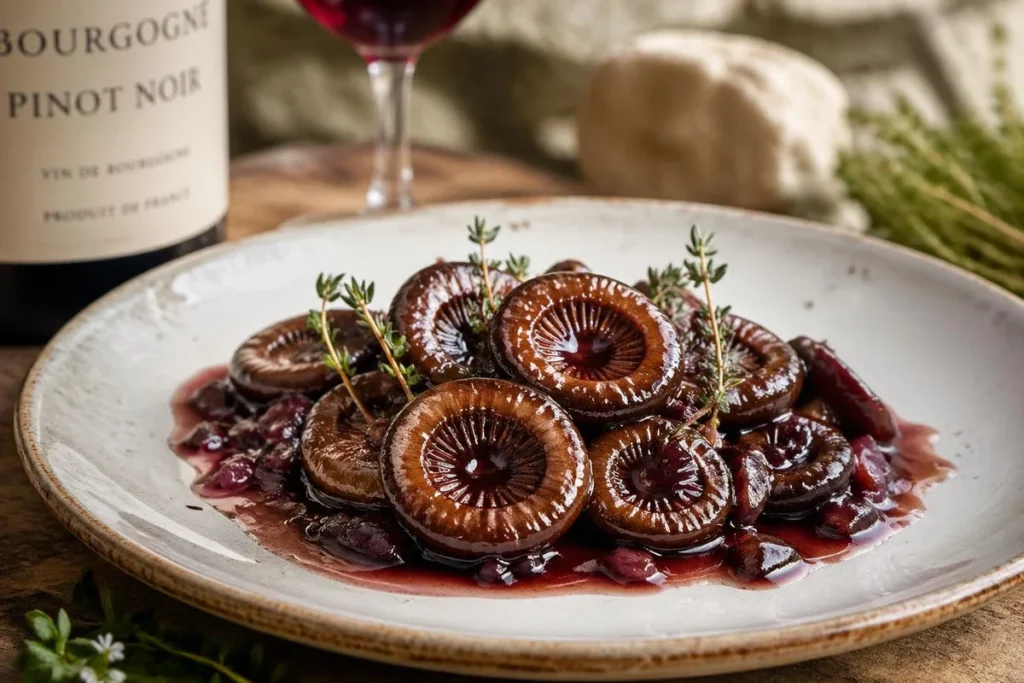
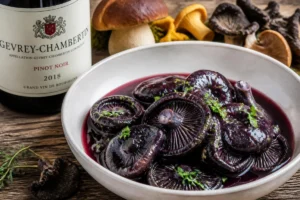
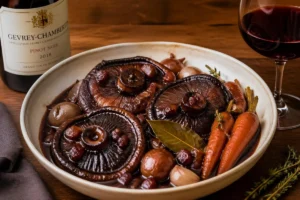
Burgundy Pinot Noir Braised Fairy Ring Mushrooms
In the hierarchy of European mycophagy, Marasmius oreades, commonly known as the Fairy Ring mushroom, occupies a unique position due to its exceptional concentration of trehalose. While often overlooked in favor of larger agarics, the French culinary tradition—particularly in the heart of Burgundy—treats this resilient species as a concentrated vessel of meadow-born umami. When subjected to the classic braising techniques of the Côte d'Or, the Fairy Ring mushroom undergoes a structural and aromatic transformation that bridges the gap between wild forage and haute cuisine.
The Culinary Physics of This Dish
The science of this preparation lies in the synergistic reduction of red wine tannins and fungal sugars. During the braising process, the anthocyanins present in the Pinot Noir interact with the chitinous cell walls of the Marasmius oreades. Unlike many mushrooms that become flaccid when wet-cooked, the Fairy Ring mushroom maintains its "al dente" snap due to its unique hyphal structure.
Furthermore, the Maillard reaction is extended here through the gradual evaporation of the wine's water content, allowing the concentrated trehalose in the mushrooms to undergo pyrolysis at a lower temperature. This creates a complex flavor bridge between the dark fruit notes of the wine and the characteristic "hay-like" coumarin scent of the mushroom, stabilizing the aromatic compounds within the lipid matrix.
Terroir Narrative
Burgundy is a region defined by its "climat"—the specific marriage of soil, slope, and microclimate. While the world looks to its vineyards, the local foragers know that the limestone-rich meadows bordering these vines produce the finest Fairy Ring mushrooms. This dish is a tribute to that symbiotic relationship, utilizing the same Pinot Noir grapes that grow meters away from where the mushrooms form their mystical circles. It is a dish born of the earth, refined by the cellar, representing centuries of Burgundian patience.
Prep Time
Cook Time
Complexity
Calories
Region
20 min
35 min
Grand Officier
185 kcal
Burgundy, France
Master Recipe (1:10 Rule)
To achieve a professional glaze, we utilize a strict ratio of 1 part fat to 10 parts mushroom, ensuring the emulsion remains stable throughout the reduction process.
500 g Fresh Fairy Ring Mushrooms (Marasmius oreades) – caps only
50 g Cultured French Butter (Beurre d'Isigny)
300 ml Aged Pinot Noir (Bourgogne Rouge)
150 ml Veal or Dark Mushroom Stock (double-reduced)
2 Shallots (Eschalots), finely ciselé
1 sprig Fresh Thyme (Thymus vulgaris)
To taste Grey Sea Salt (Sel de Guérande)
The Technique
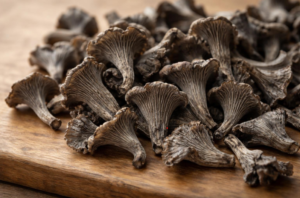
Cleaning: Use a fine brush to remove debris from the gills. Since Fairy Ring mushrooms often grow in grass, ensure no blades remain. Do not soak, as these mushrooms are highly absorbent and will lose their molecular density.
Sweating: In a wide sauté pan, melt half the butter over medium heat. Add the shallots and sweat until translucent (suer) without browning, allowing the natural sugars to release.
The Sear: Increase heat and add the mushrooms. Sauté until they release their moisture and begin to re-absorb the butter. This initiates the lipid-flavor binding.
The Braise: Pour in the Pinot Noir. Allow it to reduce by two-thirds (réduction). Add the thyme and the dark stock. Lower the heat to a gentle simmer.
Glazing: Continue simmering until the liquid becomes syrupy and coats the back of a spoon (napper), indicating the polysaccharides have thickened the sauce naturally.
Monter au Beurre: Remove from heat and whisk in the remaining cold butter. This creates a glossy, emulsified sauce that elevates the dish to restaurant standards.
"The Fairy Ring mushroom is the only fungus that can be dried and brought back to life without losing its soul. When braised in a great wine, it doesn't just absorb the sauce; it becomes part of its DNA." – Traditional Burgundian Forager's Wisdom
The Umami Profile
Marasmius oreades is biochemically distinct due to its high levels of guanylate and glutamate, which work in tandem to create a "triple umami" effect when combined with animal proteins or aged wines. The profile is characterized by a sweet, almond-like undertone (due to trace amounts of benzaldehyde) and a savory finish. At Pure Umami, we specialize in such flavor profiles, offering a curated range including Porcini, Caesar's mushroom, Chanterelle, Gray Chanterelle, and Morel to complement your culinary journey.
Explore our premium selection and elevate your kitchen with our wild-harvested Fairy Ring Mushrooms and other mycological treasures.
Sommelier’s Choice
It is non-negotiable to pair this dish with a Pinot Noir from the Côte de Nuits (such as a Gevrey-Chambertin). The wine's natural acidity cuts through the butter emulsion, while its earthy, "sous-bois" (forest floor) notes mirror the wild origin of the Marasmius oreades. For a white alternative, a heavily oaked Meursault would provide the necessary body to match the mushroom's density.
The Etymological Chronicle
In the French linguistic tradition (Post A), the Fairy Ring mushroom is known as the Mousseron. The name originates from the Old French word "mousse", meaning moss. Historically, this term was applied to any small, edible mushroom found in grassy or mossy clearings. The French folklore often associated these "circles" with the dancing grounds of mythical creatures, leading to the name Ronds de sorcières (Witches' Circles), though in the kitchen, they remain the masters of the meadow.
To provide the best experiences, we use technologies like cookies to store and/or access device information. Consenting to these technologies will allow us to process data such as browsing behavior or unique IDs on this site. Not consenting or withdrawing consent, may adversely affect certain features and functions.
Functional
Always active
The technical storage or access is strictly necessary for the legitimate purpose of enabling the use of a specific service explicitly requested by the subscriber or user, or for the sole purpose of carrying out the transmission of a communication over an electronic communications network.
Preferences
The technical storage or access is necessary for the legitimate purpose of storing preferences that are not requested by the subscriber or user.
Statistics
The technical storage or access that is used exclusively for statistical purposes.The technical storage or access that is used exclusively for anonymous statistical purposes. Without a subpoena, voluntary compliance on the part of your Internet Service Provider, or additional records from a third party, information stored or retrieved for this purpose alone cannot usually be used to identify you.
Marketing
The technical storage or access is required to create user profiles to send advertising, or to track the user on a website or across several websites for similar marketing purposes.