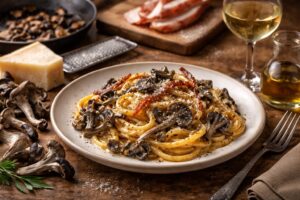
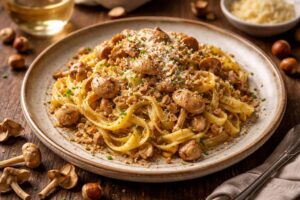
Description: Master this wild-harvested gourmet recipe. A Cantharellus cibarius culinary masterpiece with a silken texture and umami-rich herbal aromatics.
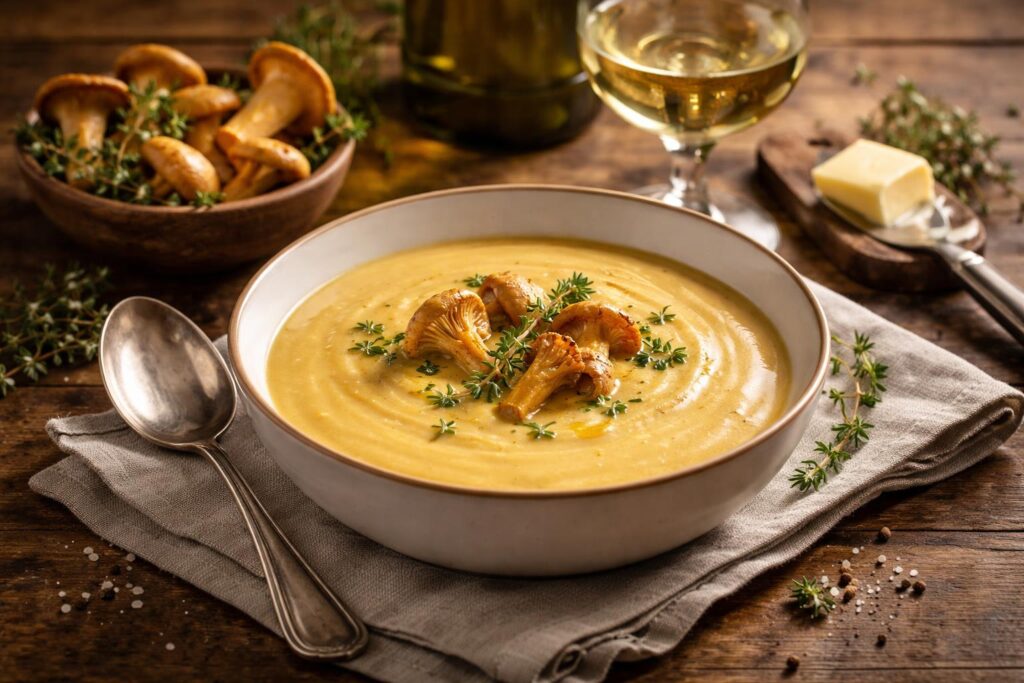
Creamy Chanterelle and Thyme Velouté
A Liquid Embodiment of the Sun-Drenched Forest Floor
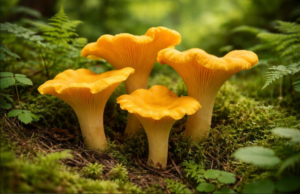
In the grand tradition of haute cuisine, the "Velouté" represents a pinnacle of technical refinement. Unlike a rustic soup, the Creamy Chanterelle and Thyme Velouté seeks to extract the very essence of the Cantharellus cibarius and suspend it in a silken, aerodynamic matrix. Historically, this dish was a staple of the French court, where the vibrant golden hue of the Chanterelle was prized for its visual resemblance to the royal coffers.
This wild-harvested gourmet recipe utilizes the gentle heat of a slow simmer to unlock the mushroom's complex cell structure. The addition of fresh thyme acts as a terrestrial anchor, bridging the mushroom's fruity top notes with the deep, damp earthiness of the European wilderness. It is a culinary masterpiece that transforms the rugged, fibrous forest find into a sophisticated, umami-rich liquid gold that coats the palate in pure luxury.
🌲 EXCLUSIVE FOREST HARVEST OFFER 🌲
Elevate your kitchen with the rarest Chanterelles, Porcini, and Morels.
Sensory & Foraging Profiles: Linalool and Forest Resins
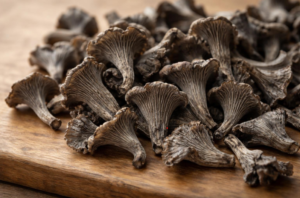
The Cantharellus cibarius is a sensory marvel, defined by its Mycorrhizal symbiosis with hardwoods and conifers. This relationship produces high concentrations of linalool and geraniol, terpenes typically found in flowers and herbs. When blended into a velouté, these volatile compounds are emulsified into the fats, creating an aromatic cloud of apricot and pine.
Microbiology & Chemistry: The microbiology of the Chanterelle involves a high concentration of soluble fiber and chitin. During the blending process, these fibers act as natural thickeners. Chemically, the glutamic acid in the mushroom is amplified by the addition of cream, which contains casein—a protein that acts as a molecular carrier for savory flavors.
Texture Analysis: A perfect velouté must be completely homogenous. The goal is to reach a state of "liquid silk," where the wild-harvested mushroom's density provides body without a single grain or fiber remaining. The finish should be velvety on the tongue, followed by the sharp, resinous "snap" of the fresh thyme.
The Base: Melt the butter in a heavy pot over medium heat. Sauté the shallots and garlic until softened but not browned.
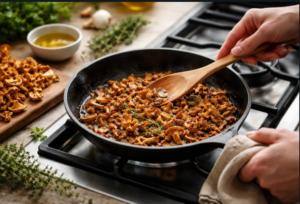
The Sauté: Add the Cantharellus cibarius and thyme. Cook for 8-10 minutes until the mushrooms have released their liquid and it has mostly evaporated.
The Deglaze: Pour in the Sherry or Cognac, scraping the bottom of the pot to release the umami-rich fond.
The Simmer: Add the stock and simmer gently for 20 minutes. This allows the mushroom fibers to soften for the emulsion phase.
The Liaison: Stir in the cream and bring back to a bare simmer for 5 minutes.
The Blend: Use a high-speed immersion blender to process the soup until completely smooth. For a professional result, pass the velouté through a fine-mesh chinois.
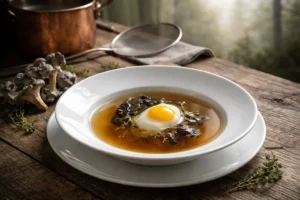
The Seasoning: Adjust with salt and white pepper. Serve with a few reserved sautéed Chanterelles on top.
Pro Technique: The “Fat-Pulse” Emulsion
To achieve that world-class glossy finish, add a single cold knob of butter right before the final blend. This is known in professional kitchens as "monter au beurre." The cold butter creates a microscopic fat-pulse that coats every particle of the wild-harvested mushroom, resulting in a luminous sheen and a significantly richer mouthfeel that standard stirring cannot achieve.
The Umami Secret: Chitin and Casein Binding
The chitin found in the cell walls of Cantharellus cibarius is a natural source of nitrogen, which contributes to its savory profile. When blended with the casein and lipids of the cream, these compounds form a stable emulsion that traps the natural glutamates against the taste buds. This prolongs the flavor perception, making each spoonful feel more substantial and "meaty" than a broth-based soup.
The Art of the Pairing
A rich, creamy velouté needs a wine with high acidity and a touch of "oak" to match the earthy thyme. A California Chardonnay or a Meursault is the perfect sommelier's selection. For a non-alcoholic pairing, a warm sage and honey infusion provides a herbal complexity that cuts through the creaminess while complementing the Chanterelle's fruity notes.
Ancestral Nutrition
This velouté is an exceptional source of Selenium, Vitamin D2, and Copper. The Cantharellus cibarius is particularly noted for its beta-glucans, which support cardiovascular health. Historically, cream-based wild mushroom soups were served as restorative tonics in Alpine regions, providing a high-density source of essential minerals and healthy fats to protect the body against cold mountain climates.
To provide the best experiences, we use technologies like cookies to store and/or access device information. Consenting to these technologies will allow us to process data such as browsing behavior or unique IDs on this site. Not consenting or withdrawing consent, may adversely affect certain features and functions.
Functional
Always active
The technical storage or access is strictly necessary for the legitimate purpose of enabling the use of a specific service explicitly requested by the subscriber or user, or for the sole purpose of carrying out the transmission of a communication over an electronic communications network.
Preferences
The technical storage or access is necessary for the legitimate purpose of storing preferences that are not requested by the subscriber or user.
Statistics
The technical storage or access that is used exclusively for statistical purposes.The technical storage or access that is used exclusively for anonymous statistical purposes. Without a subpoena, voluntary compliance on the part of your Internet Service Provider, or additional records from a third party, information stored or retrieved for this purpose alone cannot usually be used to identify you.
Marketing
The technical storage or access is required to create user profiles to send advertising, or to track the user on a website or across several websites for similar marketing purposes.