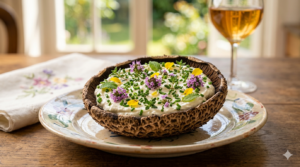
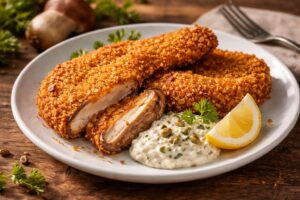
Description: Master this wild-harvested gourmet recipe. A Macrolepiota procera culinary masterpiece featuring a golden crumb and umami-rich forest texture.
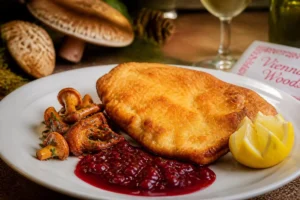
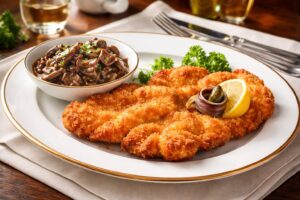
Across the sun-dappled clearings of the European wilderness, the Macrolepiota procera is revered as a gift to the meat-free table. Known colloquially as the "Parasol," its flat, broad caps are structurally reminiscent of a cutlet, inviting the same culinary treatment as a traditional Viennese schnitzel. Historically, in the mountain villages of the Balkan Massif, these mushrooms were the celebratory centerpiece of the late summer harvest, providing a wild-harvested alternative to livestock during fasting periods or times of scarcity.
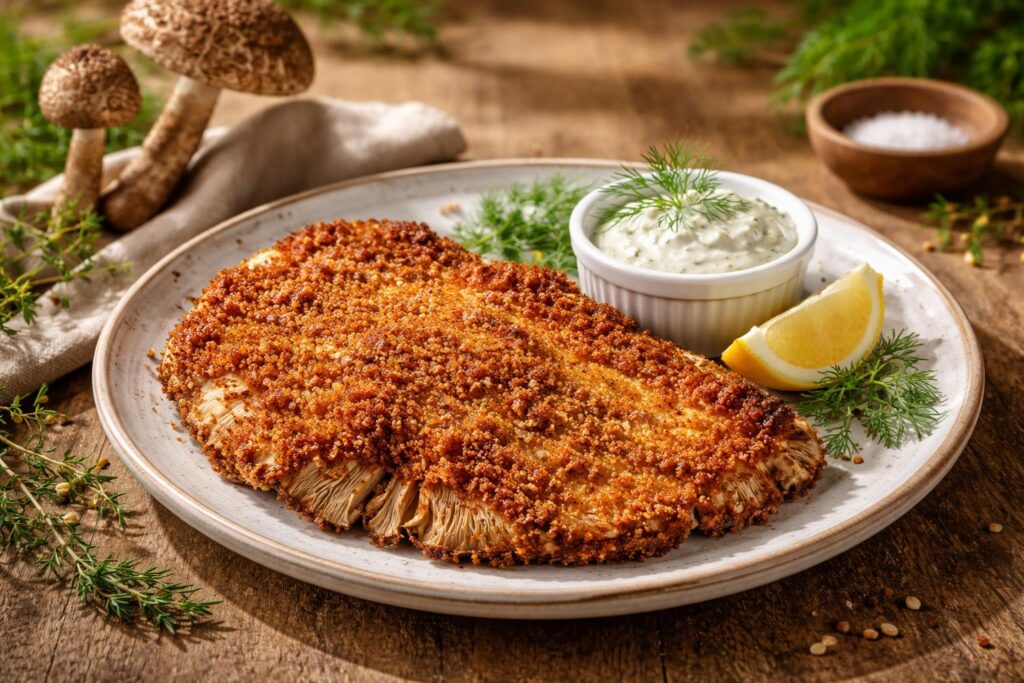
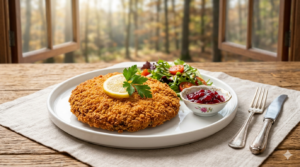
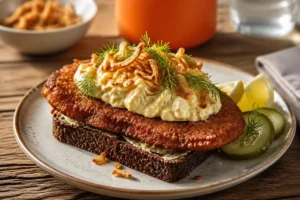
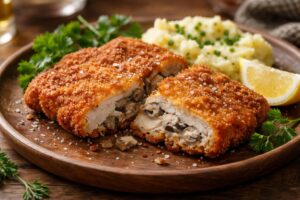
This wild-harvested gourmet recipe is a culinary masterpiece of textural engineering. By encasing the Macrolepiota procera in a seasoned, golden breadcrumb crust, we protect its delicate, nut-flavored flesh from direct heat, allowing it to steam in its own umami-rich juices. The result is a crunch that rivals any traditional schnitzel, giving way to a heart that tastes of wild hazelnut and toasted earth. It is a regional spirit served on a plate—sophisticated, rustic, and profoundly satisfying.
🌲 EXCLUSIVE FOREST HARVEST OFFER 🌲
Bring the European Wilderness to your kitchen with our premium dried Parasols and Porcini.
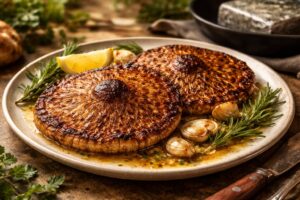
The Macrolepiota procera is a saprobic marvel. Its gills are exceptionally deep and "free," meaning they do not attach to the stem. This unique morphology creates a pocketed surface that is perfect for capturing flavor. Unlike the dense Boletus edulis, the Parasol is aerated and light, characterized by benzaldehyde notes that offer a subtle, sweet nuttiness.
Microbiology & Chemistry: The mushroom's cell walls are composed of chitin and beta-glucans. When fried in a breadcrumb coating, these structural carbohydrates soften but retain a distinct "bite." Chemically, the natural glutamates within the wild-harvested tissue are concentrated by the rapid evaporation of internal water during frying, resulting in an umami-rich profile that is perceived as intensely savory.
Texture Analysis: A perfect Parasol schnitzel is a study in "The Snap." The initial resistance of the golden crust is followed by the velvet-like glide of the gills. Because the Macrolepiota procera is naturally lean, the addition of artisanal frying fats provides the necessary "mouth-coating" richness that completes the sensory experience.
The Master Recipe: Golden Parasol Schnitzel
Ingredients
4 Large Fresh Wild-Harvested Macrolepiota procera Caps (stems removed)
100g Panko or Sourdough Breadcrumbs
2 Large Eggs (beaten with a splash of milk)
50g All-purpose Flour (seasoned with salt and pepper)
1 tsp Dried Thyme and 1 tsp Garlic Powder
100ml Neutral oil (Grape-seed or high-quality Sunflower)
For the Remoulade: 4 tbsp Mayonnaise, 1 tsp Capers, 1 chopped Gherkin, Fresh Dill, Lemon Juice.
Culinary Steps
The Prep: Clean the Macrolepiota procera caps with a dry brush. If they are very large, cut them into halves or quarters.
The Standard Breading: Set up three bowls. Dredge the cap in flour, dip into the egg wash, and then press firmly into the breadcrumbs mixed with thyme and garlic powder.
The Chill: Let the breaded mushrooms rest in the fridge for 10 minutes. This helps the crumb adhere during frying.
The Fry: Heat the oil in a wide pan until shimmering (180°C). Fry the caps for 3-4 minutes per side until deep golden brown.
The Drain: Transfer to a wire rack (not paper towels) to maintain maximum wild-harvested crunch.
The Sauce: Mix the remoulade ingredients and serve on the side with a wedge of lemon.
Pro Technique: The “Double-Drip” Seal
To ensure your wild-harvested mushroom doesn't absorb too much oil, use the Double-Drip seal. Ensure the flour coating is completely even and that no gill is exposed before hitting the egg wash. This creates a protein-starch barrier that flash-sets in the hot oil, creating a pressurized chamber where the Macrolepiota procera steams perfectly without becoming greasy.
The Umami Secret: Cereal-Fungal Synergy
When the nucleotides in the Macrolepiota procera interact with the toasted carbohydrates of the breadcrumbs, a flavor synergy occurs. The natural glutamates are amplified by the salt in the crust, while the Maillard reaction from the frying process adds a "roasted" dimension. This cereal-fungal synergy is what makes the mushroom taste remarkably like a breaded veal cutlet, providing an umami-rich experience that satisfies the palate's demand for density.
The Art of the Pairing
A classic Austrian Grüner Veltliner or a Cold Pilsner provides the crisp carbonation and acidity needed to refresh the palate between crunchy bites. For a non-alcoholic pairing, a sparkling water with a heavy dash of aromatic bitters and lemon mirrors the herbal notes of the remoulade.
Ancestral Nutrition
Parasol mushrooms are a significant source of Vitamin B2 (Riboflavin) and Selenium. They are also rich in Dietary Fiber, which aids in digestion. Historically, in the European wilderness, these wild-harvested "schnitzels" were valued for their ability to provide bioavailable minerals in a highly palatable form, offering a mineral-dense meal for foraging families during the summer-to-autumn transition.
The Parasol Lexicon: Global Names for Macrolepiota procera
The Parasol Mushroom is one of the most elegant and easily recognized wild fungi. Its names across various cultures often refer to its majestic height and umbrella-like cap:
Language
Regional & Folk Names
Expert Notes
Bulgarian
Сърнела, Чадъреста гъба, Конска гъба, Кукувиче
"Sarnela" comes from "Sarna" (Roe Deer), due to the spotted cap.
English
Parasol Mushroom, Drumstick (young stage)
Named for its resemblance to a lady's parasol.
Italian
Mazza di tamburo, Ombrellone, Bubbola maggiore
"Mazza di tamburo" means "Drumstick".
French
Coulemelle, Lépiote élevée, Nez de chat
"Coulemelle" is the traditional culinary name in France.
Spanish / Catalan
Galamperna, Macrolepiota, Paloma, Apagallums
"Apagallums" (Catalan) means "Light extinguisher".
German
Parasol, Riesenschirmling, Paukenschläger
"Riesenschirmling" means "Giant Umbrella".
Russian / Polish
Гриб-зонтик / Kania, Sowa
"Kania" is one of the most beloved wild mushrooms in Poland.
Romanian / Greek
Burete șerpesc / Ζαρκάδι (Zarkadi)
"Zarkadi" also refers to a deer, similar to the Bulgarian name.
Portuguese / Turkish
Frade, Cogumelo guarda-sol / Turna Bacağı
"Turna Bacağı" (Turkish) means "Crane's Leg".
Hungarian / Czech
Nagy őzlábgomba / Bedla vysoká
Common and highly appreciated in Central European cuisine.
Scientific identification: Macrolepiota procera | Pure Umami Research 2026
To provide the best experiences, we use technologies like cookies to store and/or access device information. Consenting to these technologies will allow us to process data such as browsing behavior or unique IDs on this site. Not consenting or withdrawing consent, may adversely affect certain features and functions.
Functional
Always active
The technical storage or access is strictly necessary for the legitimate purpose of enabling the use of a specific service explicitly requested by the subscriber or user, or for the sole purpose of carrying out the transmission of a communication over an electronic communications network.
Preferences
The technical storage or access is necessary for the legitimate purpose of storing preferences that are not requested by the subscriber or user.
Statistics
The technical storage or access that is used exclusively for statistical purposes.The technical storage or access that is used exclusively for anonymous statistical purposes. Without a subpoena, voluntary compliance on the part of your Internet Service Provider, or additional records from a third party, information stored or retrieved for this purpose alone cannot usually be used to identify you.
Marketing
The technical storage or access is required to create user profiles to send advertising, or to track the user on a website or across several websites for similar marketing purposes.