The Marriage of Saline Sweetness and Deep-Earth Musk
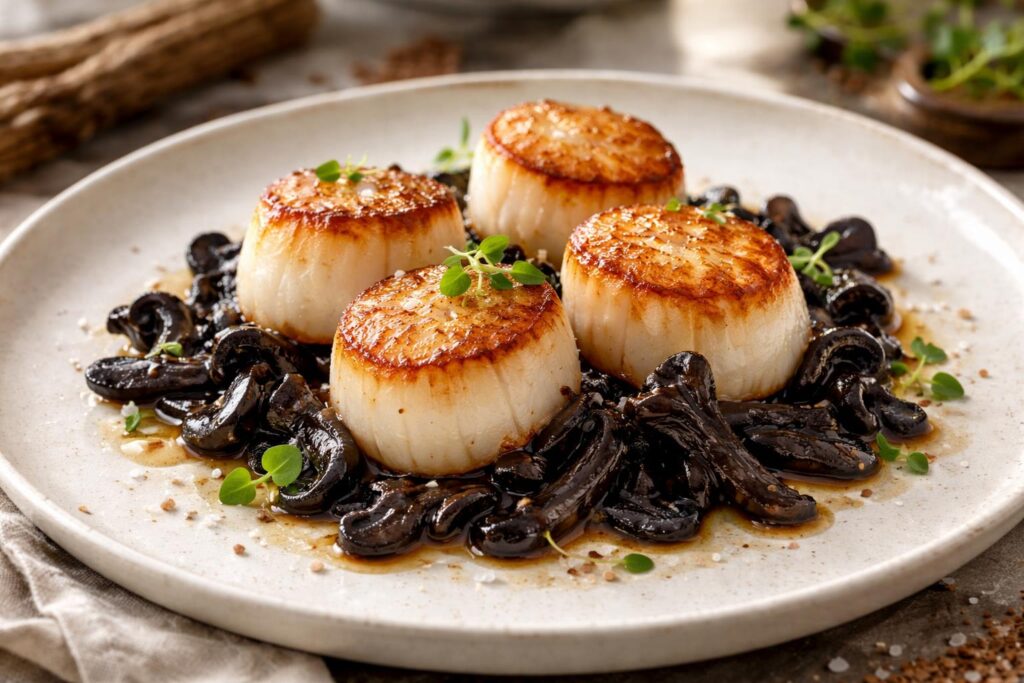
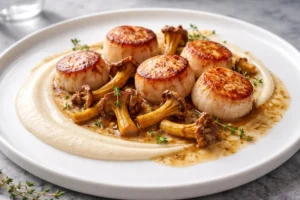
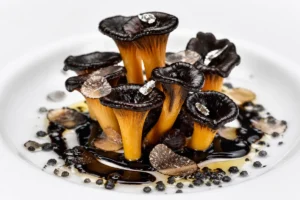
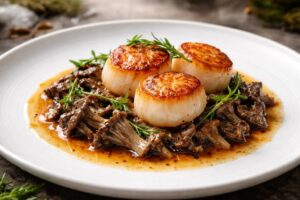
In the avant-garde kitchens of the European wilderness, the pairing of Craterellus cornucopioides and King Scallops is regarded as a masterstroke of sensory engineering. Visually, the stark white of the mollusk against the soot-black of the trumpet evokes the misty coastline where the forest meets the sea. Historically, coastal foraging communities in the Balkan Massif and the Atlantic fringes utilized the Black Trumpet as a "terrestrial seasoning" to amplify the delicate sweetness of the ocean's bounty.
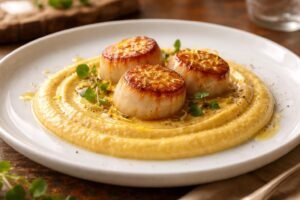
This wild-harvested gourmet recipe is a culinary masterpiece that relies on high-velocity thermal reactions. The scallop's natural sugars caramelize to form a golden crust that acts as a pedestal for the umami-rich, smoky intensity of the Black Trumpet. It is a dish of high regional spirit—capturing the essence of two different worlds in a single, perfectly balanced bite. Here, the "Black Gold" of the forest floor provides the grounding earthiness needed to elevate the brine of the scallop to a level of unparalleled luxury.
🌲 EXCLUSIVE FOREST HARVEST OFFER 🌲
Elevate your kitchen with the rarest Black Trumpets, Porcini, and Chanterelles.
Sensory & Foraging Profiles: The Terroir of the Shoreline
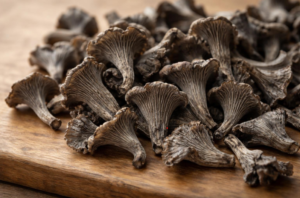
The Craterellus cornucopioides is a mycological anomaly, prized for its Mycorrhizal symbiosis with hardwoods. This relationship produces a dense concentration of phenols that mirror the aroma of leather and woodsmoke. When these "terrestrial" notes meet the iodine and salinity of a fresh scallop, they create a chemical harmony that mimics the smell of a forest after a coastal storm.
Microbiology & Chemistry: Scallops are unique in their microbiology, containing high levels of taurine and adenosine triphosphate (ATP). Chemically, when seared, these convert into savory nucleotides. The wild-harvested trumpets contribute guanylate, which is the chemical twin to the scallop's savoriness. This 1+1=3 effect is the foundation of high-end umami-rich gastronomy.
Texture Analysis: This dish is a study in "resilience versus silk." The scallop must be buttery and tender enough to cut with a fork, while the wild-harvested trumpet offers a thin, almost parchment-like texture that provides a subtle, sophisticated "snap" to the mouthfeel.
The Master Recipe: Gilded Scallops & Black Trumpets
The Scallop Prep: Ensure scallops are bone-dry. Season only with salt immediately before searing to prevent moisture from leaching out.
The Sear: Heat oil in a heavy stainless steel pan until it begins to smoke. Sear scallops for 90 seconds without moving them to develop a deep crust. Flip and cook for 60 seconds more. Remove.
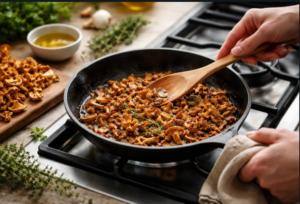
The Trumpet Bloom: Wipe the pan, add butter. Once foaming, toss in the Craterellus cornucopioides. Sauté for 3-4 minutes until they take on a glossy, velvet appearance.
The Deglaze: Add lemon juice and a splash of water (or white wine) to the mushrooms to create a light emulsion with the mushroom-butter.
The Marriage: Return scallops to the pan for 20 seconds just to coat them in the dark, umami-rich sauce.
The Plating: Arrange the black trumpets as a "nest" and place the white scallops on top.
Pro Technique: The “Black Oil” Baste
To achieve a restaurant-grade visual, use the Black Oil Baste. Before cooking the scallops, sauté a handful of dried, pulverized wild-harvested trumpets in the oil. Strain the oil through a fine cloth. Use this "Black Oil" to sear your scallops. This infuses the crust of the scallop with the Craterellus cornucopioides essence before the mushroom itself even touches the plate, creating a deeper integration of forest and ocean.
The Umami Secret: Marine Nucleotide Amplification
Scallops are essentially blocks of natural glutamates and inosinates. When these marine-based savory compounds meet the natural glutamic acid found in Craterellus cornucopioides, they trigger a "super-synergy" on the tongue. This specific combination is often perceived as a "third flavor" that is neither sea nor forest, but a concentrated umami-rich state that lingers exceptionally long on the palate.
The Art of the Pairing
This delicate yet intense dish requires a wine with mineral tension and high acidity. A Grand Cru Chablis or a Sancerre is the sommelier's selection. The "flinty" notes of the wine mirror the earthy minerals of the trumpet. For a non-alcoholic pairing, a chilled mineral water with a squeeze of charred lime provides a sharp, smoky counterpoint to the butter.
Ancestral Nutrition
This pairing is a powerhouse of Vitamin B12, Selenium, and Vitamin D. The Craterellus cornucopioides provides essential Polysaccharides, while the scallops offer high-quality, lean protein and Omega-3 fatty acids. Historically, such "Earth and Ocean" meals were the primary source of bioavailable minerals for maritime foragers in the European wilderness, supporting metabolic efficiency and thyroid health.
To provide the best experiences, we use technologies like cookies to store and/or access device information. Consenting to these technologies will allow us to process data such as browsing behavior or unique IDs on this site. Not consenting or withdrawing consent, may adversely affect certain features and functions.
Functional
Always active
The technical storage or access is strictly necessary for the legitimate purpose of enabling the use of a specific service explicitly requested by the subscriber or user, or for the sole purpose of carrying out the transmission of a communication over an electronic communications network.
Preferences
The technical storage or access is necessary for the legitimate purpose of storing preferences that are not requested by the subscriber or user.
Statistics
The technical storage or access that is used exclusively for statistical purposes.The technical storage or access that is used exclusively for anonymous statistical purposes. Without a subpoena, voluntary compliance on the part of your Internet Service Provider, or additional records from a third party, information stored or retrieved for this purpose alone cannot usually be used to identify you.
Marketing
The technical storage or access is required to create user profiles to send advertising, or to track the user on a website or across several websites for similar marketing purposes.