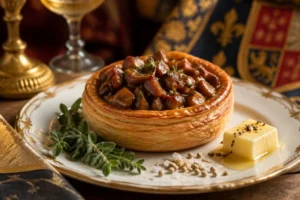
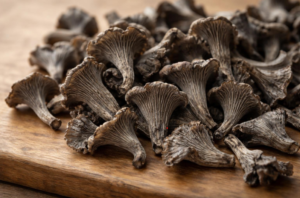
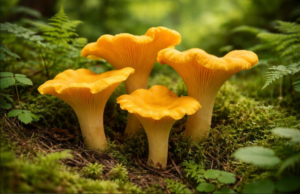
A definitive guide to selecting, cleaning, and incorporating fresh Tuber melanosporum and Tuber magnatum into haute cuisine.
The Black Diamond & The White Gold
A Comprehensive Masterclass in Mycological Gastronomy
The Historical Prelude
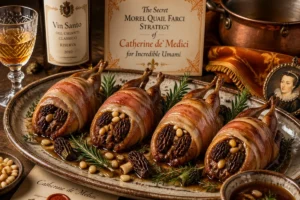
The fascination with truffles is a narrative of mysticism that stretches from the thunderbolts of Jupiter to the gilded halls of Versailles. In the 14th century, truffles were revived in the papal courts of Avignon, but it was Catherine de' Medici who truly introduced the "Tuber" to the French royal court upon her marriage to Henry II. By the 18th century, truffles became the centerpiece of the legendary "Dîners de cour".
The great Jean Anthelme Brillat-Savarin, in his 1825 masterpiece The Physiology of Taste, famously crowned the truffle as "the diamond of the kitchen." He believed they possessed aphrodisiac qualities that "make women more amiable and men more tender." Throughout the Belle Époque, chefs like Georges Auguste Escoffier codified the use of fresh truffles in mother sauces, ensuring their status as the ultimate symbol of Western European culinary prestige.
Working with fresh truffles is a race against time. From the moment a truffle is unearthed in the damp soils of the Dolomites or the Périgord, it begins to lose its aromatic potency. Our philosophy treats the truffle not as a vegetable, but as a "gas"—a carrier of volatile organic compounds that must be captured in fats (lipids) to be truly appreciated.
Sensory & Foraging Profile
Nomenclature:Tuber melanosporum (Winter Black) and Tuber magnatum pico (Alba White).
Terroir & Soil: The most prized specimens emerge from the Atlantic Fringes of France and the limestone-rich hills of Northern Italy. The soil composition is vital; high calcium carbonate levels contribute to the density of the gleba (the inner flesh), resulting in a more concentrated flavor profile.
Professional Protocol: True mycological ethics require "selective extraction." Professional foragers (Trifolau) use specialized tools to minimize soil compaction, preserving the delicate symbiotic relationship between the fungi and the host tree's roots (Mycorrhizae).
Essential Equipment
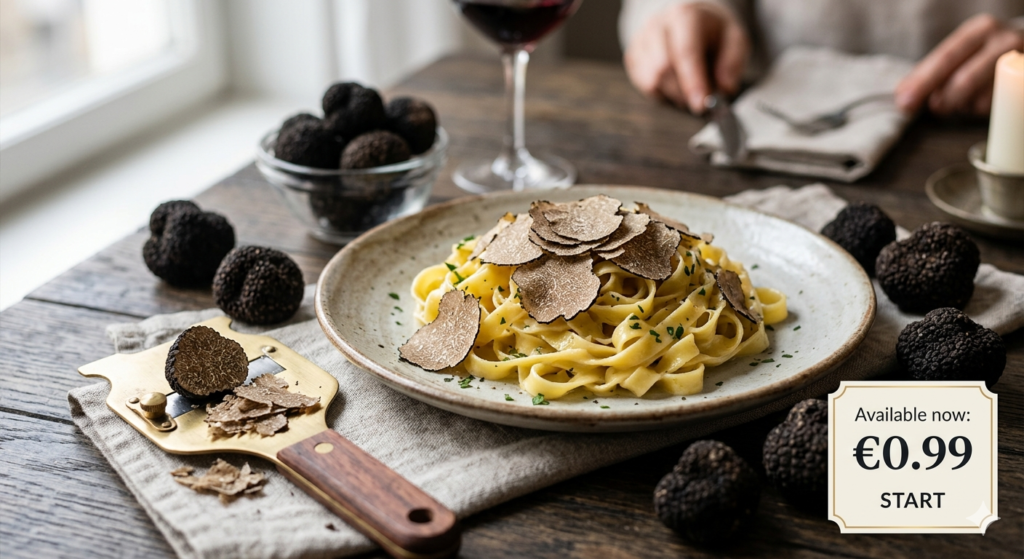
Natural Boar Bristle Brush: For removing microscopic soil particles without bruising the peridium (outer skin).
Adjustable Steel Slicer: To achieve consistent shavings between 0.2mm and 0.5mm.
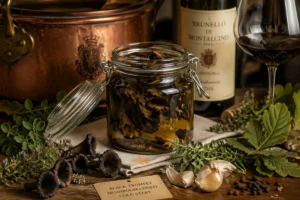
Airtight Glass Bell Jar: Essential for the "aromatic infusion" phase of storage.
Mastering the Application
Stage 1: The Cleaning Ritual
Never soak a truffle. Use a damp brush to gently clean the crevices. If working with 100g of Fresh Truffle (or 10g of Dried Truffle pieces), ensure they are bone-dry before slicing, as moisture is the enemy of the truffle's aromatic longevity.
Stage 2: The Lipid Capture
Truffle aromas are fat-soluble. To maximize a 50g Fresh Black Truffle (or 5g Dried equivalent), store it in a sealed container with high-fat ingredients like butter, eggs, or heavy cream for 24 hours. The fats will "inhale" the truffle gas, flavoring the entire dish from within.
Stage 3: Thermal Respect
Black Truffles: Can withstand gentle heat. Best added to a warm emulsion or sauce at the final stage.
White Truffles: Should never be cooked. They are strictly a finishing element, shaved raw over a dish at the moment of service.
The Umami Secret: The Maillard Catalyst
Truffles contain high concentrations of 5′-ribonucleotides. When paired with ingredients that have undergone the Maillard reaction (like a seared scallop or a slow-roasted veal), the umami compounds bond to the savory crust, creating a "flavor explosion" that lingers on the posterior part of the tongue for up to 20 minutes.
Pro Technique: The “Ghost Infusion”
For a subtle "Pure Umami" background, place a 20g Fresh Truffle (or 2g Dried) in an airtight jar with arborio rice. The rice will absorb the moisture and aroma. Use the rice for a risotto, and then shave the same truffle over the finished dish. This "double-layering" is the secret of 3-star Michelin kitchens.
The Art of Pairing
Sommelier's Choice: For Black Truffles, a Vintage Champagne (e.g., Krug or Bollinger) provides the acidity to cut through the richness. For White Truffles, a Barbaresco with its earthy "forest floor" notes is unrivaled.
Ancestral Pairings: Simple lipids like duck fat or grass-fed butter act as the perfect canvas for the truffle's complexity.
Storage & Preservation
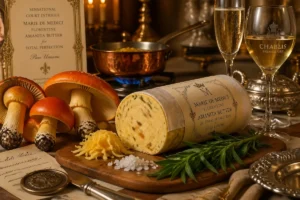
To maintain cellular structure, wrap truffles in absorbent paper and store them at exactly 4°C. Change the paper daily. To preserve for longer periods, create a Truffle Butter using a 1:10 ratio of truffle to butter (e.g., 10g Fresh Truffle / 1g Dried per 100g of butter).
Micro-FAQ
Q: Why does my truffle smell like ammonia? A: This indicates over-ripeness and the beginning of decay. Fresh truffles should smell like damp earth, musk, and honey.
Q: Can I freeze fresh truffles? A: You can, but the texture will soften. It is better to grate them into butter and freeze the butter instead.
To provide the best experiences, we use technologies like cookies to store and/or access device information. Consenting to these technologies will allow us to process data such as browsing behavior or unique IDs on this site. Not consenting or withdrawing consent, may adversely affect certain features and functions.
Functional
Always active
The technical storage or access is strictly necessary for the legitimate purpose of enabling the use of a specific service explicitly requested by the subscriber or user, or for the sole purpose of carrying out the transmission of a communication over an electronic communications network.
Preferences
The technical storage or access is necessary for the legitimate purpose of storing preferences that are not requested by the subscriber or user.
Statistics
The technical storage or access that is used exclusively for statistical purposes.The technical storage or access that is used exclusively for anonymous statistical purposes. Without a subpoena, voluntary compliance on the part of your Internet Service Provider, or additional records from a third party, information stored or retrieved for this purpose alone cannot usually be used to identify you.
Marketing
The technical storage or access is required to create user profiles to send advertising, or to track the user on a website or across several websites for similar marketing purposes.