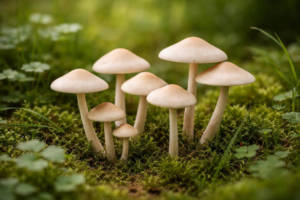
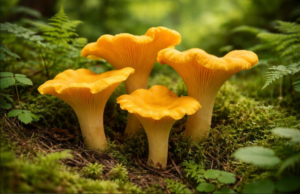
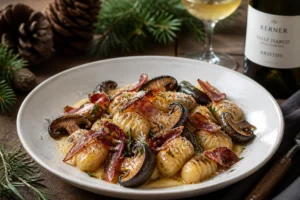
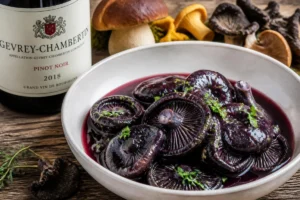
A masterclass in Maillard-driven complexity, this dish utilizes high-heat searing to transform the flexible tissues of Russula cyanoxantha into a caramelized delicacy. Finished with a classic French brown butter and sage emulsion, it highlights the mushroom's ability to retain moisture while developing a deeply savory, crust-like exterior.
Pan-Seared Charcoal Burner Beurre Noisette
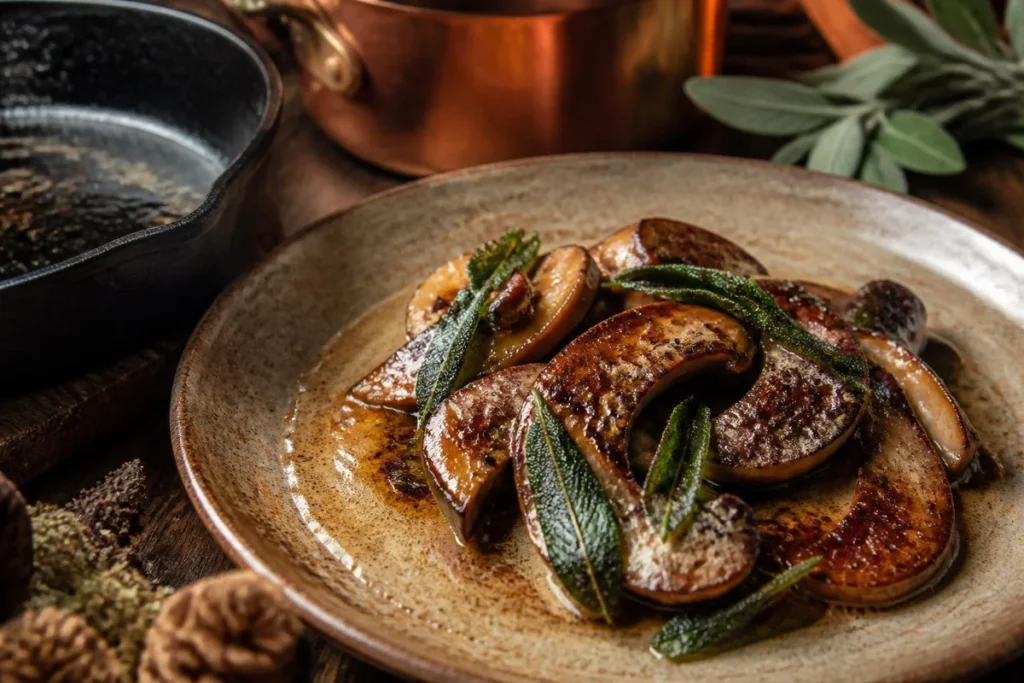
A masterclass in Maillard-driven complexity, this dish utilizes high-heat searing to transform the flexible tissues of Russula cyanoxantha into a caramelized delicacy. Finished with a classic French brown butter and sage emulsion, it highlights the mushroom's ability to retain moisture while developing a deeply savory, crust-like exterior.
The Culinary Physics of This Dish
The Russula cyanoxantha excels in high-heat environments due to its lack of typical "Russula brittleness." During the searing process, the surface sugars and amino acids undergo the Maillard reaction, creating a complex network of flavor molecules (furans and pyrazines). Unlike more delicate mushrooms that collapse into a sponge-like state, the Charcoal Burner maintains a dense, "meaty" internal structure. The addition of Beurre Noisette (brown butter) introduces toasted milk solids that act as a flavor bridge, aligning with the mushroom's natural nuttiness.
Terroir Narrative
This preparation is deeply rooted in the culinary traditions of the Auvergne-Rhône-Alpes region in France. The volcanic soils and dense deciduous forests of the Massif Central provide the ideal habitat for these mushrooms. Known locally as the "Charbonnier," it is traditionally tossed in heavy copper pans over open wood fires. The smoky, toasted notes of the brown butter mimic the traditional forest-side cooking methods used by generations of local foragers and Michelin-starred chefs alike.
Prep Time
Cook Time
Complexity
Calories
Region
15 Mins
10 Mins
Grand Officier
280 kcal
Auvergne, France
Master Recipe (1:10 Rule)
500 g Russula cyanoxantha (Cleaned, halved if large)
50 g High-fat European butter (unsalted)
10 g Fresh sage leaves
30 ml Neutral grapeseed oil (for high-smoke point)
5 g Sea salt (Flaky)
2 g Freshly cracked black pepper
1 Small shallot (finely minced)
The Technique
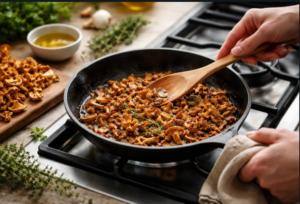
1. Pre-Heating: Heat a heavy-bottomed cast iron or stainless steel pan until the grapeseed oil begins to shimmer. High thermal mass is essential for an immediate sear.
2. The Sear: Place Russula cyanoxantha caps in the pan, gills down first. Do not overcrowd; work in batches to prevent steaming. Sear for 3-4 minutes without moving them to develop a deep golden crust.
3. The Flip: Turn the mushrooms over. Add the minced shallot and the sage leaves. The sage will become crispy and infuse the remaining oil.
4. Arrosé (The Basting): Add the cold butter. Once it melts and begins to foam, it will start to brown. Tilt the pan and spoon the foaming, nutty butter over the mushrooms repeatedly for 2 minutes.
5. Deglazing: As the butter solids turn amber, the aroma will shift to hazelnut. Remove from heat immediately to prevent burning.
6. Resting: Transfer to a warm plate and pour the remaining butter and crispy sage over the top. Season with flaky salt at the final second.
Shop Integration
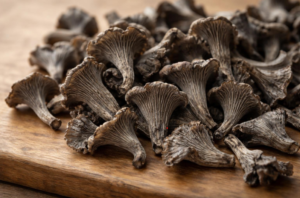
The robust nature of the Charcoal Burner makes it an ideal partner for other earthy delights. In our shop, you can find premium Boletus edulis (Boletus edulis) to add a velvety texture to this sauté, or the aromatic Marasmius oreades (Marasmius oreades) for a diverse forest-mix fricassee. For a royal presentation, pair with our Amanita caesarea (Amanita caesarea) or the vibrant Cantharellus cibarius (Cantharellus cibarius). For advanced molecular pairings, we recommend experimenting with the deep notes of Craterellus cornucopioides (Craterellus cinereus) or the honeycomb complexity of Morchella (Morchella conica).
The Umami Profile
Cooking Russula cyanoxantha breaks down the chitinous cell walls, releasing bound amino acids. The interaction between the guanosine monophosphate (GMP) in the mushroom and the sodium from the sea salt creates a synergistic umami effect. The heterocyclic compounds formed during the sear provide the "meaty" base that characterizes this high-protein mycological species.
Sommelier’s Choice
Meursault (Burgundy): A rich, buttery Chardonnay with subtle oak aging perfectly echoes the Beurre Noisette and the toasted flavors of the seared Charcoal Burner, creating a seamless flavor bridge between the glass and the plate.
THE ETYMOLOGICAL CHRONICLE
French:Russule charbonnière – Highlighting the cap's resemblance to the varied colors of smoldering embers.
Italian:Colombina maggiore – Acknowledging the "dove-like" grace and culinary superiority of the species.
German:Frauentäubling – A traditional name reflecting the flexible, mild nature of the "Lady Dove" mushroom.
Spanish:Carbonera – Referencing the dark, charcoal-hued pigments of the cap's skin.
To provide the best experiences, we use technologies like cookies to store and/or access device information. Consenting to these technologies will allow us to process data such as browsing behavior or unique IDs on this site. Not consenting or withdrawing consent, may adversely affect certain features and functions.
Functional
Always active
The technical storage or access is strictly necessary for the legitimate purpose of enabling the use of a specific service explicitly requested by the subscriber or user, or for the sole purpose of carrying out the transmission of a communication over an electronic communications network.
Preferences
The technical storage or access is necessary for the legitimate purpose of storing preferences that are not requested by the subscriber or user.
Statistics
The technical storage or access that is used exclusively for statistical purposes.The technical storage or access that is used exclusively for anonymous statistical purposes. Without a subpoena, voluntary compliance on the part of your Internet Service Provider, or additional records from a third party, information stored or retrieved for this purpose alone cannot usually be used to identify you.
Marketing
The technical storage or access is required to create user profiles to send advertising, or to track the user on a website or across several websites for similar marketing purposes.