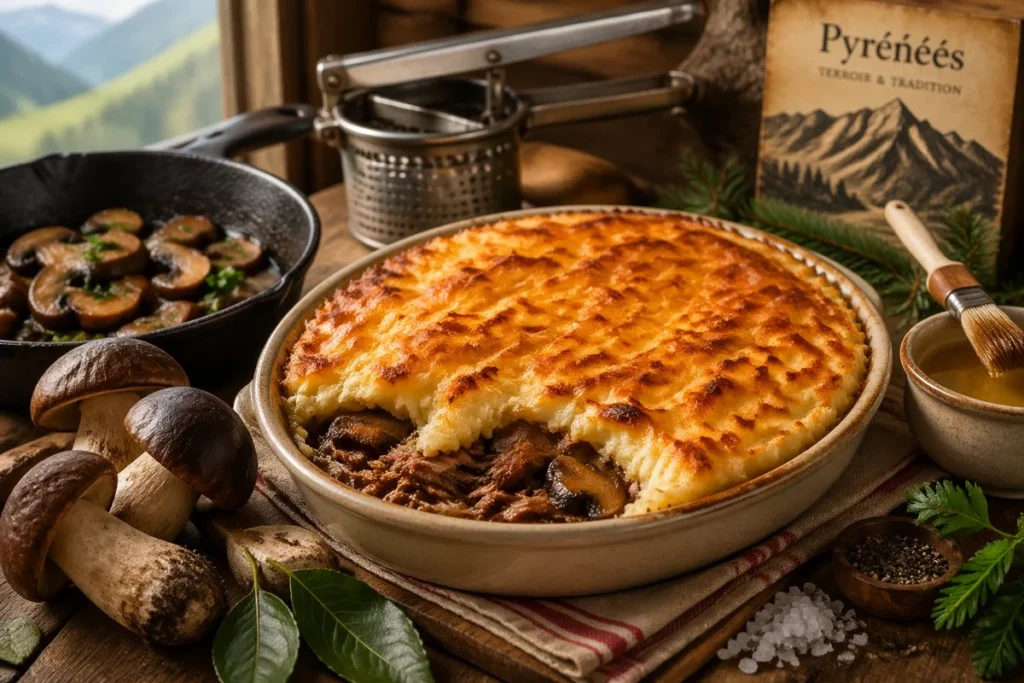
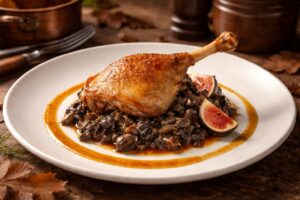
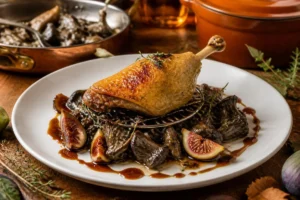
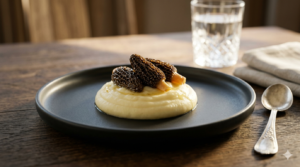
A sophisticated high-altitude evolution of the classic Hachis Parmentier, featuring slow-cooked duck leg confit and sautéed wild Boletus edulis under a crust of mountain-butter potato purée.
Pyrenean Porcini & Duck Confit Parmentier
The Gascon Union of Forest Gold and Ancestral Preserves
The Historical Prelude: Parmentier’s Revolution in the High Pass
The Hachis Parmentier is named after Antoine-Augustin Parmentier, the 18th-century pharmacist who convinced the French nation that potatoes were not "pig feed" but a culinary treasure. While the Parisian version often utilized boiled beef, the variation found in the Pyrenees—the mountainous border between France and Spain—took a far more decadent turn. In the high passes of the Ariège and Béarn, shepherds and foresters lived in a landscape dominated by the Confit de Canard (duck preserved in its own fat) and the seasonal explosion of Boletus edulis.
Historically, this dish was a "Sunday Feast" for the mountain communities. The duck provided the necessary calories for the brutal winters, while the Porcini added a layer of "Forest Perfume" that elevated the dish from survival food to a regional delicacy. By the time 19th-century travelers began exploring the Pyrenees, the local inns had refined the recipe, incorporating the rich, yellow butter of the mountain pastures and the sharp, mineral-driven Porcini from the beech forests. This is the "Luxury of the Mountains"—a dish that relies on the patient preservation of fat and the wild, fleeting gift of the mushroom.
⏱ Time: 2 Hours
📊 Difficulty: Intermediate / Heritage
🔥 Calories: 620 kcal / Serving
🍄 Type: Pyrenean Wild Porcini
Culinary Philosophy: The Architecture of the Gratin
The Parmentier is a study in thermal layering. In Pyrenean school, the goal is to create three distinct textural zones: the soft, unctuous base of shredded duck, the meaty, aromatic middle layer of sautéed Porcini, and the crisp, golden "maillard" crust of the potato purée. We do not mix the ingredients; we stack them, allowing the duck fat to slowly migrate upward through the mushrooms during the final bake, acting as a natural flavor conduit.
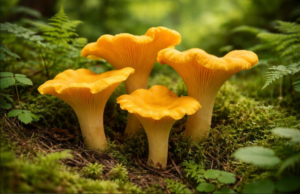
Sensory & Foraging Profile: The Beech & Fir Terroir
Latin Nomenclature:Boletus edulis (The Cèpe des Pyrénées). Terroir Analysis: The Pyrenees feature a unique climatic intersection between Atlantic moisture and Mediterranean heat. Porcini found here, especially under ancient beech (Fagus sylvatica) trees, develop a darker cap and a significantly more "musky" aroma than those in the northern plains. The soil is rich in granite and slate, which imparts a subtle metallic finish to the mushroom.
Professional Protocols: For a Parmentier, we prefer "Maturing Specimens"—mushrooms where the pores have turned a light olive-green. While less ideal for a carpaccio, these older Porcini contain a higher concentration of guanylic acid, providing the intense "Umami Backbone" needed to stand up to the richness of the duck confit.
Essential Equipment
🔸 Ceramic Gratin Dish: For slow, even heat radiation that doesn't scorch the base.
🔸 Potato Ricer (Presse-Purée): Crucial for achieving a silken texture without overworking the starch.
🔸 Cast-Iron Skillet: For "hard-searing" the mushrooms to ensure maximum flavor concentration.
The Master Recipe: Multi-Stage Execution
Stage 1: The Duck Restoration
Warm 4 duck confit legs in their fat until the meat pulls easily from the bone. Shred the meat into large flakes (do not mash). Finely dice 2 shallots and sauté them in 2 tablespoons of the duck fat until golden, then mix with the shredded meat and a splash of Armagnac.
Stage 2: The Mushroom Layer (The Extraction)
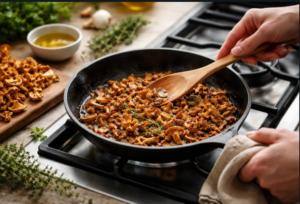
Clean 500g of fresh Pyrenean Porcini. Slice into thick 5mm pieces. Sauté in a very hot skillet with duck fat (not butter) until deep brown. Season with sea salt and cracked black pepper. Add a handful of chopped flat-leaf parsley at the very end.
Stage 3: The Alpine Purée
Boil 1kg of Bintje potatoes. Pass through the ricer while hot. Incorporate 150g of cold mountain butter and 100ml of hot milk. The consistency should be thick and velvet-like, not liquid.
Stage 4: The Final Assembly
Layer the duck at the bottom of the gratin dish. Top with the Porcini layer. Spread the potato purée over the top and use a fork to create "ridges" (these will catch the heat and become crispy). Bake at 200°C for 25 minutes until the top is a deep sunset-orange.
Pro Technique: The “Duck-Fat Seal”
Before putting the Parmentier in the oven, take a pastry brush and lightly coat the surface of the potato purée with liquid duck fat instead of butter. This creates a much more resilient and flavorful crust that shatters like glass when the spoon breaks through, a hallmark of Pyrenean Haute-Auberge cooking.
The Umami Secret: Lipophilic Flavor Carriers
The Boletus edulis contains aromatic compounds that are lipophilic—meaning they dissolve and intensify in fat. Duck fat, which has a high percentage of monounsaturated fatty acids, acts as a more efficient carrier for mushroom volatiles than butter or olive oil. When the Porcini are sautéed in duck fat, the "Forest Earth" aroma is trapped within the fat molecules, which then coat the palate, extending the flavor duration by up to 40%.
The Art of Pairing
Sommelier's Selection: A robust red from **Madiran** (Tannat grape) or a **Cahors** (Malbec). The heavy tannins in these "Black Wines" are necessary to scrub the palate of the rich duck fat, while their plum and tobacco notes complement the Porcini.
Non-Alcoholic: A warm, unsweetened blackcurrant juice with a dash of balsamic vinegar.
Storage & Reheating
This dish is actually superior 24 hours later. To reheat, cover with foil and use a low oven (150°C) to prevent the duck from "frying" in the base. This allows the mushroom juices to further permeate the potato layer.
Micro-FAQ
Q: Can I use chicken instead of duck? A: It will lack the necessary fat profile and iron-depth. If you must use chicken, use only dark meat and add a tablespoon of porcini powder to the purée.
Q: Why is my Parmentier oily? A: This happens if the duck confit was not properly drained of excess fat before shredding. Ensure the meat is "moist" but not "swimming" in fat.
To provide the best experiences, we use technologies like cookies to store and/or access device information. Consenting to these technologies will allow us to process data such as browsing behavior or unique IDs on this site. Not consenting or withdrawing consent, may adversely affect certain features and functions.
Functional
Always active
The technical storage or access is strictly necessary for the legitimate purpose of enabling the use of a specific service explicitly requested by the subscriber or user, or for the sole purpose of carrying out the transmission of a communication over an electronic communications network.
Preferences
The technical storage or access is necessary for the legitimate purpose of storing preferences that are not requested by the subscriber or user.
Statistics
The technical storage or access that is used exclusively for statistical purposes.The technical storage or access that is used exclusively for anonymous statistical purposes. Without a subpoena, voluntary compliance on the part of your Internet Service Provider, or additional records from a third party, information stored or retrieved for this purpose alone cannot usually be used to identify you.
Marketing
The technical storage or access is required to create user profiles to send advertising, or to track the user on a website or across several websites for similar marketing purposes.