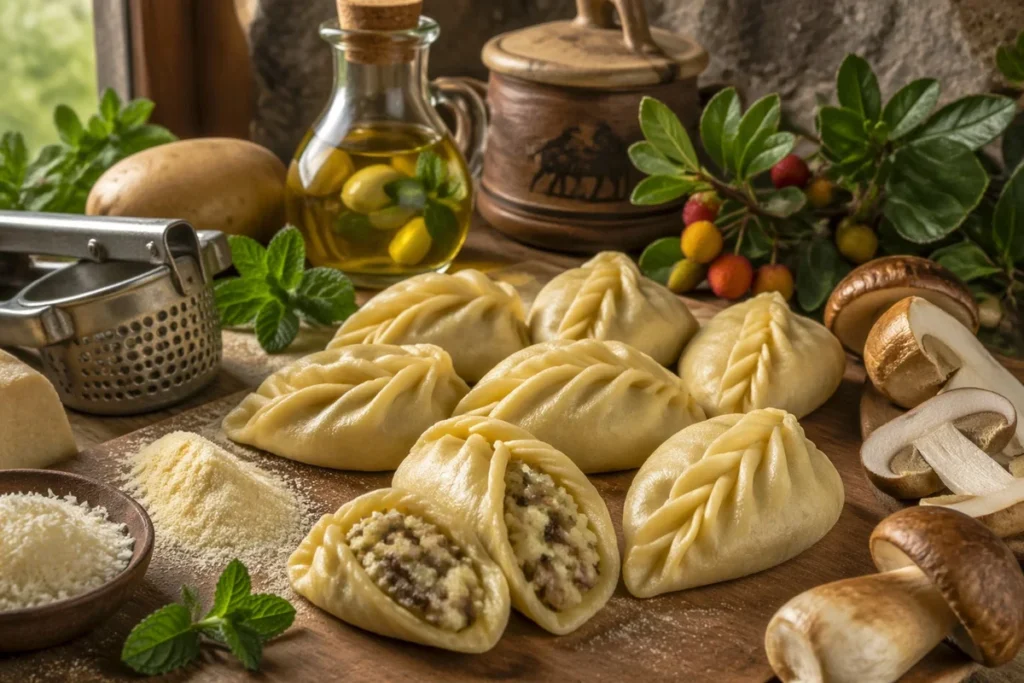
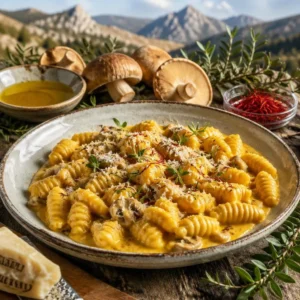
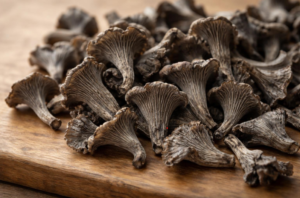
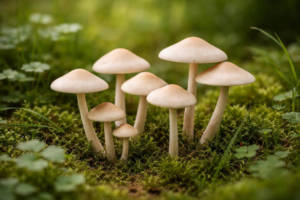
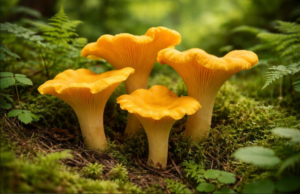
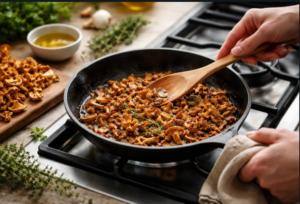
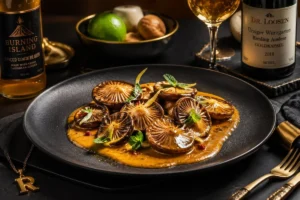
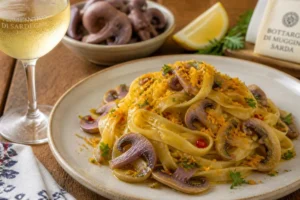
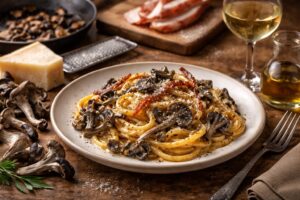
A stunning hand-folded Sardinian pasta, traditionally stuffed with a potato and mint base, here elevated with a concentrated wild Boletus edulis heart and sharp, aged Pecorino Sardo DOP.
Sardinian Porcini “Culurgiones”
The Spighitta Ritual: Ancient Grains, Wild Fungi, and the Scents of the Barbagia
The Historical Prelude: The Harvest Amulet of Ogliastra
On the island of **Sardinia**, specifically in the mountainous **Ogliastra** region, pasta is not just food—it is an amulet. Historically, **Culurgiones** were prepared to celebrate the end of the grain harvest or to ward off bad luck. Their unique "wheat-ear" closure (the sa spighitta) is a symbolic tribute to the fertility of the land.
While the classic version is stuffed with potatoes and mint, the version found in the **Barbagia** highlands during the autumn involves the Boletus edulis. In this rugged interior, the shepherds utilized the wild Porcini that grew under the ancient holm oaks to deepen the flavor of their festive dumplings. The inclusion of **Pecorino Sardo DOP**—a cheese with a much smokier, more herbal profile than its Roman cousin—creates a bridge to the wild scrubland (the macchia mediterranea). To craft a Culurgione is to engage in a meditative ritual of patience and precision that has remained unchanged for centuries.
⏱ Time: 2 Hours (Artisanal)
📊 Difficulty: Elite Technical (Folding)
🔥 Calories: 320 kcal / Serving
🍄 Type: Meaty Highland Porcini
Culinary Philosophy: The “Starch-Fungus” Emulsion
Sardinian philosophy for Culurgiones is centered on Density and Aroma. Unlike ravioli, which are airy, a Culurgione is dense and satisfying. The potato in the filling acts as a molecular "flavor-trap," capturing the volatile oils of the sautéed Porcini and the sharp fat of the Pecorino. The dough, made only of semolina and water, provides a robust, "al dente" shell that stands up to the rich, earthy interior.
Sensory & Foraging Profile: The Holm Oak & Granite Terroir
Latin Nomenclature:Boletus edulis (The Sardinian "Buretu"). Terroir Analysis: Porcini from the Gennargentu Mountains grow in ancient granitic soils. The mushrooms are often small, firm, and have a distinct mineral "crunch." The proximity to wild Myrtle and Arbutus shrubs infuses the forest floor with a unique balsamic scent, which the Porcini absorb, providing a top-note that is found nowhere else in Italy.
Preparation Protocols: For the filling, we use "Finely Minced" caps and stems. We sauté them until they reach a Duxelles-like consistency—dark, dry, and intensely concentrated. This prevents the filling from becoming watery, which would cause the delicate Spighitta fold to unravel during boiling.
Essential Equipment
🔸 Sardinian Durum Wheat Semolina (Fresa): For a dough that is elastic yet firm.
🔸 Potato Ricer: To achieve a perfectly smooth potato base for the filling.
🔸 The Fingers: No mechanical tool can replicate the complex pinch-and-fold of the Spighitta.
The Master Recipe: The Spighitta Craft
Stage 1: The Pasta Silk
Mix 300g of fine semolina with 150ml of warm water and a tablespoon of olive oil. Knead for 15 minutes until smooth. Let rest for 1 hour. This resting period is critical for the gluten to relax, allowing for the intricate folding required later.
Stage 2: The Porcini-Potato Farce
Boil 400g of starchy potatoes and pass through a ricer. Sauté 300g of finely minced Porcini in olive oil with garlic until dry. Combine the potatoes, mushrooms, and 100g of grated Pecorino Sardo. Add 2 leaves of minced fresh mint—the mint is the "secret key" that lifts the heavy mushroom umami.
Stage 3: The Fold (Sa Spighitta)
Cut 8cm circles of dough. Place a generous ball of filling in the center. Fold the circle in half and "pinch" the edges together by overlapping small sections of dough to create a pattern that looks like a wheat ear. It should be hermetically sealed.
Stage 4: The Golden Finish
Boil in salted water until they float (approx. 4 mins). Sauté briefly in a pan with brown butter and sage. Do not use a tomato sauce; the flavor of the Culurgione is so complex that a simple fat-based glaze is the only proper way to serve it.
Chef’s Secret: The “Mint-Garlic” Oil
In Sardinia, the garlic is never used raw in the filling. Instead, crush two cloves of garlic and let them sit in 50ml of olive oil for 2 hours, then strain. Use this Infused Oil to sauté your Porcini. This provides a "ghost" of garlic flavor that supports the mushroom without the aggressive "burn" that would clash with the delicate fresh mint in the final pasta.
The Umami Secret: The Mycelial-Potato-Lactose Bridge
Potatoes are rich in **potassium** and starch, which act as a neutral substrate. When the **Glutamates** of the Porcini and the **Lactic Acid** of the Pecorino Sardo are forced into this starch matrix, they form a highly stable flavor emulsion. The mint acts as a palate cleanser, temporarily "resetting" the taste buds so that each bite of the dense Culurgione feels as intense as the first.
The Art of Pairing
Sommelier's Selection: A structured Sardinian white like a **Vermentino di Gallura Superiore**. Its saline, mineral notes and almond-like finish are the perfect match for the Pecorino and Porcini.
Non-Alcoholic: A chilled infusion of wild myrtle berries or a strong rosemary tea.
Micro-FAQ
Q: My Culurgiones opened during boiling! A: This is the most common failure. It means your Spighitta fold wasn't tight enough or your dough was too dry. Ensure the dough is elastic and "pinch" firmly to create a waterproof seal.
Q: Can I use Pecorino Romano? A: You can, but Romano is much saltier and lacks the herbal, "scrubland" depth of Sardo. If using Romano, reduce the amount of salt in the potatoes.
The Porcini Directory: Global Names for Boletus edulis
The King Bolete, or simply Porcini, is arguably the most recognized wild mushroom in the culinary world. Its linguistic variety reflects its presence in forests from the Alps to the Himalayas:
Language
Regional & Folk Names
Expert Insights
Italian
Porcino, Brisa, Fungo di faggio
"Porcini" (little pigs) is the global trade name.
French
Cèpe de Bordeaux, Gros pied, Polonais
"Cèpe" comes from the Gascon word for trunk/stump.
German
Steinpilz, Herrenpilz, Edelpilz
"Steinpilz" (Stone mushroom) refers to its firm flesh.
To provide the best experiences, we use technologies like cookies to store and/or access device information. Consenting to these technologies will allow us to process data such as browsing behavior or unique IDs on this site. Not consenting or withdrawing consent, may adversely affect certain features and functions.
Functional
Always active
The technical storage or access is strictly necessary for the legitimate purpose of enabling the use of a specific service explicitly requested by the subscriber or user, or for the sole purpose of carrying out the transmission of a communication over an electronic communications network.
Preferences
The technical storage or access is necessary for the legitimate purpose of storing preferences that are not requested by the subscriber or user.
Statistics
The technical storage or access that is used exclusively for statistical purposes.The technical storage or access that is used exclusively for anonymous statistical purposes. Without a subpoena, voluntary compliance on the part of your Internet Service Provider, or additional records from a third party, information stored or retrieved for this purpose alone cannot usually be used to identify you.
Marketing
The technical storage or access is required to create user profiles to send advertising, or to track the user on a website or across several websites for similar marketing purposes.