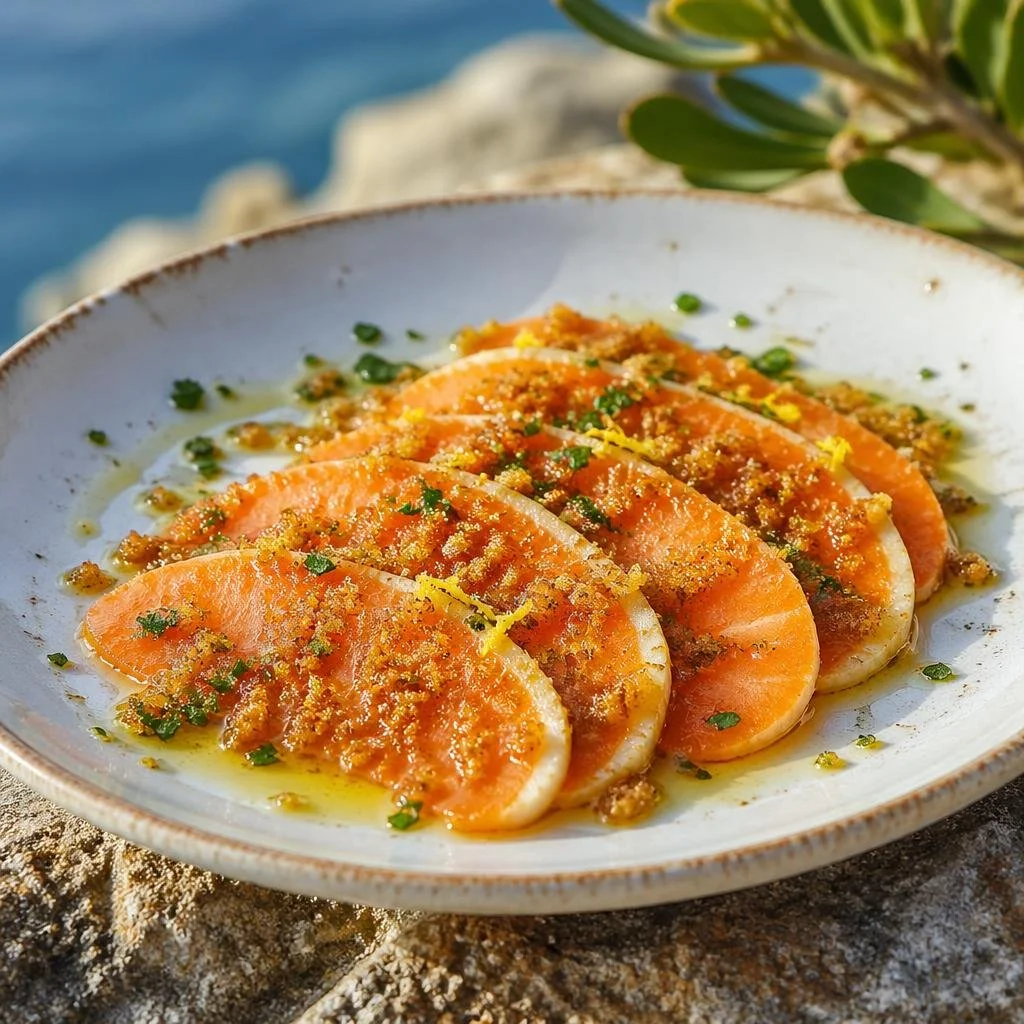
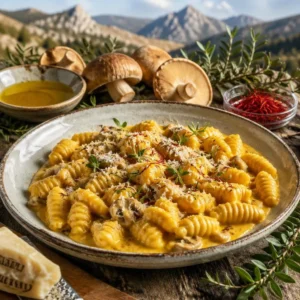
Experience the rugged coastal sophistication of the Mediterranean with this Amanita caesarea recipe, featuring the sharp, saline depth of artisanal Sardinian Bottarga. A masterclass in "Sea-and-Forest" umami synergy.
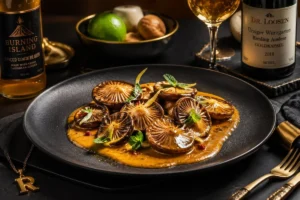
Sardinian Bottarga Crumbed Caesar Mushroom
Terroir Narrative
In the wild, granite-strewn interior of Sardinia, the Amanita caesarea thrives in the shadow of cork oaks. This recipe pairs the "Royal Mushroom" with the island's "Sardinian Gold"—Bottarga di Muggine (cured grey mullet roe). This combination is a testament to the island's unique Terra e Mare philosophy. Traditionally served in the coastal enclaves of Alghero and Cagliari, the intense, salty complexity of the sun-dried roe provides a stunning counterpoint to the mushroom's mild, nutty elegance, creating a dish that tastes of both the deep Mediterranean blue and the ancient forest floor.
The Culinary Physics of This Dish
The technical foundation of this preparation is Dry-Cured Protein Crystallization. Bottarga is rich in concentrated glutamates and nucleotides due to the slow dehydration process. When finely grated over a warm Amanita caesarea, the residual heat (approx. 50°C) softens the roe's natural waxes, releasing its lipids into the mushroom's porous gills. This creates a molecular "crust" that amplifies the savory receptors on the tongue. The high mineral content of the Bottarga acts as a natural seasoning, drawing out the mushroom's moisture and replacing it with intense marine salinity.
40ml Sardinian Extra Virgin Olive Oil (Cultivar Bosana)
1 Tiny clove of Garlic (bruised)
1g Lemon Zest (unwaxed)
2g Parsley (micro-chopped)
The Technique (Technical Steps)
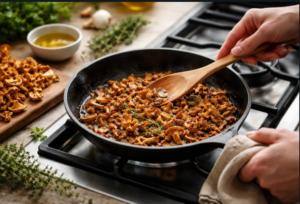
Infusion: Heat the olive oil with the bruised garlic in a heavy skillet. Once the garlic is golden, remove and discard it.
Flash Sauté: Lay the Caesar mushroom slices in the hot oil. Sauté for 90 seconds per side until they become flexible and slightly golden at the edges.
Off-Heat Integration: Remove the pan from the heat. This is crucial to prevent the Bottarga from becoming bitter.
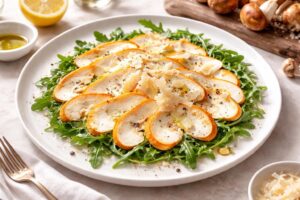
The Crumb: Using a micro-plane, grate the Bottarga directly over the mushrooms until they are covered in a fine, golden dust.
Finishing: Toss quickly with the lemon zest and parsley. The residual heat will melt the Bottarga into a glossy, savory glaze.
"In Sardinia, we say the sea provides the salt and the forest provides the soul; together, they create the King's meal." — Sardinian Oral History
Shop Integration
The perfect crumb requires a high-quality aged roe. Discover our selection of authentic Sardinian Bottarga and professional grating tools at the [Pure Umami Store].
The Umami Secret
Bottarga contains high levels of inosinic acid, which exhibits a specific synergistic effect with the glutamic acid found in Amanita caesarea. This interaction provides a "flavor boost" that is significantly more powerful than the sum of its parts, creating a prolonged marine-savory aftertaste.
Sommelier’s Choice
A chilled Vermentino di Gallura DOCG is the essential pairing. Its characteristic salinity and notes of Mediterranean scrub echo both the Bottarga and the foraged terroir of the mushroom.
The Etymological Chronicle: The German “Königs-Amanita”
In the old world mycological manuscripts of Germany, the mushroom was sometimes identified as the Königs-Amanita (The Royal Amanita). While Kaiserling was the common courtly term, "Königs-Amanita" was used in more formal botanical descriptions to emphasize its biological dominance. The German prefix Königs (King's) was not just a title of rank, but a marker of biological perfection. It signaled to the reader that among the thousands of fungal species, this particular Amanita was the sovereign—the only one whose beauty and flavor could match the weight of a royal crown.
To provide the best experiences, we use technologies like cookies to store and/or access device information. Consenting to these technologies will allow us to process data such as browsing behavior or unique IDs on this site. Not consenting or withdrawing consent, may adversely affect certain features and functions.
Functional
Always active
The technical storage or access is strictly necessary for the legitimate purpose of enabling the use of a specific service explicitly requested by the subscriber or user, or for the sole purpose of carrying out the transmission of a communication over an electronic communications network.
Preferences
The technical storage or access is necessary for the legitimate purpose of storing preferences that are not requested by the subscriber or user.
Statistics
The technical storage or access that is used exclusively for statistical purposes.The technical storage or access that is used exclusively for anonymous statistical purposes. Without a subpoena, voluntary compliance on the part of your Internet Service Provider, or additional records from a third party, information stored or retrieved for this purpose alone cannot usually be used to identify you.
Marketing
The technical storage or access is required to create user profiles to send advertising, or to track the user on a website or across several websites for similar marketing purposes.