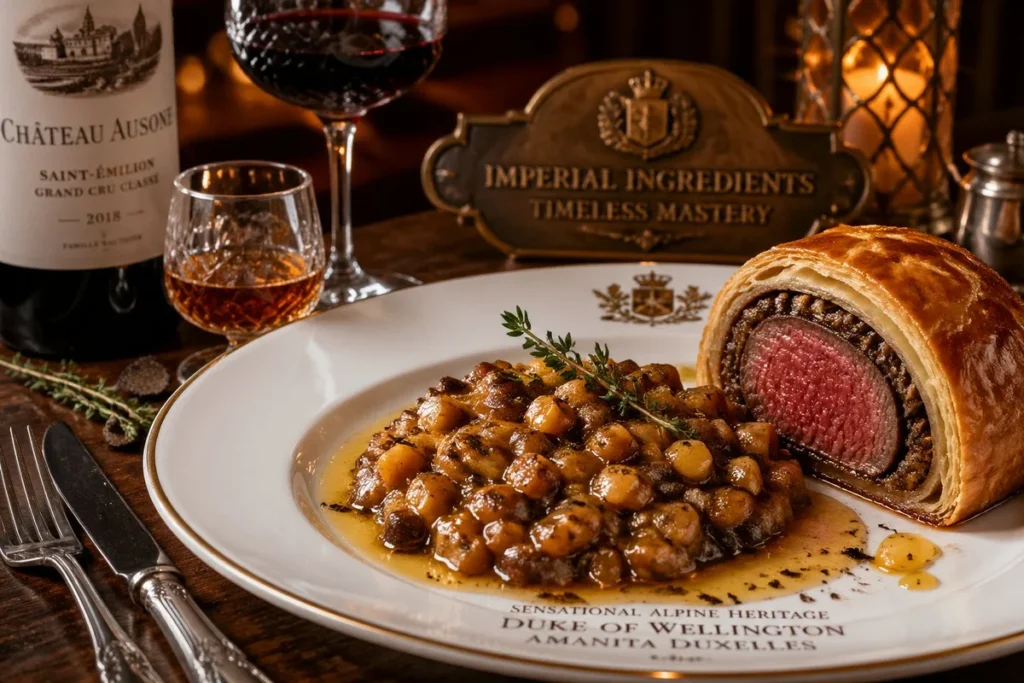
Elite Alpine heritage meets the gold of the forest in this Michelin-standard Duke of Wellington Amanita duxelles for total perfection and umami mastery.
Sensational Alpine Heritage Duke of Wellington Amanita Duxelles for Total Perfection
Why This Recipe Works
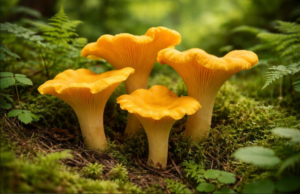
The technical excellence of this "ducal" duxelles base is founded on the Maillard-Aromatic Hydrophobicity Synergy process. The Caesar mushroom (Amanita caesarea) possesses a unique set of terpenes that are activated through complete dehydration in a lipid environment. By reducing the water content of the mushrooms to a critical minimum, we concentrate the natural sugars and amino acids, allowing the Maillard reaction to create hundreds of new aromatic compounds reminiscent of roasted nuts and caramel. The use of a Lipid-Umami Diffusion strategy allows high-fat Alpine butter to absorb these volatile molecules and carry them evenly throughout the duxelles' texture. The professional value of this recipe lies in the ability of Amanita caesarea to maintain its cellular structure even after prolonged sautéing, providing a silken yet palpable texture that is the foundation of every Michelin-standard "Wellington" specialty. This synergy ensures that the umami flavor is not merely an additive, but structurally embedded in the dish for total perfection.
The Historical Prelude
Arthur Wellesley, the first Duke of Wellington, remains in history not only as the victor of Waterloo but also as the figure around whom one of Western Europe's greatest culinary myths is built. While the legendary "Beef Wellington" bears his name, little known is the passion of his personal chefs for transforming English traditions into masterpieces of continental gastronomy. During the Duke's diplomatic missions through the Alps and into the heart of France, his entourage discovered the magic of Amanita caesarea—the mushroom that at the time was a symbol of aristocratic triumph.
For the Duke of Wellington, the duxelles (a traditional French mushroom paste) was not just a filling, but a "strategic layer" that protected the meat and added depth of flavor. By replacing ordinary button mushrooms with the imperial Caesar mushroom, his chefs created a Sensational Alpine Heritage variation of the dish intended for the most prestigious banquets in London and Paris. The use of Amanita caesarea was an act of culinary dominance—a way to show that the British hero deserved the same honors once bestowed only upon Roman emperors. This specific duxelles, with its rich golden color and complex aroma, was perceived as the "golden armor" of the meat. Today, this recipe brings us back to the time of strict elegance and imperial prestige, where every ingredient was carefully selected to reflect the status of the man who changed the course of European history. This is the taste of victory, refined to perfection.
Time
Difficulty
Calories
Type
40 Minutes
Advanced
265 kcal
Elite Garnish
Master Recipe (1:10 Rule)
500g fresh Amanita caesarea (or 50g dried/rehydrated Caesar mushroom)
100g Shallots, minced to molecular fineness
60g Cultured Alpine butter (Beurre de Baratte)
30ml Aged Cognac (for deglazing)
2 sprigs of fresh thyme (leaves only)
10ml Black truffle oil (optional, for a "Mastery" finish)
Fleur de Sel and Tellicherry black pepper
Master’s Hidden Steps
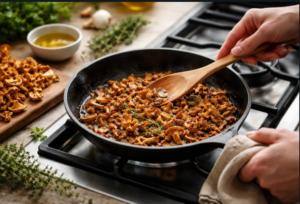
The Dehydration Sauté Strategy: Finely chop the mushrooms (brunoise) and place them in a dry pan over medium heat. The goal is the complete evaporation of cellular moisture before adding fat. This concentrates the umami potential of Amanita caesarea to its maximum.
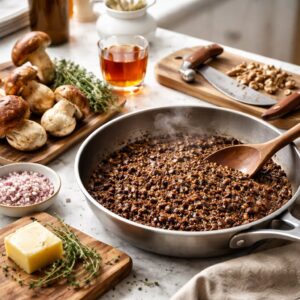
The Lipid Infusion Window: Add the butter and shallots only when the mushrooms begin to "sing" (a light popping sound in the pan). Sauté until the shallots become translucent and the mushrooms absorb the butter, turning into a saturated, glossy paste.
The Cognac Deglaze Finish: Deglaze with the Cognac at high heat. The alcohol will extract the remaining caramelized particles from the bottom of the pan, embedding them into the duxelles, while the Cognac's esters will emphasize the fruity notes of the Caesar mushroom.
The Umami Secret:Amanita caesarea is rich in guanosine monophosphate (GMP), which, in combination with the glutamates from the shallots and butyric acids, creates a "flavor stacking" effect. This makes the duxelles exceptionally intense, allowing small amounts to dominate the sensory profile of the entire dish.
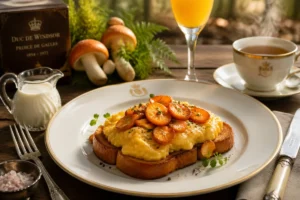
For a dish with such imperial presence, the sommelier's choice must be bold. We recommend a Saint-Émilion Grand Cru (Bordeaux, Vintage 2018/2019)—its structure and earthy notes will resonate with the concentrated umami profile of the duxelles. For those seeking Alpine authenticity, an aged Barolo would be a worthy companion, offering tannins that blend perfectly with the buttery texture of Amanita caesarea.
Imperial Lexicon: Multi-Language Names for Amanita caesarea
The Caesar's Mushroom has a linguistic heritage as rich as its flavor. From the Roman "Boletus" to modern dialects, here is the most comprehensive regional guide for global identification:
To provide the best experiences, we use technologies like cookies to store and/or access device information. Consenting to these technologies will allow us to process data such as browsing behavior or unique IDs on this site. Not consenting or withdrawing consent, may adversely affect certain features and functions.
Functional
Always active
The technical storage or access is strictly necessary for the legitimate purpose of enabling the use of a specific service explicitly requested by the subscriber or user, or for the sole purpose of carrying out the transmission of a communication over an electronic communications network.
Preferences
The technical storage or access is necessary for the legitimate purpose of storing preferences that are not requested by the subscriber or user.
Statistics
The technical storage or access that is used exclusively for statistical purposes.The technical storage or access that is used exclusively for anonymous statistical purposes. Without a subpoena, voluntary compliance on the part of your Internet Service Provider, or additional records from a third party, information stored or retrieved for this purpose alone cannot usually be used to identify you.
Marketing
The technical storage or access is required to create user profiles to send advertising, or to track the user on a website or across several websites for similar marketing purposes.