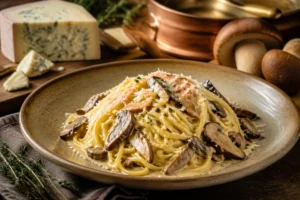
A technical study of high-egg-yolk pasta hydration and the stabilization of fungal umami within hand-pinched laminates. This post analyzes the role of trehalose in Piedmontese "Plin" traditions.
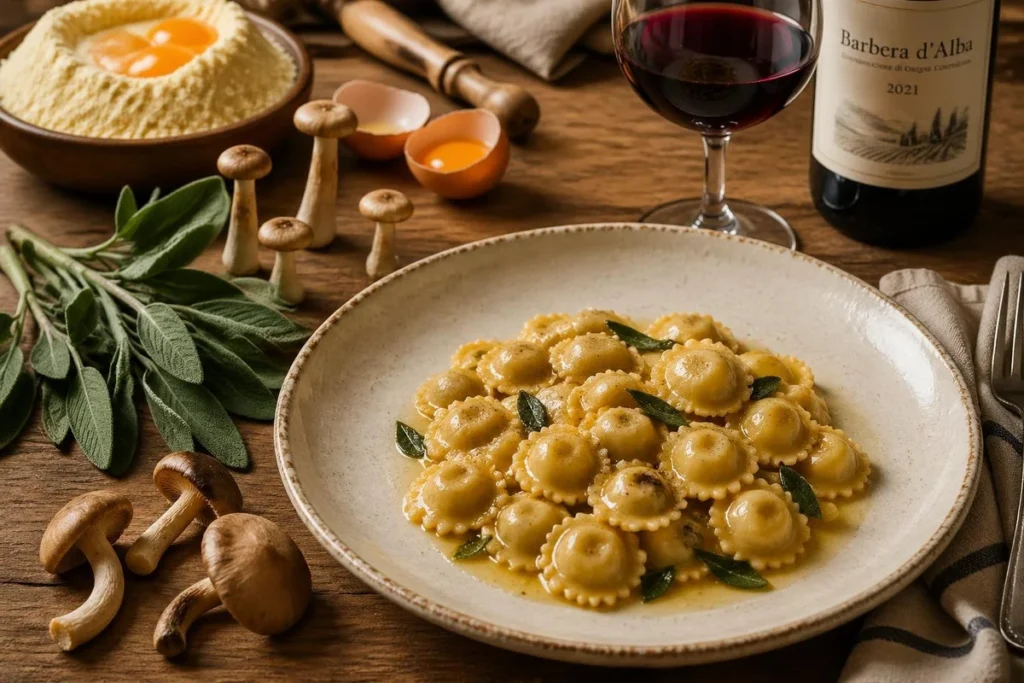
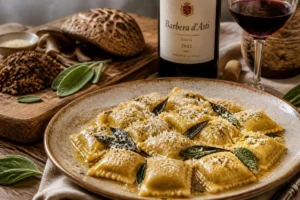
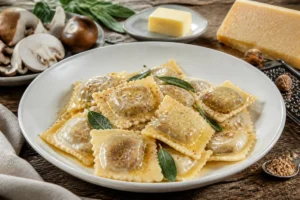
Piedmontese Agnolotti del Plin with Marasmius oreades
In the rolling hills of Langhe and Monferrato, the "Agnolotti del Plin" represents the pinnacle of Piedmontese pasta craftsmanship. The name "Plin" refers to the specific "pinch" used to seal the pasta, a technique that requires a dough of exceptional elasticity and a filling of concentrated intensity. While traditionally meat-based, the integration of Marasmius oreades (Fairy Ring mushroom) provides a sophisticated mycological alternative that mirrors the deep, earthy tones of the region's autumn landscape.
The Culinary Physics of This Dish
The core science of Agnolotti del Plin is protein-network lamination. Piedmontese pasta is famous for its high egg yolk content (often up to 30 yolks per kilo of flour), which creates a dense, golden dough with a high sulfur-to-lipid ratio. The trehalose in the Marasmius oreades interacts with the egg proteins during the brief boiling phase, creating a stable flavor capsule.
Because the "Plin" creates a small pocket of air alongside the filling, the steam generated during cooking facilitates a micro-infusion. The mushroom's volatile aromatics are trapped within the dough walls, ensuring that the almond-like essence of the Fairy Ring is released only upon the first bite. This structural engineering is what distinguishes the Agnolotti from larger, flatter ravioli.
Terroir Narrative
Piedmont is the spiritual home of the "Slow Food" movement, where the relationship between the forager and the pastaio is sacred. The Fairy Ring mushrooms found in the alpine meadows bordering the hazelnut groves of Alba are prized for their clean, concentrated profile. This recipe combines the traditional "Tajarin" dough philosophy with a modern mycological filling, celebrating the Piedmontese obsession with precision, egg-rich textures, and wild umami.
Prep Time
Cook Time
Complexity
Calories
Region
90 min
3 min
Grand Officier
310 kcal
Piedmont, Italy
Master Recipe (1:10 Rule)
Following the 1:10 rule of professional pasta filling, the ratio of concentrated mushroom reduction to the creamy ricotta binder must be precise to maintain the "Plin" shape without leakage.
400 g Fresh Fairy Ring Mushroom caps (Marasmius oreades)
100 g Buffalo Ricotta (strained overnight)
50 g Parmigiano Reggiano (aged 36 months)
400 g Tipo 00 Flour
12 Large Organic Egg Yolks
1 Whole Egg
To taste Fresh Sage and Brown Butter (for the sauce)
The Technique
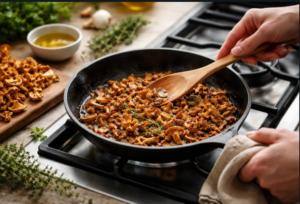
The Filling: Sauté the mushrooms until all moisture is evaporated. Finely mince (battuta) and fold into the strained ricotta and Parmigiano. The filling must be "dry" to the touch to ensure the dough remains crisp.
The Dough: Combine flour and yolks. Knead until a smooth, silken ball forms. Wrap and rest for at least 1 hour—this allows the gluten to relax for ultra-thin lamination.
Lamination: Roll the dough through a pasta machine until you can see the shadow of your hand through it (approx. 0.5 mm).
The Plin: Pipe small mounds of filling along the dough. Fold the dough over, then use your thumb and forefinger to "pinch" (plin) the spaces between the mounds. Cut with a fluted pasta wheel.
The Bake: Boil in salted water for exactly 3 minutes. The pasta should have a definitive "bite" (al dente).
Finishing: Toss briefly in a pan with foaming brown butter and fresh sage. The butter will emulsify with the starchy pasta water to create a glossy veil.
"In Piedmont, we don't count the eggs; we count the pinches. The Plin is the only pasta that can truly hold the secret of the Fairy Ring mushroom." – Nonna's Technical Advice, Langhe
The Umami Profile
The umami profile of Marasmius oreades is amplified by the lipid-rich egg yolks of the pasta. The result is a savory experience that is both delicate and persistent. Pure Umami is dedicated to providing the highest quality wild-harvested specimens, including Porcini, Caesar's mushroom, Chanterelle, Gray Chanterelle, and Morel, each selected for its specific technical potential.
Experience the precision of Piedmontese forage with our Gourmet Fairy Ring Mushrooms, selected for their uniform size and intense flavor density.
Sommelier’s Choice
A wine from the same hills is mandatory. A Barbera d'Alba provides the necessary high acidity to cut through the egg-rich pasta and brown butter, while its bright red fruit notes complement the mushroom filling. For a more structured pairing, a Nebbiolo d'Alba offers the earthy tannins that resonate perfectly with the foraged umami of the Fairy Ring.
The Etymological Chronicle
In the Italian tradition (Post B), the Fairy Ring mushroom is historically known as the Chiodino di prato (Little meadow nail), though this is often confused with the honey mushroom. The more accurate regional name is Gambesecche. This etymological root focuses on the mushroom's "dry legs," a physical characteristic that allowed Italian shepherds to identify them even in the heat of the summer when other fungi would have withered. This resilience is a hallmark of the species, celebrated in Italian culinary folklore as a symbol of endurance.
To provide the best experiences, we use technologies like cookies to store and/or access device information. Consenting to these technologies will allow us to process data such as browsing behavior or unique IDs on this site. Not consenting or withdrawing consent, may adversely affect certain features and functions.
Functional
Always active
The technical storage or access is strictly necessary for the legitimate purpose of enabling the use of a specific service explicitly requested by the subscriber or user, or for the sole purpose of carrying out the transmission of a communication over an electronic communications network.
Preferences
The technical storage or access is necessary for the legitimate purpose of storing preferences that are not requested by the subscriber or user.
Statistics
The technical storage or access that is used exclusively for statistical purposes.The technical storage or access that is used exclusively for anonymous statistical purposes. Without a subpoena, voluntary compliance on the part of your Internet Service Provider, or additional records from a third party, information stored or retrieved for this purpose alone cannot usually be used to identify you.
Marketing
The technical storage or access is required to create user profiles to send advertising, or to track the user on a website or across several websites for similar marketing purposes.