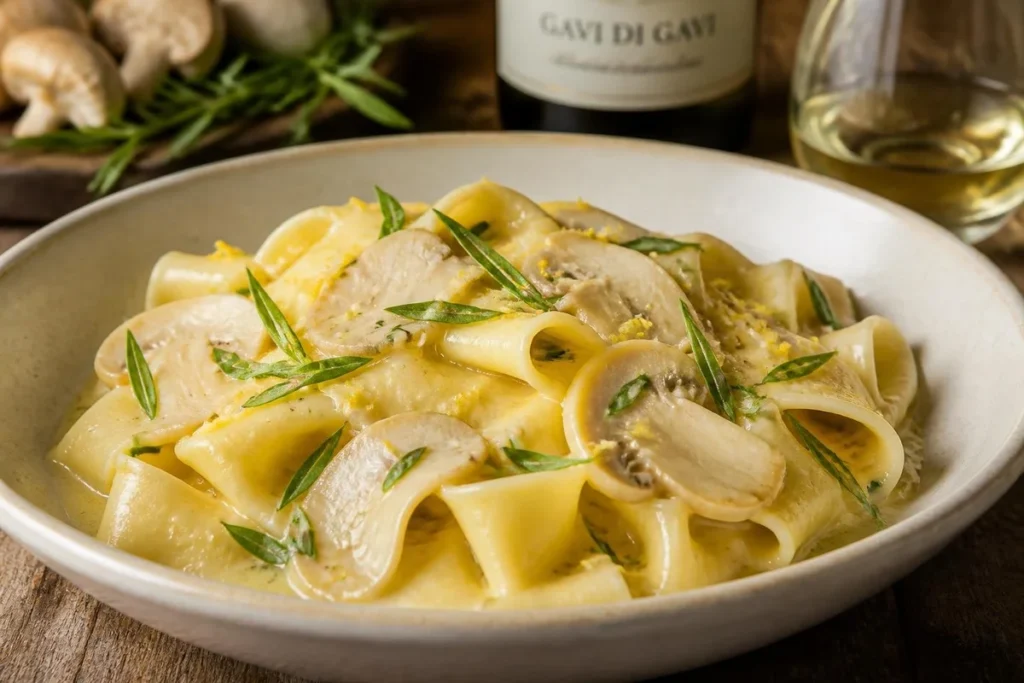
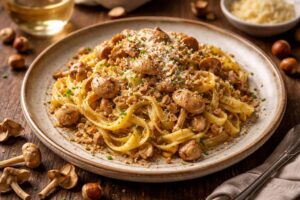
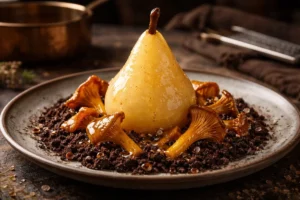
This technical execution focuses on the aromatic synchronization between the "farinaceous" volatiles of Clitopilus prunulus and the anise-like top notes of fresh tarragon. By utilizing a wide-format pasta (pappardelle), we maximize the surface area for a delicate citrus-butter emulsion to cling to, while the rapid poaching of the Miller mushroom within the sauce preserves its unique suede-like texture and fresh-dough fragrance.
Miller Mushroom Pappardelle with Lemon and Tarragon
This technical execution focuses on the aromatic synchronization between the "farinaceous" volatiles of Clitopilus prunulus and the anise-like top notes of fresh tarragon. By utilizing a wide-format pasta (pappardelle), we maximize the surface area for a delicate citrus-butter emulsion to cling to, while the rapid poaching of the Miller mushroom within the sauce preserves its unique suede-like texture and fresh-dough fragrance.
The Culinary Physics of This Dish
The Clitopilus prunulus contains high levels of 2-acetyl-1-pyrroline, a compound it shares with freshly baked bread. In this preparation, we utilize Lipid-Aromatic Entrapment. By emulsifying cold butter with starchy pasta water and lemon juice, we create a high-viscosity "sauce-matrix" that traps these volatile bread-like esters. The tarragon provides estragole, which acts as a flavor bridge, connecting the mushroom's nuttiness with the citrus acidity, preventing the delicate "Meunier" aromatics from being overwhelmed by the starch of the pasta.
Terroir Narrative
This dish is inspired by the Piedmont region of Italy, where the transition from late summer to autumn sees the "Prugnolo bastardo" flushing in the damp oak and chestnut forests. Traditionally, these mushrooms were tossed with hand-cut egg pasta (Tajarin), but here we utilize the broader Pappardelle to celebrate the mushroom's substantial, meaty bite. It is a dish that represents the Cucina Povera evolved—transforming humble foraged fungi into a technically refined masterpiece of the Italian North.
Prep Time
Cook Time
Complexity
Calories
Region
20 Mins
12 Mins
Grand Officier
380 kcal
Piedmont, Italy
Master Recipe (1:10 Rule)
400 g Fresh Miller Mushrooms (Clitopilus prunulus), vertically sliced
320 g Fresh egg Pappardelle
60 g High-fat cultured butter (cold, cubed)
15 ml Extra virgin olive oil
10 g Fresh tarragon (leaves only, roughly torn)
1 Organic lemon (juice and micro-planed zest)
50 ml Dry white wine (Gavi or Arneis)
Sea Salt and White Pepper to taste
The Technique
1. Pasta Hydration: Boil the pappardelle in heavily salted water until 1 minute before al dente. Reserve 100ml of the starchy pasta water before draining.
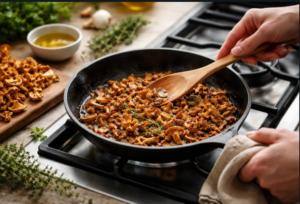
2. The Aromatic Base: In a wide skillet, heat the olive oil over medium heat. Add the Clitopilus prunulus and sauté for 2 minutes. Do not allow them to brown; we want to preserve their "white" farinaceous integrity.
3. Deglazing: Pour in the white wine and lemon juice. Increase heat to high for 60 seconds to cook off the alcohol and reduce the volume by half.
4. Emulsification (La Mantecatura): Add the undercooked pasta to the skillet along with the reserved water. Toss vigorously. Begin adding the cold butter cubes one by one, shaking the pan to create a creamy, glossy emulsion.
5. The Herb Infusion: Once the sauce has thickened and coated the pasta, turn off the heat. Fold in the fresh tarragon and lemon zest. The residual heat will release the herb's essential oils without turning them bitter.
6. Service: Plate immediately in warmed shallow bowls. Finish with a final crack of white pepper to enhance the mushroom's nutty profile without affecting the dish's aesthetic purity.
Shop Integration
The delicate, dough-like profile of the Miller mushroom serves as a perfect foundation for our more robust shop offerings. You can add a deeper, woodier dimension with our Boletus edulis (Boletus edulis) or the smoky intensity of Craterellus cornucopioides (Craterellus cinereus). For a striking visual contrast, include our vibrant Cantharellus cibarius (Cantharellus cibarius) or the royal Amanita caesarea (Amanita caesarea). For a spring-inspired twist, the Morchella (Morchella conica) provides a sophisticated textural counterpoint, while Marasmius oreades (Marasmius oreades) enhances the subtle sweetness of the pasta dough.
The Umami Profile
This dish demonstrates Synergistic Aromatic Umami. The free amino acids in the Miller mushroom are "unlocked" by the citric acid in the lemon juice. When these interact with the lipids in the butter, the palate perceives a rounded, savory sweetness. The tarragon acts as a "cleanser," ensuring each bite feels as fresh as the first, while the egg pasta provides a protein base that lengthens the mushroom's savory aftertaste.
Sommelier’s Choice
Gavi di Gavi (Cortese): A crisp, mineral-driven white wine from the Piedmont region. Its notes of green apple and flinty acidity provide a perfect structural match for the lemon-tarragon emulsion and the delicate forest notes of the Miller mushroom.
THE ETYMOLOGICAL CHRONICLE
Italian:Prugnolo bastardo – A local name referencing its physical similarity to the highly prized spring Prugnolo, though it appears in the autumn.
French:Meunier – The "Miller," so named for the floury aroma that fills the basket of the forager.
German:Mehlräsling – Combining "Mehl" (flour) with a traditional suffix for the Clitopilus family.
Spanish:Molinera – Identifying the mushroom with the miller's craft and the fragrance of raw sourdough.
To provide the best experiences, we use technologies like cookies to store and/or access device information. Consenting to these technologies will allow us to process data such as browsing behavior or unique IDs on this site. Not consenting or withdrawing consent, may adversely affect certain features and functions.
Functional
Always active
The technical storage or access is strictly necessary for the legitimate purpose of enabling the use of a specific service explicitly requested by the subscriber or user, or for the sole purpose of carrying out the transmission of a communication over an electronic communications network.
Preferences
The technical storage or access is necessary for the legitimate purpose of storing preferences that are not requested by the subscriber or user.
Statistics
The technical storage or access that is used exclusively for statistical purposes.The technical storage or access that is used exclusively for anonymous statistical purposes. Without a subpoena, voluntary compliance on the part of your Internet Service Provider, or additional records from a third party, information stored or retrieved for this purpose alone cannot usually be used to identify you.
Marketing
The technical storage or access is required to create user profiles to send advertising, or to track the user on a website or across several websites for similar marketing purposes.