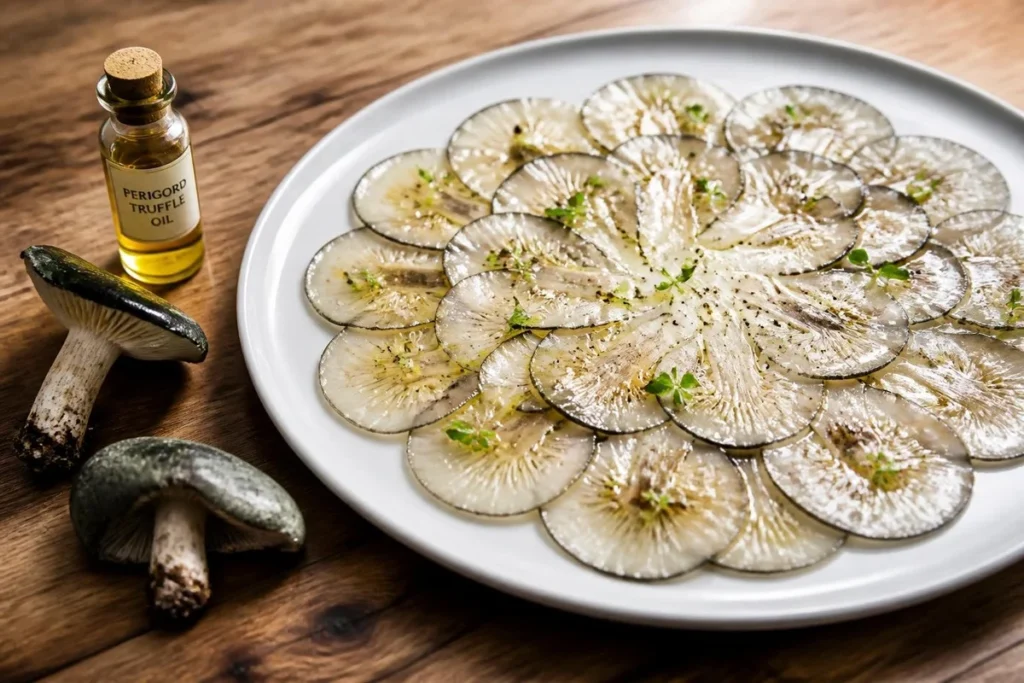
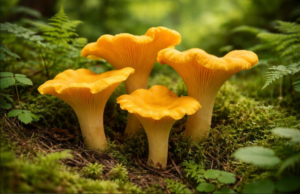
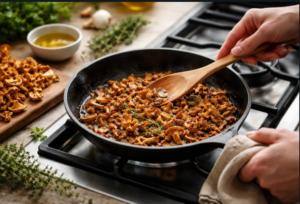
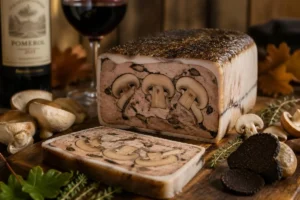
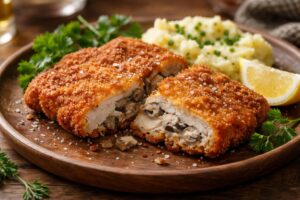
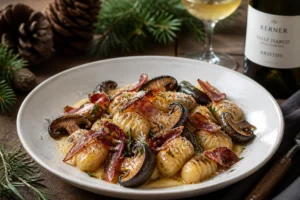
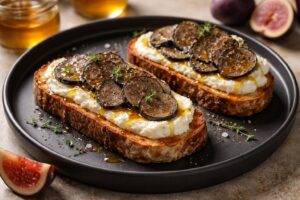
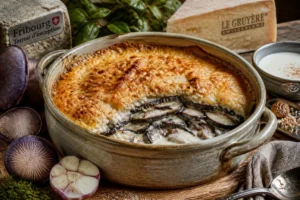
A refined molecular exploration of raw textures, this dish highlights the structural integrity of Russula cyanoxantha paired with the aromatic depth of Tuber melanosporum. By utilizing precision mandoline techniques and lipid-infusion, the mushroom's mild nuttiness is transformed into a sophisticated avant-garde appetizer.
Perigord Truffle Charcoal Burner Carpaccio
A refined molecular exploration of raw textures, this dish highlights the structural integrity of Russula cyanoxantha paired with the aromatic depth of Tuber melanosporum. By utilizing precision mandoline techniques and lipid-infusion, the mushroom's mild nuttiness is transformed into a sophisticated avant-garde appetizer.
The Culinary Physics of This Dish
The Russula cyanoxantha is a mycological anomaly; unlike most members of its genus, its gills are "greasy" and flexible rather than brittle. This physical property is the foundation of the carpaccio. When sliced at a calibrated 1.5mm, the gill structure remains intact, creating a unique mouthfeel that mimics fine seafaring proteins. The infusion of truffle-based lipids facilitates a hydrophobic reaction, coating the mushroom fibers and preventing cellular collapse, which preserves the "crunch" while delivering fat-soluble aromatic compounds directly to the olfactory receptors.
Terroir Narrative
This dish finds its soul in the limestone-heavy woodlands of Périgord, France. In these humid oak and beech forests, the "Charbonnier" grows in the same shadowed soil as the legendary black truffle. It is a regional symbiotic relationship—the mushroom's subtle, nutty profile acts as the perfect neutral canvas for the truffle's assertive musk. Historically, foragers in the Dordogne have prized the Charcoal Burner for its ability to withstand handling, making it the only Russula suitable for such a delicate raw presentation.
Prep Time
Cook Time
Complexity
Calories
Region
20 Mins
0 Mins
Grand Officier
145 kcal
Périgord, France
Master Recipe (1:10 Rule)
500 g Russula cyanoxantha (Select young, firm specimens)
50 ml Extra virgin olive oil (Cold-pressed, mild)
10 g Fresh Perigord Truffle (or high-grade Tuber melanosporum oil)
5 g Fleur de Sel de Guérande
2 g White Tellicherry pepper (freshly ground)
10 ml Freshly squeezed Meyer lemon juice
Optional: Micro-shiso for plating
The Technique
1. Selection & Cleansing: Use only firm, "greasy-to-the-touch" Russula cyanoxantha. Clean with a dry artisan brush; water will compromise the molecular tension of the gills.
2. Precision Mandoline Work: Using a professional mandoline, slice the mushrooms vertically into 1.5mm sheets. The flexible nature of the "Charbonnier" allows for full-cap slices without breakage.
3. Lipid Emulsion: Whisk the olive oil, truffle essence, and lemon juice. This creates a temporary emulsion designed to "flash-cure" the mushroom slices.
4. Assembly: Arrange slices in a tight radial pattern. Apply the emulsion with a silicone brush to ensure even saturation of the gill cavities.
5. Maceration: Allow the dish to rest for 120 seconds. This allows the acidity to slightly denature the proteins, enhancing the silky texture.
6. Seasoning: Finish with a light dusting of Fleur de Sel and white pepper to provide a mineral contrast to the earthy umami.
Shop Integration
While the Charcoal Burner offers a unique texture, the pure umami experience is further enriched by our seasonal selection. For a deeper, cooked earthiness, incorporate our Boletus edulis (Boletus edulis) or the rare Amanita caesarea (Amanita caesarea). For textural contrast, consider the delicate Marasmius oreades (Marasmius oreades) or the vibrant Cantharellus cibarius (Cantharellus cibarius). During the transitional seasons, our Craterellus cornucopioides (Craterellus cinereus) and Morchella (Morchella conica) provide the complex notes required for true molecular gastronomy.
The Umami Profile
The Russula cyanoxantha is rich in free amino acids, specifically Aspartic acid and Glutamic acid. When presented raw, these molecules interact more directly with the T1R1 taste receptors. The addition of black truffle introduces bis(methylthio)methane, which acts as an aromatic multiplier, significantly increasing the duration of the umami "after-ring" on the palate.
Sommelier’s Choice
Chablis 1er Cru: Look for a vintage with high minerality and flinty notes. The sharp acidity cleanses the palate of the truffle oils, while the wine's "steely" character complements the cold temperature of the carpaccio.
THE ETYMOLOGICAL CHRONICLE
French:Russule charbonnière – Named for the iridescent, coal-like blues and purples of the cap.
Italian:Colombina maggiore – A reference to its "dove-like" gray-blue hues and superior size.
German:Frauentäubling – Literally "Lady's Little Dove," noting its gentle, non-brittle characteristics.
Spanish:Carbonera – Derived from its visual similarity to cooled charcoal embers.
To provide the best experiences, we use technologies like cookies to store and/or access device information. Consenting to these technologies will allow us to process data such as browsing behavior or unique IDs on this site. Not consenting or withdrawing consent, may adversely affect certain features and functions.
Functional
Always active
The technical storage or access is strictly necessary for the legitimate purpose of enabling the use of a specific service explicitly requested by the subscriber or user, or for the sole purpose of carrying out the transmission of a communication over an electronic communications network.
Preferences
The technical storage or access is necessary for the legitimate purpose of storing preferences that are not requested by the subscriber or user.
Statistics
The technical storage or access that is used exclusively for statistical purposes.The technical storage or access that is used exclusively for anonymous statistical purposes. Without a subpoena, voluntary compliance on the part of your Internet Service Provider, or additional records from a third party, information stored or retrieved for this purpose alone cannot usually be used to identify you.
Marketing
The technical storage or access is required to create user profiles to send advertising, or to track the user on a website or across several websites for similar marketing purposes.