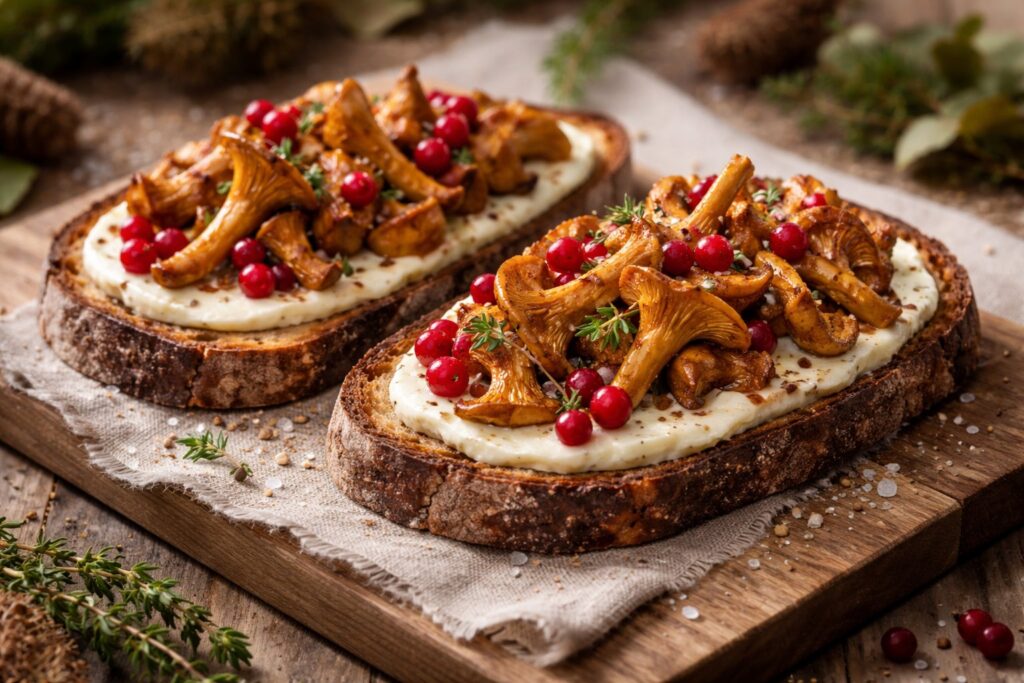
Nordic Chanterelle Toast with Wild Berries and Smoked Cream
A Golden Journey to the Scandinavian Wilderness
⏱️ 25 min🍴 Intermediate🔥 345 kcal🌱 Wild-Harvested
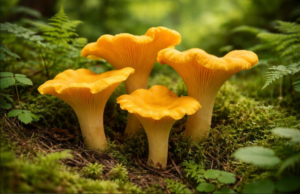
The Scandinavian forest is not merely a collection of trees; it is a living, breathing cathedral of silence, ancient moss, and hidden gold. Within these damp, sun-dappled corridors of Sweden, Norway, and Finland, the Cantharellus cibarius, or the Golden Chanterelle, reigns as the undisputed monarch of the undergrowth. This recipe is more than a simple meal; it is a culinary pilgrimage to the North, an homage to the "Gold of the Forest" that has graced the banquet tables of Nordic royalty for centuries. In the Viking Age, foraging was a necessity of survival, but today, finding these vibrant yellow gems is a spiritual reconnection with nature.
The brief but intense Northern summer provides the perfect conditions for these mushrooms to develop their complex profile. Unlike farm-grown varieties that lack character, the wild chanterelle is born from a delicate Mycorrhizal symbiosis. It is a biological partnership where the fungus and the roots of ancient conifers trade nutrients in a silent, underground language. This relationship is exactly why the Chanterelle refuses to be domesticated; it belongs to the wild, and its flavor is a direct reflection of the untouched soils of the Scandinavian Highlands and the Boreal forests. When you taste this toast, you are tasting the very essence of the wilderness—undiluted, powerful, and deeply satisfying.
CHEF’S SPECIAL OFFER
Bring the essence of the European forests to your kitchen with our premium wild-harvested mushrooms.
BUY 2, GET 1 FREE!
Limited seasonal stock available for international shipping.
The sensory journey of a Chanterelle begins long before it hits the pan. To the experienced forager, the first sign of a high-quality specimen is its intoxicating aroma—a rare olfactory bridge between the damp, earthy forest floor and the sweet, floral scent of sun-ripened apricots. This fruitiness is not subtle; it is a bold statement of the mushroom's chemical complexity. The texture is equally remarkable: meaty, dense, and remarkably resilient. While lesser mushrooms turn to mush when exposed to heat, the Cantharellus cibarius holds its elegant, trumpet-like shape, providing a satisfying "bite" that mimics the tenderness of a well-cooked scallop.
Biologically, the chanterelle is a marvel. Because it cannot be cultivated in greenhouses, every single mushroom you consume has been hand-picked by human hands in the wild. This lack of domestication ensures that the umami-rich compounds—the natural glutamates—are present in much higher concentrations than in commercial button mushrooms. The vibrant yellow to orange hue is not just for show; it is a marker of its rich antioxidant profile and its high vitamin content. In the wild, these mushrooms act as the forest's secondary root system, and that intense connectivity is what gives them their deep, lingering flavor. Foraging for them requires a keen eye and a deep respect for the ecosystem, as they often hide under fallen birch leaves or within thick beds of emerald-green moss.
The Master Recipe: Nordic Forest Toast
This recipe focuses on contrasting temperatures and textures: the hot, buttery mushrooms against the cold, smoked cream and the tart, popping sensation of wild berries.
500g Fresh or 50g Dried Chanterelles (Cantharellus cibarius)
2 Large Slices of Artisanal Rye Bread (Dense, sourdough-based)
60g High-Fat Grass-fed Butter (Ideally salted)
120g Smoked Crème Fraîche (Alternatively: Greek yogurt with a drop of liquid smoke)
50g Wild Lingonberries or Red Currants (Fresh or frozen)
2 sprigs of Fresh Thyme
1 clove of Garlic (Smashed)
Flaky Sea Salt and Cracked Black Pepper
Step 1: The Moisture Release
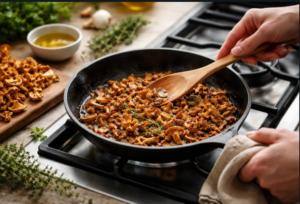
Clean your mushrooms with a soft brush (avoid water if possible). Place them in a wide, heavy-bottomed skillet over medium-high heat with no oil or butter. This "dry sauté" allows the mushrooms to release their internal water. Watch as the steam rises and the mushrooms begin to shrink slightly, intensifying their flavor essence.
Step 2: The Golden Maillard Infusion
Once the pan is dry again, add the grass-fed butter and the smashed garlic clove. As the butter foams and turns nut-brown, toss the chanterelles to coat them. The goal is the Maillard reaction—a caramelization of the mushroom's proteins. Add the fresh thyme now, letting the oils of the herb infuse into the bubbling butter for at least 4 to 5 minutes until the mushroom edges are golden-brown and crisp.
Step 3: The Assembly of Textures
Toast your rye bread until it has a sturdy, crunchable surface. Spread a thick, cold layer of the **smoked crème fraîche**. This creates a thermal barrier. Pile the piping hot, buttery chanterelles onto the cream. The heat will begin to melt the cream slightly, creating a rich sauce on the spot. Top with the wild berries and a final sprinkle of sea salt.
Pro Technique: The Essence Glaze
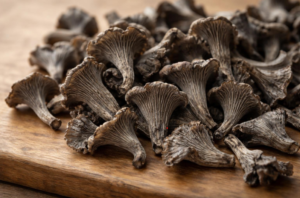
If you are using dried chanterelles, you have a secret weapon. After rehydrating them, take the leftover mushroom water—which is now dark and fragrant—and simmer it in a small saucepan until it reduces to a thick, syrupy glaze. Pour this back over the mushrooms in the final minute of sautéing. This double-infusion technique ensures that no flavor is lost and creates a glossy, restaurant-quality finish that coats the palate in pure forest essence.
The Umami Secret: Synergistic Flavor
The profound depth of this dish comes from flavor synergy. Chanterelles are naturally high in guanylates, which are umami-providing nucleotides. When these are combined with the lactic acids and fats in the smoked cream, they don't just add up—they multiply. This chemical reaction triggers a longer-lasting taste perception on the human tongue, which is why the flavor of a wild mushroom dish feels so much "bigger" and more satisfying than a standard vegetable meal. The smoke adds a third dimension, mimicking the traditional forest fires that historically rejuvenated chanterelle patches.
The Art of the Pairing
To truly appreciate this Nordic Masterpiece, the drink selection must provide a bridge between the fruitiness of the mushroom and the richness of the butter. A Dry German Riesling with high acidity will cut through the fat perfectly. For red wine lovers, a light-bodied **Pinot Noir** from the **Alsace region** or **Germany (Spätburgunder)** offers earthy undertones that mirror the forest floor. If choosing a non-alcoholic pairing, a chilled sparkling apple cider with no added sugar provides the necessary tartness to complement the lingonberries.
Ancestral Nutrition
Beyond the gourmet appeal, wild chanterelles are a nutritional powerhouse. They are one of the few non-animal sources of Vitamin D, which they synthesize naturally from the sun—a vital nutrient in the dark Northern winters. Furthermore, their high concentration of Selenium acts as a potent antioxidant, while their fiber content supports a healthy gut microbiome. Eating wild-harvested products like these is a return to Ancestral Nutrition, providing minerals and vitamins often missing from modern, industrially farmed produce.
The Chanterelle Lexicon: Global Names for Cantharellus cibarius
The Golden Chanterelle is one of the most commercially important wild mushrooms worldwide. Its names often reflect its apricot aroma and bright yellow hue:
To provide the best experiences, we use technologies like cookies to store and/or access device information. Consenting to these technologies will allow us to process data such as browsing behavior or unique IDs on this site. Not consenting or withdrawing consent, may adversely affect certain features and functions.
Functional
Always active
The technical storage or access is strictly necessary for the legitimate purpose of enabling the use of a specific service explicitly requested by the subscriber or user, or for the sole purpose of carrying out the transmission of a communication over an electronic communications network.
Preferences
The technical storage or access is necessary for the legitimate purpose of storing preferences that are not requested by the subscriber or user.
Statistics
The technical storage or access that is used exclusively for statistical purposes.The technical storage or access that is used exclusively for anonymous statistical purposes. Without a subpoena, voluntary compliance on the part of your Internet Service Provider, or additional records from a third party, information stored or retrieved for this purpose alone cannot usually be used to identify you.
Marketing
The technical storage or access is required to create user profiles to send advertising, or to track the user on a website or across several websites for similar marketing purposes.