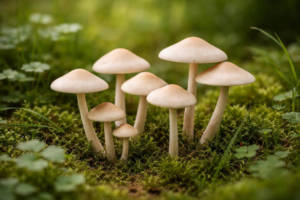
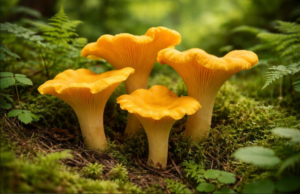
Description: Master this wild-harvested gourmet recipe. A Cantharellus cibarius culinary masterpiece featuring a bright, umami-rich vinegar infusion for preservation.
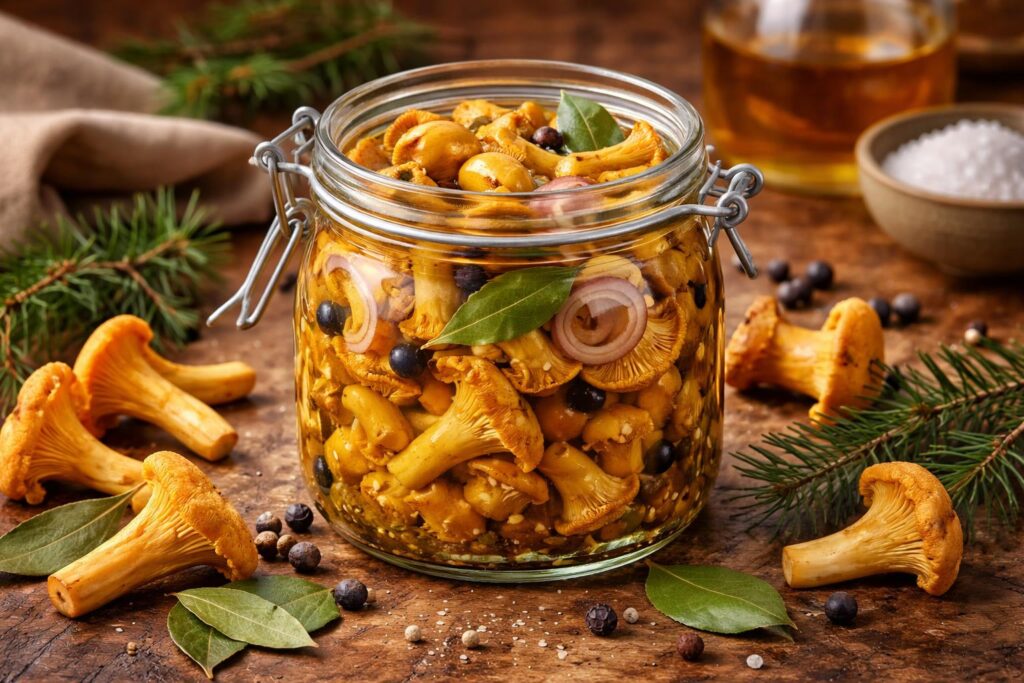
In the vast, untamed stretches of the European wilderness, the abundance of the fall harvest is often too great for immediate consumption. The Pickled Chanterelles with Juniper and Bay is a dish born of necessity, refined into a luxury condiment. Historically, the foragers of the Balkans and Scandinavia used pickling not just as a survival strategy, but as a way to transform the Cantharellus cibarius into a bright, acidic counterpoint for heavy winter meats.
This wild-harvested gourmet recipe utilizes a cold-steeping method to maintain the mushroom's structural integrity. The addition of wild juniper berries—often found growing in the same sub-alpine zones as the Chanterelle—creates a "terroir" link between the fungi and the brine. It is a culinary masterpiece of balance, where the umami-rich nature of the mushroom is locked in a crystalline suspension of vinegar, sugar, and forest aromatics.
🌲 EXCLUSIVE FOREST HARVEST OFFER 🌲
Elevate your kitchen with the rarest Chanterelles, Porcini, and Morels.
Sensory & Foraging Profiles: Acidity and Enzyme Inhibition
The Cantharellus cibarius is uniquely suited for pickling due to its dense mycelial fibers. Its Mycorrhizal symbiosis with pines often imparts a faint resinous undertone, which is perfectly complemented by the gin-like aromatics of juniper.
Microbiology & Chemistry: Pickling works through enzyme inhibition. The low pH of the vinegar solution stops the natural decomposition process and denatures certain proteins. Chemically, the glutamic acid in the Chanterelles remains stable, while the infusion of acetic acid sharpens the tongue's ability to perceive the mushroom's hidden sweet esters.
Texture Analysis: When wild-harvested Chanterelles are pickled correctly, they should not be mushy. The goal is a "squeaky" texture—firm to the tooth with a slippery, glossy exterior that releases a burst of spiced vinegar upon the first bite.
The Master Recipe: Spiced Forest Pickles
Ingredients
500g Wild-Harvested Cantharellus cibarius (small buttons are best)
300ml Apple Cider Vinegar (5% acidity)
150ml Water
100g Granulated Sugar
1 tablespoon Sea Salt
10 Juniper berries, lightly crushed
2 fresh Bay leaves
1 small Shallot, sliced into rings
1/2 teaspoon Yellow Mustard seeds
Culinary Steps
Preparation: Clean the Cantharellus cibarius meticulously. If the mushrooms are large, slice them into even halves or quarters.
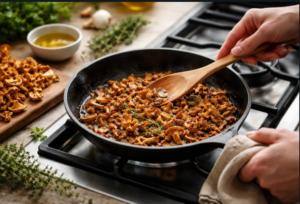
The Blanch: Bring a pot of salted water to a boil. Blanch the mushrooms for exactly 2 minutes. Drain and immediately plunge into ice water. This sets the golden color and stops the cooking.
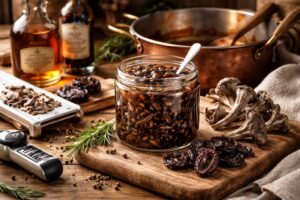
The Brine: In a separate pot, combine vinegar, water, sugar, salt, and all spices. Bring to a boil, then simmer for 5 minutes to infuse the juniper and bay essence.
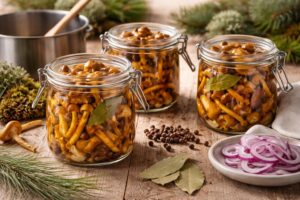
The Jarring: Pack the blanched mushrooms and shallot rings into a sterilized glass jar.
The Infusion: Pour the hot brine over the mushrooms, ensuring they are completely submerged.
The Cure: Seal the jar and allow it to cool. Refrigerate for at least 48 hours before consuming. They will keep for up to 3 months in the fridge.
Pro Technique: The “Cold Shock” Retention
The secret to professional-grade wild-harvested pickles is the "Cold Shock" after blanching. Chanterelles contain delicate carotenoids that can turn brownish-grey if exposed to prolonged heat. By plunging them into an ice bath, you lock the pigments in place, ensuring your jars look as vibrant as the day you found the mushrooms in the woods. This also prevents the internal fibers from over-softening, maintaining the required "snap."
The Umami Secret: Acidic Sharpening of Nucleotides
The guanylate and inosinate nucleotides in Cantharellus cibarius are enhanced by the presence of salt and acid. In a pickled state, the acid acts as a "cleanser" for the palate, removing the fatty film from other foods (like terrines or roasts). This allows the natural glutamates in the mushroom to hit the taste receptors with 100% clarity, creating a flavor spike that is both refreshing and deeply savory.
The Art of the Pairing
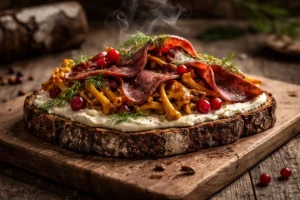
Pickled Chanterelles are the ultimate companion for Charcuterie boards, Venison terrines, or Smoked Salmon. Pair with a Dry Sherry (Fino) or a Sake (Junmai) to match the fermentation notes. For a non-alcoholic pairing, a chilled kombucha provides a similar acidic complexity that echoes the brine.
Ancestral Nutrition
Pickled mushrooms are a fantastic source of prebiotic fiber and B-vitamins. The Cantharellus cibarius is also naturally high in Polysaccharides, which have been studied for their role in supporting metabolic health. Historically, pickled fungi were the primary source of Vitamin D and Copper during the long winter months in Northern Europe, preventing seasonal deficiencies when fresh produce was unavailable.
To provide the best experiences, we use technologies like cookies to store and/or access device information. Consenting to these technologies will allow us to process data such as browsing behavior or unique IDs on this site. Not consenting or withdrawing consent, may adversely affect certain features and functions.
Functional
Always active
The technical storage or access is strictly necessary for the legitimate purpose of enabling the use of a specific service explicitly requested by the subscriber or user, or for the sole purpose of carrying out the transmission of a communication over an electronic communications network.
Preferences
The technical storage or access is necessary for the legitimate purpose of storing preferences that are not requested by the subscriber or user.
Statistics
The technical storage or access that is used exclusively for statistical purposes.The technical storage or access that is used exclusively for anonymous statistical purposes. Without a subpoena, voluntary compliance on the part of your Internet Service Provider, or additional records from a third party, information stored or retrieved for this purpose alone cannot usually be used to identify you.
Marketing
The technical storage or access is required to create user profiles to send advertising, or to track the user on a website or across several websites for similar marketing purposes.