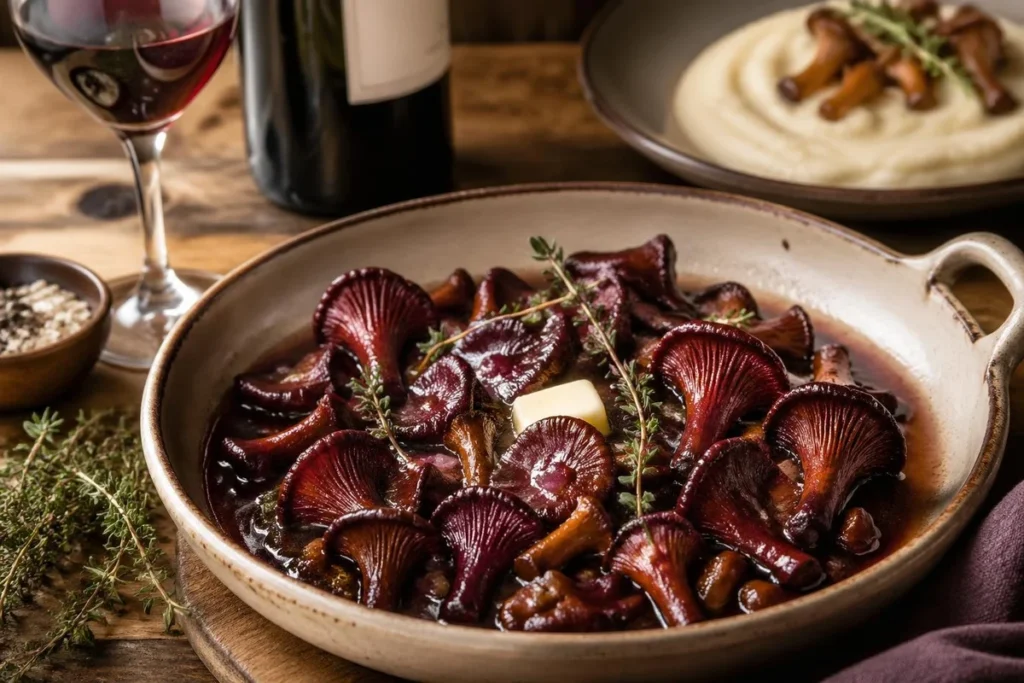
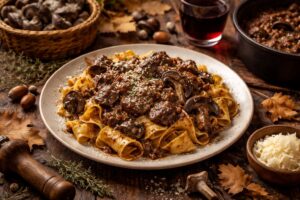
A technical study in Anthocyanin-Tannin Bonding, utilizing the low-pH environment of a dry red wine reduction to tenderize the Golden Chanterelle's chitinous structure while infusing it with deep pigment and complex polyphenols.
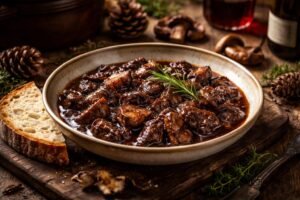
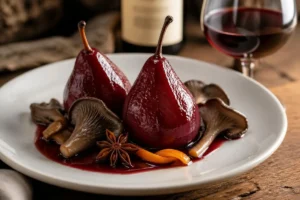
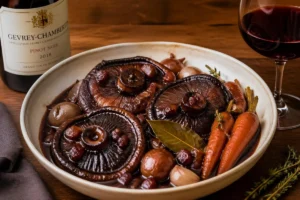
Red Wine Braised Chanterelles
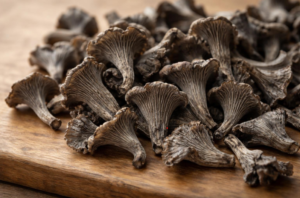
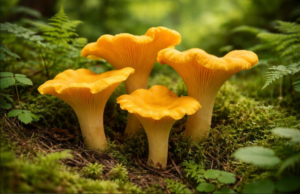
For our forty-first technical formulation, we challenge the conventional "white wine only" rule for delicate fungi. Cantharellus cibarius (Golden Chanterelle) possesses a robust enough chemical profile to withstand the tannins of a red wine if managed with precision. By utilizing a "short-braise" technique, we allow the mushroom to absorb the wine's color and acidity without losing its characteristic peppery finish. At pure-umami.cc, we view this as a transformative process—turning the golden mushroom into a deep, ruby-hued jewel that serves as a powerful accompaniment to dark meats and root vegetables.
The Culinary Physics of This Dish
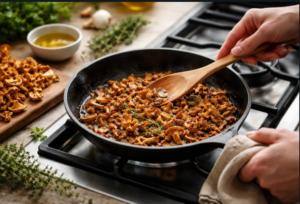
The engineering of this braise relies on **Solute-Driven Pigment Transfer**. Red wine contains anthocyanins (pigments) and tannins that can be astringent. Molecularly, we first sear the Cantharellus cibarius to create a protective Maillard crust, then deglaze with a reduced red wine. The reduction increases the sugar concentration, which acts as a "buffer" for the tannins. As the mushrooms simmer, the alcohol acts as a solvent, pulling fat-soluble aromatics out of the fungal tissue and into the sauce, while the red pigments move into the porous ridges of the mushroom, staining it through to the core.
Terroir Narrative
This formulation is a tribute to the Burgundy and Bordeaux regions, where the "Meurette" style of cooking utilizes red wine for everything from eggs to mushrooms. The terroir is expressed through the choice of a cool-climate Pinot Noir or a structured Merlot. This mirrors the technical rigor of our Boletus edulis and Craterellus cinereus formulations, emphasizing that the "color" of a wine should be chosen based on the desired aromatic outcome rather than arbitrary culinary tradition.
250ml Dry Red Wine (high acidity, low tannin preferred)
1 Shallot (finely minced)
20g Cold Butter (for the final gloss)
10g Sugar or Honey (to balance the acidity)
1 sprig Thyme
Fleur de Sel and Cracked Black Pepper
The Technique
The Primary Sear: Sauté the chanterelles in a very hot pan with a small amount of oil. You want them to "weep" their water and then re-absorb it until they are golden and firm.
The Soffritto: Add the shallots and thyme, cooking until the shallots are translucent but not browned.
The Deglaze: Pour in the red wine. Increase the heat to high. The goal is a rapid reduction to "shock" the pigment into the mushroom.
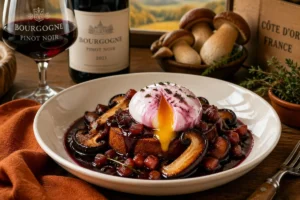
The Glaze Evolution: Add the sugar/honey. Reduce the liquid until it coats the back of a spoon (syrupy consistency). The Cantharellus cibarius should now appear dark purple or ruby.
The Mounting: Turn off the heat and whisk in the cold butter. This creates a "Beurre Rouge"—a glossy, emulsified sauce that clings to the mushrooms. Season with salt and pepper immediately before serving.
Shop Integration
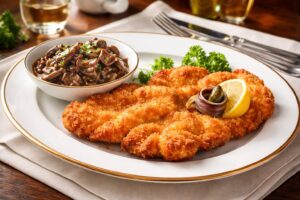
The yellow pigments of our Cantharellus cibarius provide a unique base for the red wine, resulting in a vibrant, almost neon-purple finish. For a darker, more "gothic" appearance, use our Craterellus cinereus (Grey Chanterelle), which turns almost black in red wine. If you seek a nutty baseline, our Marasmius oreades provides a spectacular contrast when served alongside the braised chanterelles. For an elite presentation, serve atop a purée of roasted Boletus edulis (Porcini). Avoid using Amanita caesarea (Caesar's mushroom) in this format, as its delicate color and flavor will be completely obliterated by the wine.
The Umami Profile
This dish features **Acid-Tannin Umami**. The red wine's acidity acts as a bright "lens," magnifying the earthy guanylates of the Cantharellus cibarius. The butter provides the necessary lipid bridge to smooth over the tannins, resulting in a savory experience that is deep, long-lasting, and highly sophisticated.
Sommelier’s Choice
Serve with the same **Red Wine** used in the braise. A Pinot Noir from a cool climate is the technical requirement—its natural acidity and cherry-fruit notes will harmonize perfectly with the mushroom's apricot esters.
The Etymological Chronicle
The term Braise comes from the French braiser (to cook over coals). In Italian, this would be Finferli Brasati al Vino Rosso. In German, it is In Rotwein geschmorte Pfifferlinge. Regardless of the language, the red wine braised **Chanterelle** is the definitive standard for technical vinous cookery.
Pure Umami | Mycological Research & Culinary Arts | 2026
To provide the best experiences, we use technologies like cookies to store and/or access device information. Consenting to these technologies will allow us to process data such as browsing behavior or unique IDs on this site. Not consenting or withdrawing consent, may adversely affect certain features and functions.
Functional
Always active
The technical storage or access is strictly necessary for the legitimate purpose of enabling the use of a specific service explicitly requested by the subscriber or user, or for the sole purpose of carrying out the transmission of a communication over an electronic communications network.
Preferences
The technical storage or access is necessary for the legitimate purpose of storing preferences that are not requested by the subscriber or user.
Statistics
The technical storage or access that is used exclusively for statistical purposes.The technical storage or access that is used exclusively for anonymous statistical purposes. Without a subpoena, voluntary compliance on the part of your Internet Service Provider, or additional records from a third party, information stored or retrieved for this purpose alone cannot usually be used to identify you.
Marketing
The technical storage or access is required to create user profiles to send advertising, or to track the user on a website or across several websites for similar marketing purposes.