A technical study of legume-fungal protein synergy and the stabilization of complex vegetable broths using Marasmius oreades. This post analyzes the role of chitin in slow-simmered Tuscan stews.
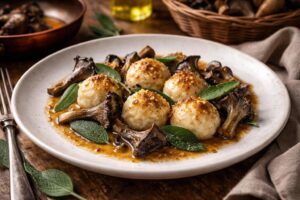
Tuscan Ribollita with Fairy Ring Mushroom Infusion
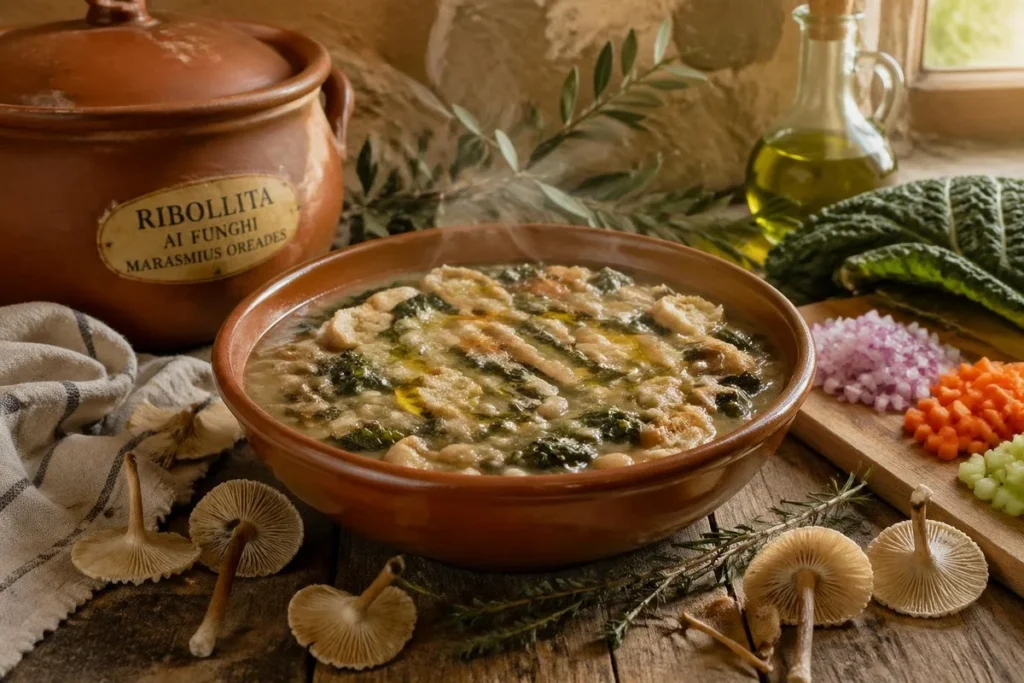
In the agrarian traditions of Tuscany, "Ribollita" (literally "re-boiled") is the quintessential example of the "Cucina Povera" philosophy—transforming humble ingredients through technical patience. While traditionally a bread and vegetable soup, the integration of Marasmius oreades (Fairy Ring mushroom) introduces a sophisticated mycological layer that mimics the savory depth of cured meats. This version utilizes the mushroom's unique poikilohydric properties to ensure that the "re-boiling" process actually intensifies the aromatic profile rather than degrading it.
The Culinary Physics of This Dish
The core science of Ribollita lies in starch-lipid complexing. As the soup sits and is subsequently re-heated, the starches from the Cannellini beans and the Tuscan bread undergo retrogradation. When Marasmius oreades is infused into this matrix, its chitinous cell walls act as a scaffold. Unlike common button mushrooms, the Fairy Ring mushroom maintains its structural snap even after multiple heating cycles, providing a definitive textural contrast to the soft, emulsified vegetables.
Molecularly, the nucleotides in the mushrooms create a synergistic effect with the amino acids in the black kale (Lacinato kale). This combination triggers a profound umami response, allowing for a deep, savory broth without the need for animal proteins. The light almond-like scent of the mushrooms provides a subtle floral counterpoint to the bitter notes of the brassicas.
Terroir Narrative
Tuscany is a land of rolling hills, olive groves, and ancient stone farmhouses. The Fairy Ring mushrooms found in the pastures of the Val d'Orcia are traditionally gathered and dried to be used as a natural "bouillon" during the winter months. This recipe celebrates that spirit of resourcefulness, utilizing the traditional coccio (clay pot) cooking method to allow the flavors of the meadow and the garden to fuse slowly under gentle, indirect heat.
Prep Time
Cook Time
Complexity
Calories
Region
40 min
120 min
Grand Officier
325 kcal
Tuscany, Italy
Master Recipe (1:10 Rule)
Following the 1:10 rule of professional vegetable stews, the volume of the concentrated mushroom infusion must be precisely balanced against the weight of the vegetable solids to ensure a clear but potent flavor profile.
400 g Fresh Fairy Ring Mushroom caps (Marasmius oreades)
300 g Dried Cannellini Beans (soaked and cooked)
1 bunch Black Kale (Cavolo Nero), stemmed and chopped
1/2 head Savoy Cabbage, shredded
200 g Stale Tuscan Bread (saltless), sliced
100 ml Extra Virgin Olive Oil (Tuscan IGP)
1 Large Red Onion, diced
2 Carrots and 2 stalks of Celery (Soffritto base)
To taste Fresh Thyme and Rosemary
The Technique
The Soffritto: Sauté the onion, carrot, and celery in half the olive oil until completely soft (appassito). This slow-cooking phase is essential for developing a base of caramelized sugars.
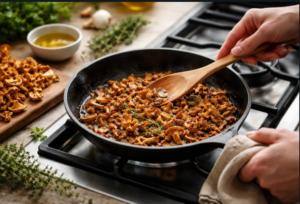
The Infusion: Add the Fairy Ring mushrooms and the herbs to the soffritto. Cook for 5 minutes until the mushrooms release their primary aromatics into the oil.
The Assembly: Add the kale, cabbage, and pre-cooked beans (along with their cooking liquid). Simmer for 1 hour on low heat until the vegetables are tender and the broth is dark and flavorful.
The Bread Phase: Layer the stale bread slices into a separate pot and pour the soup over them. Allow it to sit for at least 4 hours (ideally overnight). This is the "ribollita" phase where the bread absorbs the mushroom essence.
The Re-Boil: Gently heat the mixture, stirring often to break up the bread until the soup reaches a thick, porridge-like consistency.
Finishing: Serve with a generous "C d'olio"—a raw swirl of premium Tuscan olive oil—to re-introduce fresh polyphenols.
"In Tuscany, the best soup is always the one made yesterday. The Fairy Ring mushroom is the secret that makes it taste like it was made for a king." – Chef di Cucina, Val d'Orcia
The Umami Profile
The umami profile of Marasmius oreades in this dish is exceptionally deep due to the concentration during the cooling-reheating cycle. The mushroom's flavors become structurally integrated into the bread and bean starches. Pure Umami is dedicated to providing only the highest quality wild-harvested specimens, including Porcini, Caesar's mushroom, Chanterelle, Gray Chanterelle, and Morel.
Discover the authentic power of Tuscan forage with our Dried Fairy Ring Mushrooms, the professional's choice for slow-simmered soups and stews.
Sommelier’s Choice
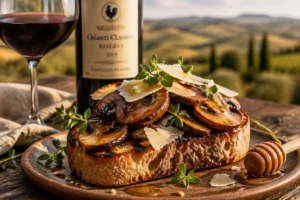
A classic Chianti Classico (Sangiovese) is the mandatory pairing. Its high acidity and cherry-earth notes mirror the rustic, savory nature of the Ribollita. Alternatively, a Morellino di Scansano offers a softer, more fruit-forward experience that highlights the sweetness of the caramelized cabbage and mushrooms.
The Etymological Chronicle
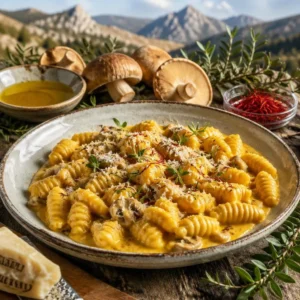
In the Italian tradition (Post B), the Fairy Ring mushroom is often categorized under the term Fungo di prato. While Gambe secche (Dry Legs) is the technical name used by mycologists, the Tuscan peasants often referred to them as Marasmi. This term, derived from the same Greek root as the scientific name, acknowledges the mushroom's habit of "withering" in the sun and "springing back to life" with the rain—a biological resilience that Tuscans equated with their own enduring spirit.
To provide the best experiences, we use technologies like cookies to store and/or access device information. Consenting to these technologies will allow us to process data such as browsing behavior or unique IDs on this site. Not consenting or withdrawing consent, may adversely affect certain features and functions.
Functional
Always active
The technical storage or access is strictly necessary for the legitimate purpose of enabling the use of a specific service explicitly requested by the subscriber or user, or for the sole purpose of carrying out the transmission of a communication over an electronic communications network.
Preferences
The technical storage or access is necessary for the legitimate purpose of storing preferences that are not requested by the subscriber or user.
Statistics
The technical storage or access that is used exclusively for statistical purposes.The technical storage or access that is used exclusively for anonymous statistical purposes. Without a subpoena, voluntary compliance on the part of your Internet Service Provider, or additional records from a third party, information stored or retrieved for this purpose alone cannot usually be used to identify you.
Marketing
The technical storage or access is required to create user profiles to send advertising, or to track the user on a website or across several websites for similar marketing purposes.