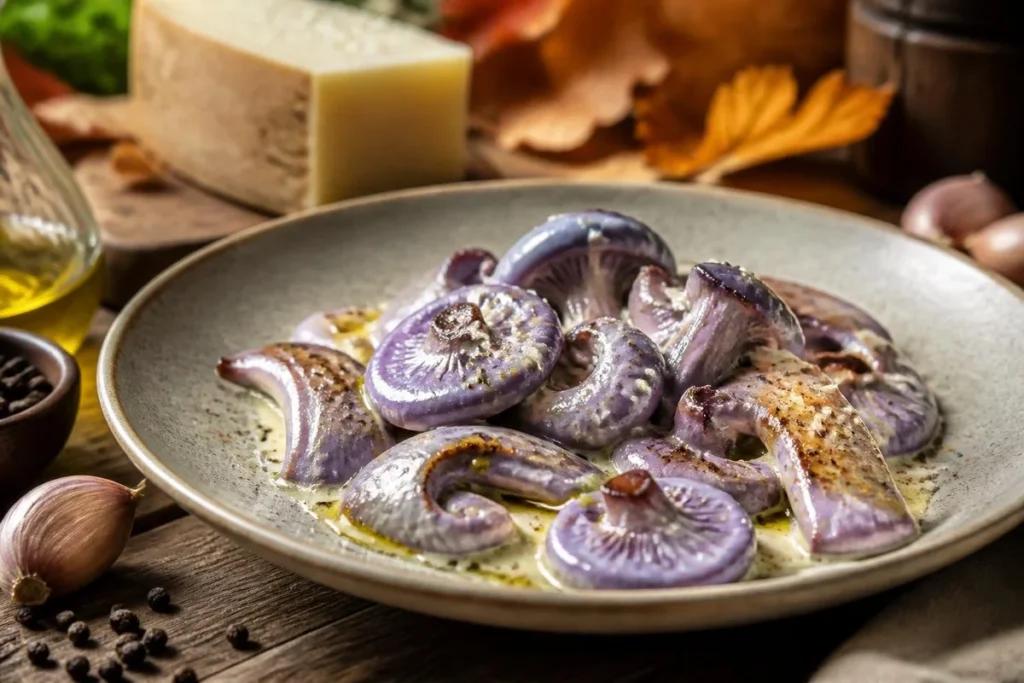
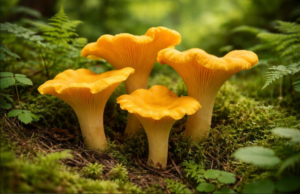
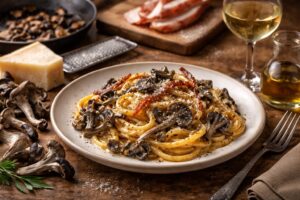
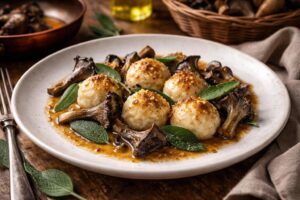
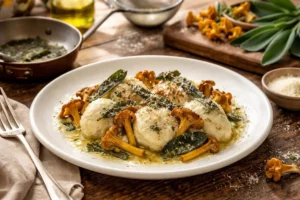
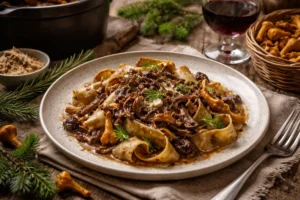
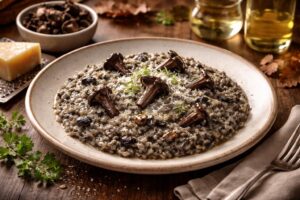
This preparation utilizes the ancient Roman technique of creating a "Cacio e Pepe" style emulsion, where the sharp, salty profiles of Pecorino Romano DOC are used to scientifically clarify and lengthen the Wood Blewit's floral top notes.
Roman Pecorino Emulsion with Wood Blewit
In the oak and chestnut forests surrounding Rome, the Clitocybe nuda has been a prized autumn find since antiquity. This recipe is a modern scientific tribute to the eternal city's most famous culinary export: the cheese-and-pepper emulsion. Historically, Roman shepherds would pair their sharp, aged sheep's cheeses with wild mountain fungi to add depth to their simple meals. By utilizing the molecular properties of aged Pecorino, we create a silken, savory glaze that respects the Wood Blewit's delicate texture while providing a bold, Mediterranean finish.
Prep Time
Cook Time
Complexity
Calories
Region
20 min
10 min
Grand Officier
390 kcal
Lazio, Italy
Master Recipe (1:10 Ratio)
The 1:10 ratio of aged Pecorino to mushroom weight is critical for maintaining the savory equilibrium without overwhelming the floral fungi.
500g Fresh Clitocybe nuda (quartered or sliced)
50g Pecorino Romano DOC (very finely grated)
100ml Starchy pasta water (reserved from cooking)
30ml Extra virgin olive oil
5g Toasted black peppercorns (coarsely cracked)
1 Clove of garlic (whole, for infusion)
The Technique
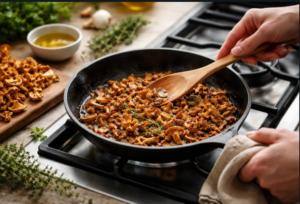
Infuse the olive oil with the garlic clove over medium heat, then remove the garlic. Add the Clitocybe nuda and sauté until they have released their moisture and developed a light golden sear. Meanwhile, whisk the finely grated Pecorino with a small amount of the starchy water to form a thick, smooth paste. This is the **Emulsification** base. Add the remaining starchy water to the mushroom pan to achieve a rapid **Deglazing**. Remove from heat—this is essential to prevent the cheese from clumping. Fold in the Pecorino paste and cracked pepper, whisking vigorously until a glossy, silken emulsion coats every mushroom cap.
Shop Integration
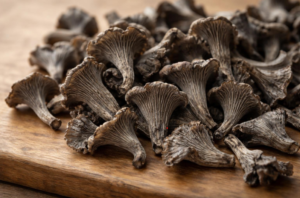
The sharp, savory profile of a Roman emulsion is a magnificent companion to our robust Boletus edulis or the peppery, intense Cantharellus cibarius. To build a truly authentic Mediterranean mycological platter, consider layering these flavors with the delicate, nutty profiles of our Marasmius oreades or the sophisticated elegance of Amanita caesarea. Our Craterellus cinereus and Morchella conica provide the necessary deep-forest umami to balance the high-acid/high-salt profile of the Pecorino preparation.
The Umami Profile
This dish demonstrates "chemical umami enhancement." The high sodium and glutamic acid content of the Pecorino Romano acts as a bridge, lowering the sensory threshold for the subtle savory compounds in the Wood Blewit. The addition of toasted black pepper provides a "heat" that stimulates the trigeminal nerve, further intensifying the perception of umami and the mushroom's floral top notes.
Sommelier’s Choice
A wine with "sapidity" and structure is required to match the saltiness of the Pecorino. We recommend a Frascati Superiore DOCG. Its volcanic minerality and notes of white peach and almond perfectly echo the Lazio terroir, while its crisp acidity cleanses the palate of the rich cheese emulsion.
The Etymological Chronicle
In the Roman dialect (Romanesco), the Wood Blewit is often called Fungatèllo violetto. While the French call it Pied-bleu and the Spanish Piecito azul, the Italian Agarico violetto remains the most formal and descriptive name. The English "Blewit" continues to fascinate etymologists, likely acting as a colorful descriptor for this late-season fungi that brings a vibrant lilac splash to the Roman countryside during the late autumn transition.
Pure Umami | Mycological Research & Culinary Arts | 2026
To provide the best experiences, we use technologies like cookies to store and/or access device information. Consenting to these technologies will allow us to process data such as browsing behavior or unique IDs on this site. Not consenting or withdrawing consent, may adversely affect certain features and functions.
Functional
Always active
The technical storage or access is strictly necessary for the legitimate purpose of enabling the use of a specific service explicitly requested by the subscriber or user, or for the sole purpose of carrying out the transmission of a communication over an electronic communications network.
Preferences
The technical storage or access is necessary for the legitimate purpose of storing preferences that are not requested by the subscriber or user.
Statistics
The technical storage or access that is used exclusively for statistical purposes.The technical storage or access that is used exclusively for anonymous statistical purposes. Without a subpoena, voluntary compliance on the part of your Internet Service Provider, or additional records from a third party, information stored or retrieved for this purpose alone cannot usually be used to identify you.
Marketing
The technical storage or access is required to create user profiles to send advertising, or to track the user on a website or across several websites for similar marketing purposes.