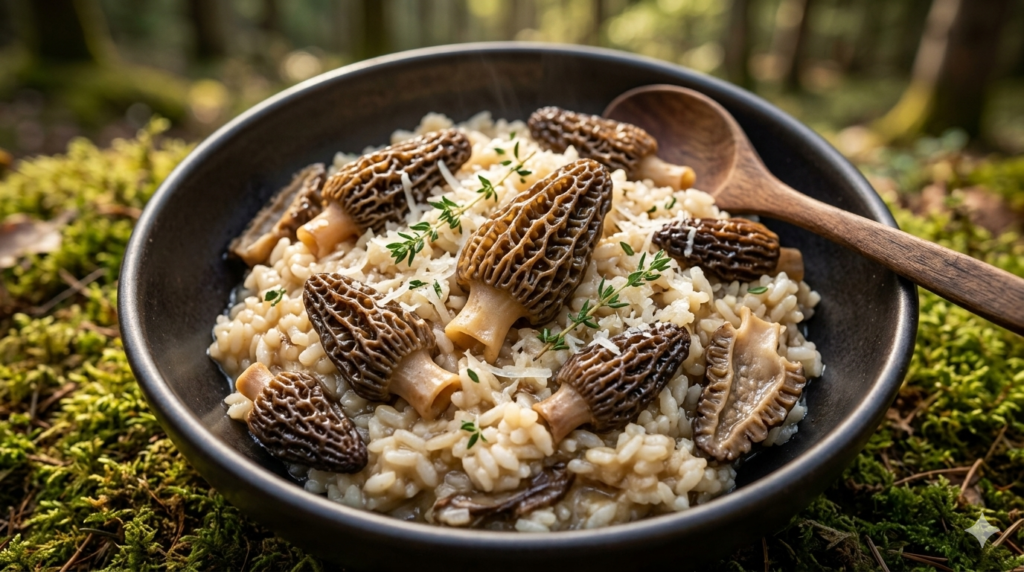
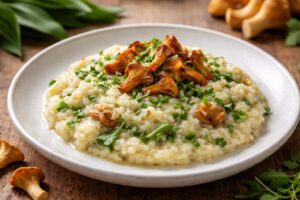
The Ultimate Gourmet Morel Risotto: A Deep Umami Experience with Dried Wild Mushrooms
A prestigious, high-altitude masterclass in mycological gastronomy, featuring the honeycomb-textured Morchella and aged Carnaroli rice.
The Vernal Alchemist’s Risotto
Wild Morels and Aged Carnaroli in a Silken Madeira-Infused Emulsion
The Historical Prelude
The Morchella, or Morel, is the heralded messenger of spring in the European culinary calendar. Historically, its appearance in the damp clearings of the Black Forest and the French Alps was met with a reverence bordering on the divine. In the 18th century, Morels were the darling of the House of Bourbon, often served during Lent as a meat-like indulgence for the aristocracy.
The evolution of the "Morel Risotto" represents a historical convergence of French and Italian excellence. While the rice culture of the Po Valley provided the structural canvas, it was the French masters, notably Auguste Escoffier, who introduced the technique of deglazing these hollow fungi with fortified wines like Madeira to highlight their smoky, nut-like profile. This dish was famously served at the Palace of Versailles during spring banquets, symbolizing the monarch's mastery over the fleeting treasures of the wild.
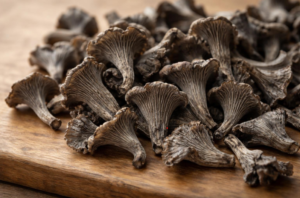
Working with dried Morels is an exercise in "Aromatic Restoration." Unlike fresh mushrooms, dried Morels possess a concentrated, quase-fermented depth that is essential for a truly "deep" umami experience. Our philosophy focuses on the Double-Infusion: we use the rehydration liquid to flavor the rice from within, while the restored mushroom caps provide the textural architecture.
Sensory & Foraging Profile
Nomenclature:Morchella esculenta (Yellow Morel) and Oryza sativa (Carnaroli Rice).
Terroir: The finest Morels for drying are sourced from the Atlantic Fringes and the Pyrenees. The limestone-heavy soil gives the mushroom a metallic, smoky finish that intensifies during the dehydration process.
Professional Protocol: We adhere to the "Clean-Dry-Store" protocol. Morels must be dried immediately after harvest to prevent the loss of volatile guanylates. We use a "Leave No Trace" harvesting method, ensuring the subterranean root system of the host ash or elm trees remains undisturbed to guarantee a return harvest the following spring.
Essential Equipment
Heavy Copper Risottiera: For uniform heat distribution and perfect starch agitation.
Fine Mesh Sieve & Coffee Filter: To clarify the mushroom rehydration liquid.
Wooden "Girorisotto" Spoon: To aerate the rice without bruising the delicate grains.
Master Recipe
Stage 1: The Aromatic Restoration
40g Dried Wild Morels (The mandatory equivalent of 400g Fresh Morels).
Rehydrate the Morels in 400ml of warm (not boiling) spring water for 30 minutes.
Remove the mushrooms, squeeze gently, and filter the liquid through a coffee filter. This liquid is your "Morel Nectar"—the soul of the dish.
Stage 2: The Tostatura & Deglaze
Toast 320g of Carnaroli rice in a dry pan until hot.
Deglaze with 100ml of Madeira (Sercial). Once evaporated, begin adding a mixture of simmering vegetable stock and your "Morel Nectar" one ladle at a time.
Stage 3: The Morel Sauté & Mantecatura
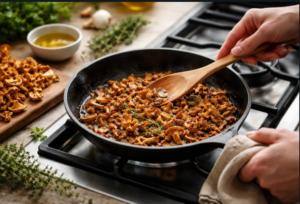
In a separate pan, sauté the rehydrated 40g of Morels (400g fresh equivalent) in 30g of butter with a minced shallot until slightly crisp.
Add the mushrooms to the rice at the 12-minute mark.
Once al dente, remove from heat. Vigorously beat in 50g of cold, cultured butter and 60g of 30-month aged Parmigiano Reggiano (The Mantecatura).
The Umami Secret: The 1:10 Nucleotide Synergy
The "Pure Umami" experience is achieved through the 1:10 concentration effect. Dried Morels contain ten times the amount of guanylate per gram than fresh ones. When this guanylate meets the glutamates in the aged cheese and the inosinates in the stock, it triggers a synergistic flavor explosion. By using the rehydration nectar, you ensure that every grain of rice is "molecularly seasoned" from the center outward.
Pro Technique: The “Ghost Infusion”
For a professional "Chef's Secret," pulverize 2-3 of your dried morels into a fine powder and mix it with your finishing salt. Dust this "Morel Salt" over the risotto just before serving to provide an immediate aromatic hit to the olfactory senses.
The Art of Pairing
Sommelier's Choice: A mature Chardonnay from the Jura or an Amontillado Sherry. The oxidative notes of these wines are the only structural match for the smoky depth of the dried morels.
Non-Alcoholic: A warm infusion of roasted chicory and dandelion root, offering a sophisticated bitter-earthy contrast.
Ancestral Nutrition
Morels are a legendary source of Vitamin D and Iron. In the traditional folk medicine of the Pyrenees, this risotto was considered a "blood-builder," served in early spring to restore the vitality lost during the winter dormancy.
Micro-FAQ
Q: Why is the 1:10 ratio so important for dried Morels? A: Because 40g of dried Morels provides the aromatic complexity and volume of 400g of fresh, but with a significantly more concentrated umami profile that is better suited for the starch of a risotto.
Q: Can I use regular garlic? A: It is better to use shallots. Regular garlic can be too aggressive and may mask the delicate hazelnut notes of the Morchella.
To provide the best experiences, we use technologies like cookies to store and/or access device information. Consenting to these technologies will allow us to process data such as browsing behavior or unique IDs on this site. Not consenting or withdrawing consent, may adversely affect certain features and functions.
Functional
Always active
The technical storage or access is strictly necessary for the legitimate purpose of enabling the use of a specific service explicitly requested by the subscriber or user, or for the sole purpose of carrying out the transmission of a communication over an electronic communications network.
Preferences
The technical storage or access is necessary for the legitimate purpose of storing preferences that are not requested by the subscriber or user.
Statistics
The technical storage or access that is used exclusively for statistical purposes.The technical storage or access that is used exclusively for anonymous statistical purposes. Without a subpoena, voluntary compliance on the part of your Internet Service Provider, or additional records from a third party, information stored or retrieved for this purpose alone cannot usually be used to identify you.
Marketing
The technical storage or access is required to create user profiles to send advertising, or to track the user on a website or across several websites for similar marketing purposes.