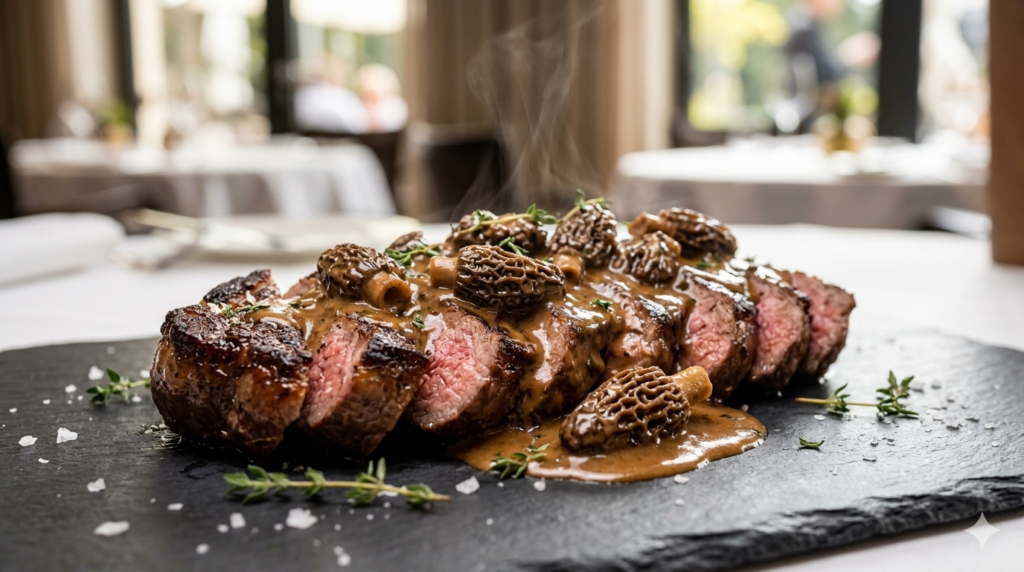
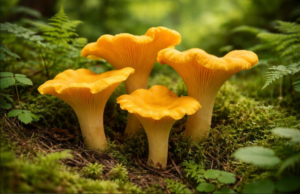
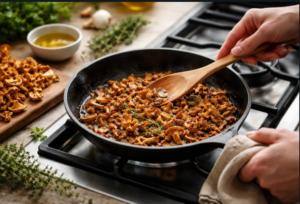
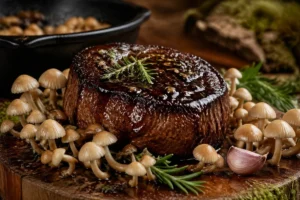
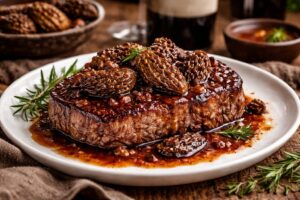
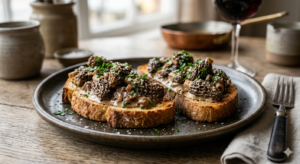
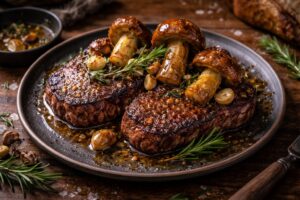
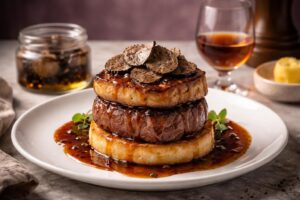
A magnificent marriage of prime aged beef and the legendary "King of Spring" mushrooms, bathed in a silken Madeira-infused reduction.
The Sovereign’s Entrecôte
Grass-Fed Beef Fillet with a Rich Emulsion of Wild Morchella and Madeira
The Historical Prelude
The pairing of prime beef with Morchella (Morel) mushrooms is a cornerstone of the 19th-century French culinary renaissance. Known as "The Queen of the Spring," the Morel has been the darling of the French Alps for centuries, but it was at the Maison Dorée in Paris where this pairing reached legendary status.
Legend has it that Napoléon III had a particular affinity for the smoky, nut-like depth of the Morel when combined with the robust juices of a pan-seared steak. The great Auguste Escoffier later refined this dish, moving away from heavy flour-based gravies to the "reduction-emulsion" style—using the mushroom's own juices and fortified wines from the Atlantic Fringes to create a sauce that enhanced, rather than masked, the quality of the meat. This dish symbolizes the height of Western European gastronomy: the meeting of the meadow and the deep forest.
This dish is an exploration of the "Synergy Effect." The Morel is a hollow, honeycomb vessel designed to trap lipid-rich sauces. Our philosophy focuses on Aromatic Synchronization: we use the same pan to sear the beef and create the sauce, ensuring the *fond* (the browned meat proteins) provides the structural base for the mushroom's smoky volatiles.
Sensory & Foraging Profile
Nomenclature:Morchella esculenta (Yellow Morel) and Bos taurus (Dry-Aged Beef).
Terroir: The finest Morels are harvested from the Black Forest or the limestone-rich banks of the Loire Valley. The soil composition here, rich in minerals and wood ash, lends the mushroom its distinctive aroma of toasted hazelnut and damp earth.
Professional Protocol: Morels must be inspected for "internal integrity." We only harvest specimens with a clean, white internal cavity. We practice the "Sporal Dispersal" method—harvesting into mesh baskets to ensure the forest floor is re-seeded as we move through the terroir.
Essential Equipment
Heavy Steel Sauté Pan: For achieving a perfect Maillard reaction on the beef and even heat for the reduction.
Conical Whisk: To ensure the cream emulsion is molecularly stable.
Digital Probe Thermometer: For precise internal meat temperature control.
Master Recipe
Stage 1: The Protein Sear
2 Dry-Aged Beef Fillets or Ribeyes (approx. 250g each).
Sear in a scorching pan with grapeseed oil for 3-4 minutes per side. Remove and rest.
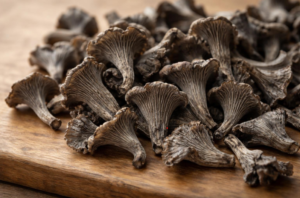
If using the 40g Dried (400g Fresh equivalent), reserve the filtered soaking liquid.
Sauté the Morels in the beef pan with 1 minced shallot. The mushrooms will absorb the beef juices (the *fond*).
Stage 3: The Madeira Reduction & Emulsion
Deglaze the pan with 80ml of Madeira (Verdelho). Reduce by half.
Add 150ml of high-fat double cream and any reserved mushroom nectar. Simmer until the sauce reaches *nappe* consistency.
Return the steaks to the pan for 30 seconds to glaze them in the sauce. Finish with fresh thyme leaves.
The Umami Secret: The 1:10 Nucleotide Synergy
The "Pure Umami" of this dish is a result of Guanylate-Glutamate bonding. Beef is exceptionally rich in free glutamates, while Morels (especially when dried and restored using the 1:10 ratio) are packed with guanylates. When these two molecules meet in a fat-rich environment (the cream), they lock onto the tongue's receptors, creating a flavor intensity that is eight times stronger than each ingredient alone.
Pro Technique: The “Arrosé” Method
To achieve a 3-star Michelin finish, baste the steak with the Morel sauce during the final 30 seconds of resting. This "Cold-Rest Basting" ensures the meat fibers relax while pulling the mushroom aromatics deep into the surface of the steak.
The Art of Pairing
Sommelier's Choice: A Pauillac or a structured Saint-Émilion (Bordeaux). The wine's tannins provide the necessary structure to cut through the beef fat, while its earthy "undergrowth" notes mirror the Morels.
Non-Alcoholic: A cold-steeped Pu-erh Tea, which shares the same oxidative and earthy characteristics as the Madeira wine.
Ancestral Nutrition
Morels are a rare source of Vitamin D and are rich in Iron. Historically, in the **French Pyrenees**, this "Feast" was served to hunters after the first spring thaw to restore iron levels and provide high-density protein for the coming season.
Micro-FAQ
Q: Why is the 1:10 ratio mandatory for the sauce? A: 40g of dried Morels contains the same aromatic weight as 400g of fresh ones, but provides a much more stable texture for a cream reduction, preventing the sauce from becoming watery.
Q: Can I use regular white wine instead of Madeira? A: You can, but you will miss the oxidative depth that makes this a "Royal" preparation. Madeira is essential for the authentic Pure Umami profile.
To provide the best experiences, we use technologies like cookies to store and/or access device information. Consenting to these technologies will allow us to process data such as browsing behavior or unique IDs on this site. Not consenting or withdrawing consent, may adversely affect certain features and functions.
Functional
Always active
The technical storage or access is strictly necessary for the legitimate purpose of enabling the use of a specific service explicitly requested by the subscriber or user, or for the sole purpose of carrying out the transmission of a communication over an electronic communications network.
Preferences
The technical storage or access is necessary for the legitimate purpose of storing preferences that are not requested by the subscriber or user.
Statistics
The technical storage or access that is used exclusively for statistical purposes.The technical storage or access that is used exclusively for anonymous statistical purposes. Without a subpoena, voluntary compliance on the part of your Internet Service Provider, or additional records from a third party, information stored or retrieved for this purpose alone cannot usually be used to identify you.
Marketing
The technical storage or access is required to create user profiles to send advertising, or to track the user on a website or across several websites for similar marketing purposes.