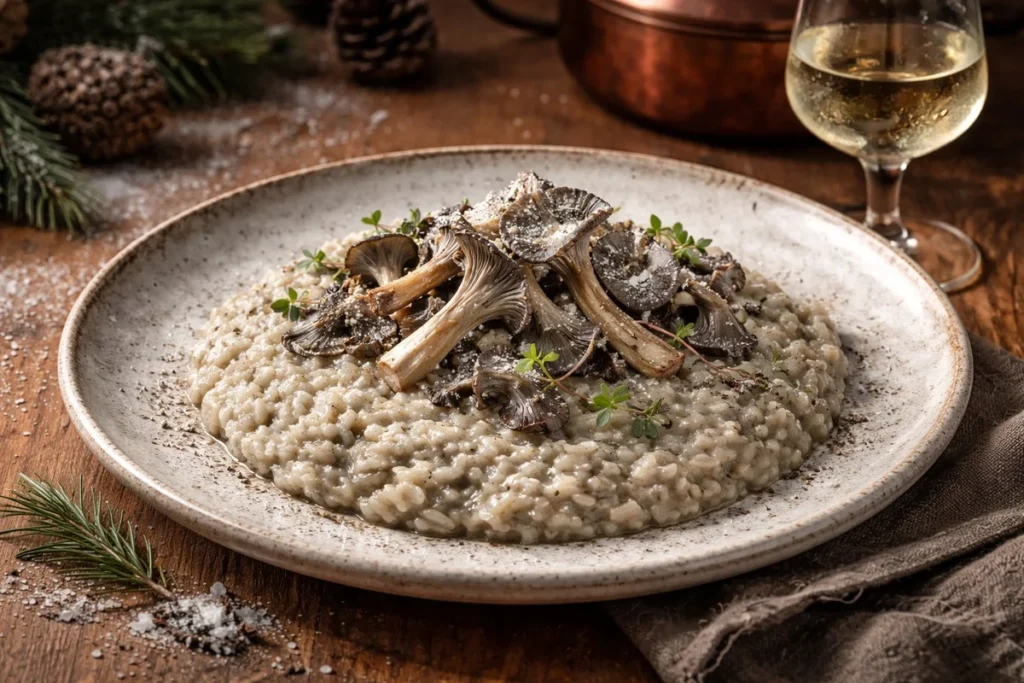
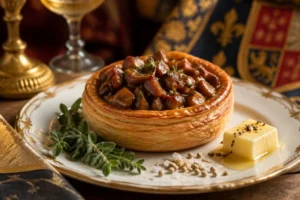
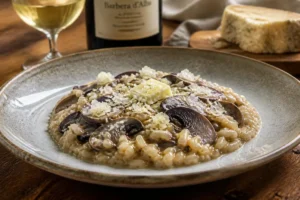
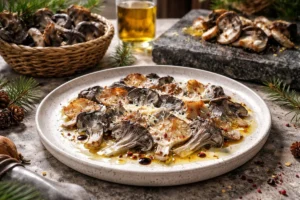
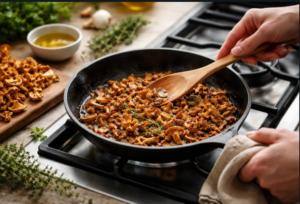
Experience the heights of Italian Cucina Povera with this Dolomite-inspired risotto featuring wild Gray Chanterelles and aged Castelmagno cheese.
Dolomite Limestone Risotto
Ashen Umami Dust and the Spirit of the Pale Peaks
The Historical Prelude
In the high-altitude reaches of the Dolomites, where the limestone crags pierce the veil of the clouds, the Cantharellus cinereus has long been a culinary phantom. While the Venetian nobility in the lowlands demanded the opulent spices of the East, the mountain aristocracy of the late Renaissance—most notably the advisors to Catherine de' Medici—recognized a different kind of luxury: the quiet, earthy intensity of the Gray Chanterelle. It is said that when Catherine traveled to the French court, she brought with her the secret of the "Ashen Dust," a technique used by the mountain foragers of the Sellaronda to preserve the ephemeral flavor of the harvest.
These mountain chefs, masters of what we now call "Cucina Povera Luxury," realized that the Gray Chanterelle possessed a unique affinity for the starchy grains of the North. By the 19th century, during the peak of the Grand Tour, legendary chefs began incorporating these "silver trumpets" into the risottos served to weary travelers. They sought to mirror the very landscape in the bowl—the gray of the limestone, the green of the pine needles, and the white of the early frosts. This risotto is a direct descendant of that era, bridging the gap between humble mountain foraging and the refined palates of the European elite.
Narrative Intro: The Dolomites are not just mountains; they are ancient coral reefs frozen in time. This culinary philosophy treats the Gray Chanterelle as the mineral heartbeat of the forest. In this region, we don't just cook food; we attempt to replicate the synergy between the limestone soil and the moisture of the Atlantic Fringes. Every grain of rice must be a vessel for the woodsy, peppery essence of the Cantharellus cinereus.
Sensory & Foraging Profile
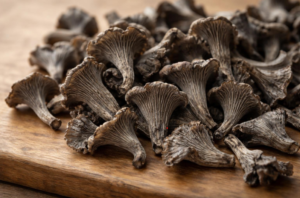
The Cantharellus cinereus is a master of disguise, blending seamlessly with the slate-gray leaf litter of the Black Forest and the Pyrenees. Unlike its vibrant golden relative, the Gray Chanterelle offers a scent profile that is significantly more sophisticated—leaning away from pure fruit and toward a damp slate, toasted almond, and white pepper bouquet.
Ethical Harvesting: In the limestone-rich terrains of Western Europe, the "Leave No Trace" protocol is non-negotiable. Foragers must use a specialized horsehair brush to clean the specimens in situ, allowing the spores to remain in their native habitat. Because Cantharellus cinereus is often found in clusters, the professional forager only harvests "the elders," leaving the smaller buttons to reach maturity and continue the genetic legacy of the patch.
Essential Equipment
Acquerello or Carnaroli Rice: Aged grains for maximum starch release.
Copper Risottiera: For even heat distribution to prevent scorching.
Microplane: For the precision grating of aged Castelmagno.
Dehydrator: Essential for creating the "Ashen Umami Dust."
Master Recipe: Dolomite Limestone Risotto
Preparation of the Ashen Dust: Take 50g of Gray Chanterelles, dehydrate at 40°C for 12 hours, and pulse into a fine powder with a pinch of sea salt. Set aside.
The Mushroom Essence: Sauté 200g of fresh, torn Gray Chanterelles in Beurre d'Échiré until their edges are crisp. Remove and keep warm.
The Tostatura: In the same copper pan, toast 320g of rice until the grains are hot to the touch. This seals the starch. Deglaze with 100ml of dry Alto Adige Pinot Grigio.
The Gradual Infusion: Begin adding simmering mushroom stock (infused with Gray Chanterelle trimmings) one ladle at a time. Stir constantly to develop the "all'onda" (wavy) texture.
The Mantecatura: Once the rice is al dente, remove from heat. Vigorously beat in 50g of cold butter and 60g of finely grated Castelmagno AOP cheese.
The Presentation: Plate the risotto, top with the sautéed mushrooms, and finish with a generous veil of the Ashen Umami Dust.
Substitutions & Variations
Cheese: If Castelmagno is unavailable, use a 36-month aged Parmigiano-Reggiano or a dry Pecorino Romano to maintain the salty, mineral edge.
Liquid: A high-quality vegetable bouillon can replace poultry stock, provided it is steeped with dried porcini to mimic the depth of the Gray Chanterelle.
Pro Technique: The Chef’s Secret
To achieve the perfect "mineral" finish, add a single drop of cold-pressed walnut oil at the very end of the mantecatura. The tannins in the walnut oil bridge the gap between the peppery notes of the mushroom and the creamy fat of the cheese.
The Umami Secret
The nucleotides in Cantharellus cinereus, specifically Guanylate, are concentrated tenfold during the dehydration process used for the Ashen Dust. When this powder hits the moisture of the risotto, it triggers a massive sensory response on the tongue, amplifying the savory characteristics of the Castelmagno cheese through synergistic umami activation.
The Art of Pairing
Sommelier's Notes: Pair this dish with a Barolo from a cool vintage. The wine's structured tannins and notes of "tar and roses" provide a magnificent counterpoint to the limestone minerality of the risotto. Alternatively, an artisanal dry cider from the Atlantic Fringes offers a crisp acidity that cuts through the richness.
Storage & Reheating
Risotto is best enjoyed immediately. However, if restoration is required, spread it thin on a chilled tray to stop the cooking. Reheat with a splash of hot stock and a fresh knob of butter to restore the emulsion. Never use a microwave, as it collapses the starch structure.
Ancestral Nutrition
This dish is a powerhouse of Ergosterols (pre-Vitamin D) and Polysaccharides. The inclusion of aged grains provides a low-glycemic index energy source, while the wild mushrooms offer rare trace minerals like Germanium, often found in high concentrations in the limestone soils of the Dolomites.
Micro-FAQ
Q: Why use the dehydration method for the dust? A: Dehydration breaks down the chitin walls and concentrates the flavor compounds, providing a punch of flavor that fresh mushrooms alone cannot achieve.
Q: Is Cantharellus cinereus synonymous with Black Trumpets? A: No. While they look similar, Cantharellus cinereus has distinct ridges, whereas Black Trumpets (Craterellus cornucopioides) are smooth underneath.
Q: Can I use arborio rice? A: You can, but Carnaroli is preferred for professional results as it holds its shape better during the vigorous stirring required for this recipe.
The Ashen Lexicon: Global Names for Cantharellus cinereus
The Ashen Chanterelle is a sophisticated relative of the golden chanterelle, prized for its deep, fruity aroma. Its regional names often describe its elegant grey-to-black coloration and trumpet-like hollow stem:
To provide the best experiences, we use technologies like cookies to store and/or access device information. Consenting to these technologies will allow us to process data such as browsing behavior or unique IDs on this site. Not consenting or withdrawing consent, may adversely affect certain features and functions.
Functional
Always active
The technical storage or access is strictly necessary for the legitimate purpose of enabling the use of a specific service explicitly requested by the subscriber or user, or for the sole purpose of carrying out the transmission of a communication over an electronic communications network.
Preferences
The technical storage or access is necessary for the legitimate purpose of storing preferences that are not requested by the subscriber or user.
Statistics
The technical storage or access that is used exclusively for statistical purposes.The technical storage or access that is used exclusively for anonymous statistical purposes. Without a subpoena, voluntary compliance on the part of your Internet Service Provider, or additional records from a third party, information stored or retrieved for this purpose alone cannot usually be used to identify you.
Marketing
The technical storage or access is required to create user profiles to send advertising, or to track the user on a website or across several websites for similar marketing purposes.