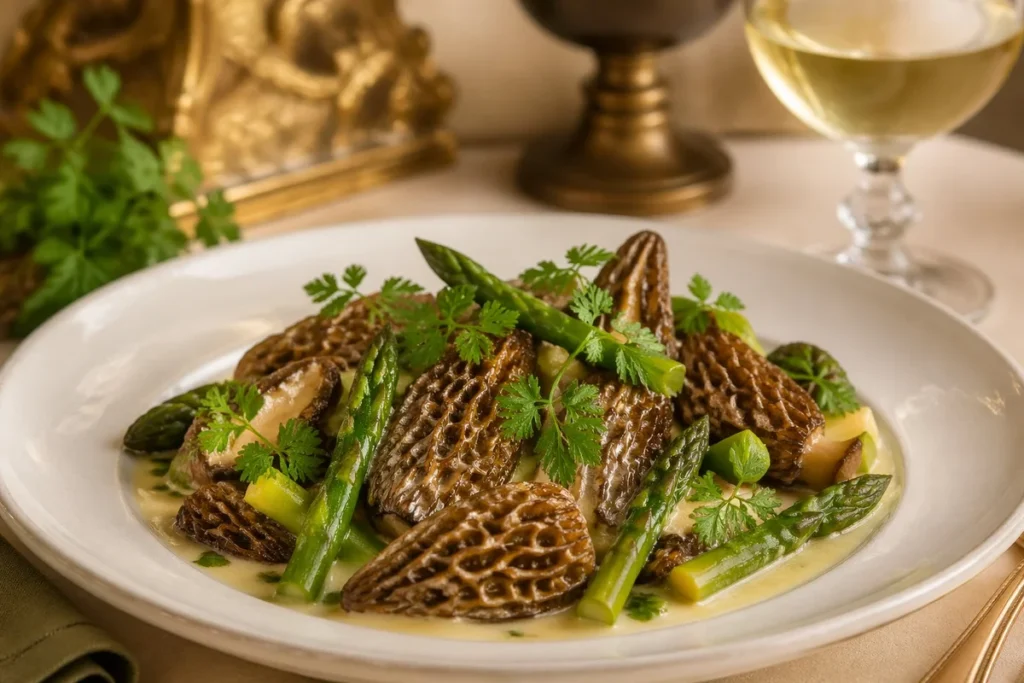
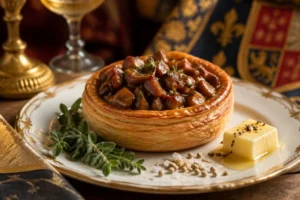
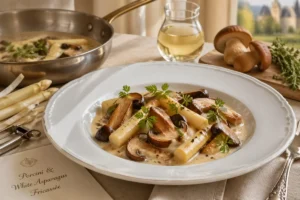
A Renaissance-inspired masterpiece uniting the royal Morchella esculenta with tender spring asparagus, echoing the refined elegance of the Medici courts.
Sensational Catherine de Medici Heritage The Secret Morel Asparagus Fricassée for Ultimate Perfection
A seasonal union of Morchella esculenta and the "Royal Stalk" of the Renaissance.
Why This Recipe Works
This culinary masterpiece operates through the chemical synergy between the aspartic acid found in young asparagus and the rich glutamate profile of Morchella esculenta. The fricassée is a technique that occupies the middle ground between sautéing and braising, allowing the morel to maintain its specific porous texture while soaking up the aromatic juices of butter and white pepper. Utilizing the professional 1:10 rule for dried morels is of essential importance here—the intensive concentrate from the soaking process transforms into a glaze that envelops the vegetables without dominating their delicate flavor. The professional standard here requires minimal thermal processing time to preserve the "forest floor" aroma of the fungi.
The Historical Prelude
When Catherine de' Medici arrived at the French court from Florence, she brought with her not only Italian Renaissance etiquette but also a love for ingredients that were considered exotic at the time—artichokes, asparagus, and wild mushrooms. In Western European culinary history, this combination of morels and asparagus is known as "Le Printemps du Roi" (The King's Spring). While medieval cuisine relied on heavy spices, the era of the Medicis introduced a focus on the natural flavor of Morchella and the freshness of spring crops from the Loire Valley.
For the gastronomes of the Renaissance era, the morel was a symbol of nature's rebirth. In the Alpine regions and the forests near the Pyrenees, the appearance of the first Morchella esculenta signaled the end of Lent and the beginning of the most exquisite banquets. This fricassée has evolved over the centuries, passing through the hands of chefs like La Varenne, to become today a mandatory element of any Michelin-starred spring menu, celebrating French savoir-faire.
The Essence Preservation Strategy: Rehydrate the dried morels in 500ml of warm water for 20 minutes. Save exactly 100ml of the liquid after filtering it carefully through a fine mesh. This "Morel Infusion" carries the Incredible Umami depth needed for the glaze.
The Color Lock Secret: Blanch the asparagus tips in salted boiling water for exactly 2 minutes, then immediately shock them in ice water. This preserves their emerald color and snap, providing the perfect textural contrast to the soft, porous Morchella esculenta.
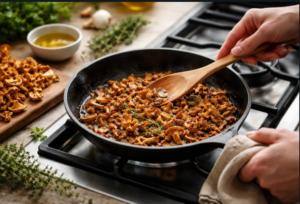
The Fricassée Liaison: Sauté the leeks in butter until soft, then add morels. Deglaze with white wine and reduce almost completely. Add the reserved morel infusion and the asparagus. Cook for 3-4 minutes until the sauce reduces to a shimmering glaze, achieving Ultimate Perfection in every bite.
Sensory & Foraging Profile
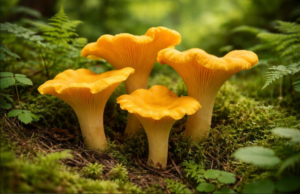
Botanical Integrity:Morchella esculenta is often found in symbiosis with deciduous tree species in the lower parts of the Alps. Its "honeycomb" structure is ideal for holding delicate sauces. During mycological surveys, always follow the "Leave No Trace" principle to avoid damaging the surface mycelium.
Essential Equipment
Stainless Steel Wide Pan: For rapid evaporation of liquids and even glazing.
Precision Kitchen Scale: To strictly observe the 1:10 ratio during hydration.
The Umami Secret
Sulfur-Glutamate Synergy: The scientific core of this dish is MSM (Methylsulfonylmethane), found in asparagus, which acts as a flavor enhancer for the sulfur compounds in the morel. The result is a complex aroma perceived as "full" and "deep," typical of high-end gastronomy.
The Art of Pairing
Since asparagus is often difficult to pair with wine, the best choice is a Sauvignon Blanc from Sancerre. Its herbaceous notes connect with the asparagus, while its mineral backbone balances the earthy character of the morel. Alternatively, a dry Pinot Grigio from Alto Adige would elegantly highlight the fricassée.
Micro-FAQ
Q: Can I use frozen asparagus? A: Absolutely not. Their texture will collapse and ruin the elegance of the fricassée—Ultimate Perfection requires fresh stalks.
Q: Why filter the mushroom water? A: Even the highest quality wild morels can contain microscopic grit in their folds; filtering ensures a grit-free, Michelin-standard experience.
Q: How do I identify Morchella esculenta? A: It is completely hollow and features a honeycomb structure—the gold standard for Pure Umami quality.
The Morel Lexicon: Regional Names for Morchella
The Morel is the undisputed queen of the spring forest. Its honeycomb structure and deep earthy aroma have earned it legendary status in cuisines from the Himalayas to the Appalachian Mountains:
Language
Regional & Folk Names
Cultural Context
English
Morel, Yellow Morel, Sponge Mushroom, Dryland Fish
"Dryland fish" is a popular folk name in the American South.
French
Morille, Morille blonde, Morille ronde
A staple of classic French haute cuisine.
German
Speisemorchel, Rund-Morchel
Highly valued in Alpine culinary traditions.
Bulgarian
Смърчкула, Пумпалка, Корминка, Мрежовка
"Pumpalka" refers to its spinning-top shape.
Romanian
Zbârciog, Ciuciulete, Попеască
"Zbârciog" is the most common term in Romanian folklore.
Russian / Polish
Сморчок (Smorchok) / Smardz jadalny
Considered a sign of the real spring's arrival.
Italian / Spanish
Spugnola / Colmenilla, Morilla
"Spugnola" (Italy) and "Colmenilla" (Spain) refer to the sponge/honeycomb look.
Turkish
Kuzu Göbeği Mantarı
Literally "Lamb's Belly" mushroom, a gourmet export of Turkey.
Japanese / Chinese
Amigasa-take (アミガサタケ) / Yangdujun
In China, it is highly valued for its medicinal properties.
Nordic (SE/NO/DK)
Toppmurkla / Rund morkel
A highly anticipated spring find in Scandinavia.
Scientific identification: Genus: Morchella | Pure Umami Research 2026
To provide the best experiences, we use technologies like cookies to store and/or access device information. Consenting to these technologies will allow us to process data such as browsing behavior or unique IDs on this site. Not consenting or withdrawing consent, may adversely affect certain features and functions.
Functional
Always active
The technical storage or access is strictly necessary for the legitimate purpose of enabling the use of a specific service explicitly requested by the subscriber or user, or for the sole purpose of carrying out the transmission of a communication over an electronic communications network.
Preferences
The technical storage or access is necessary for the legitimate purpose of storing preferences that are not requested by the subscriber or user.
Statistics
The technical storage or access that is used exclusively for statistical purposes.The technical storage or access that is used exclusively for anonymous statistical purposes. Without a subpoena, voluntary compliance on the part of your Internet Service Provider, or additional records from a third party, information stored or retrieved for this purpose alone cannot usually be used to identify you.
Marketing
The technical storage or access is required to create user profiles to send advertising, or to track the user on a website or across several websites for similar marketing purposes.