The Historical Prelude: The Hunter’s Autumn Solace
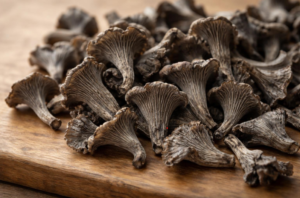
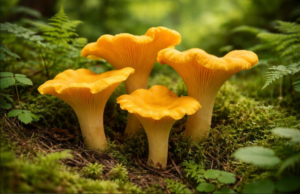
In the rugged heart of the Rhodope Mountains, the transition from autumn to winter has always been defined by the "Wild Harvest." Historically, the Venison (Red Deer) harvest provided the essential protein for mountain villages, while the forest floor offered its last treasures before the deep snow. The Yellow Foot Chanterelle (Craterellus lutescens) was traditionally prized as the "Late Gold," appearing in the damp mosses when other mushrooms had already succumbed to the frost.
Local hunters discovered that the lean, metallic depth of venison required a specific aromatic partner to soften its intensity. The apricot esters of the Yellow Foot, combined with the resinous "bite" of wild Juniper berries, created a culinary bridge. This synergy didn't just mask the gaminess; it celebrated it, grounding the meat in the very flavors of the forest where the deer grazed.
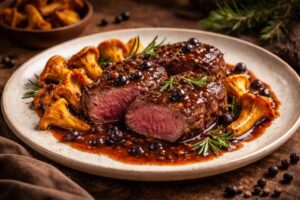
This dish represents a masterful study in Coniferous Terroir. By utilizing a "One-Pan" roasting technique, the juices of the venison are captured and transformed into a Jus that carries the essence of the pine needles, the juniper, and the delicate fungi. It is a dish that serves as a sensory map of the high-altitude Balkan wilderness.
Narrative Intro: This dish is a "Forest Hearth." Our philosophy for the Venison Haunch is to treat the Yellow Foot as a botanical seasoning. The mushroom's stone-fruit notes act as a natural "glaze" for the meat, while the juniper provides the structural resin that ties the plate back to the spruce-heavy landscape.
Sensory & Foraging Profile: The Moss and Granite Terroir
The Craterellus lutescens of the Rhodope region thrives in granite-derived, acidic soils beneath Scots Pine and Spruce. This terroir produces a mushroom with a vibrant orange stem and a high concentration of alpha-pinene (pine aroma) and linalool (apricot aroma). The hollow stems are particularly effective at holding onto the rich game jus, acting as tiny "flavor reservoirs" on the plate.
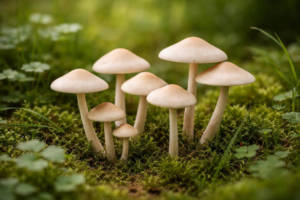
Ethical Harvesting & Professional Protocols: In the mountain passes, we follow the "Mycelial Insulation" protocol—never clearing the moss completely around a cluster to protect the underground network from freezing. We utilize natural hair brushes to clean the delicate caps and strictly harvest only when the temperature is above freezing to prevent the "cellular shattering" of the mushrooms.
Essential Equipment: The Roasting Station
Heavy-Bottomed Cast Iron Skillet: Essential for a high-intensity sear on the venison and even heat distribution during roasting.
Digital Probe Thermometer: Crucial for reaching a perfect medium-rare internal temperature (52°C).
Fine-Mesh Sieve: To strain the juniper-infused jus for a silk-like professional finish.
Small Mortar and Pestle: To lightly crack the juniper berries, releasing their volatile oils without turning them into a paste.
Master Recipe: Venison Haunch & Yellow Foot
Stage 1: The Coniferous Rub
Lightly crush 6 Juniper Berries with black peppercorns and sea salt. Rub this mixture over a 500g Venison Haunch (topside). Let it temper at room temperature for 30 minutes. This allows the resins to penetrate the outer layer of the meat.
Stage 2: The High-Heat Sear
In a hot skillet with duck fat or oil, sear the venison on all sides until a deep mahogany crust forms. Add a knob of butter and a sprig of fresh rosemary, basting the meat as it sears.
Stage 3: The Oven Finish
Transfer the skillet to a preheated oven at 180°C. Roast until the internal temperature reaches 52°C. Remove the meat and let it rest on a warm plate for at least 10 minutes—this is non-negotiable for a tender result.
Stage 4: The Yellow Foot Sauté & Jus
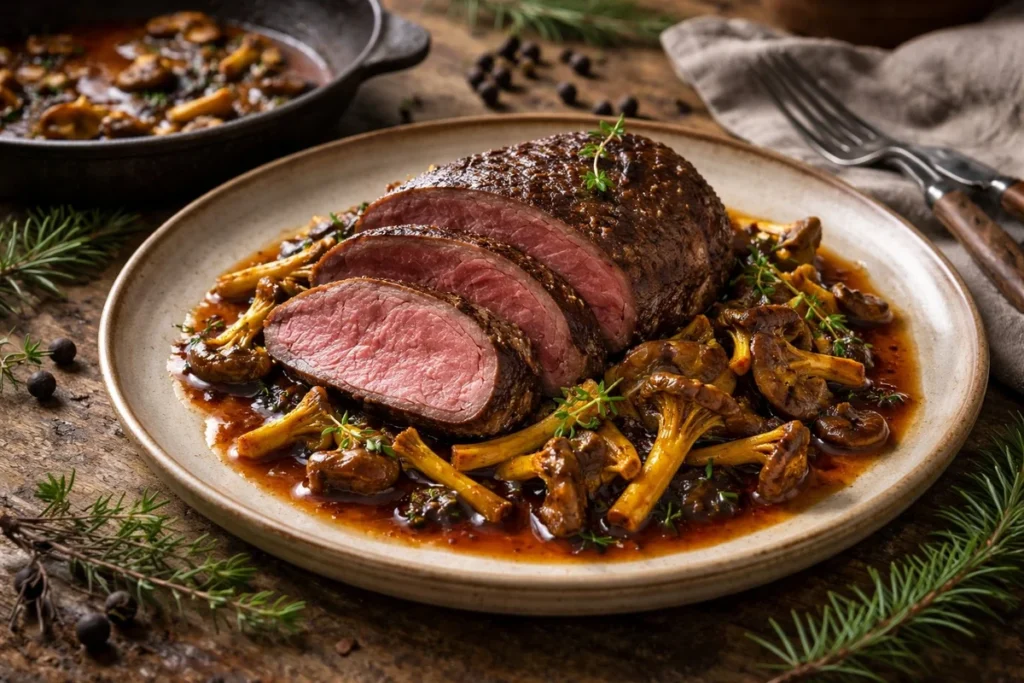
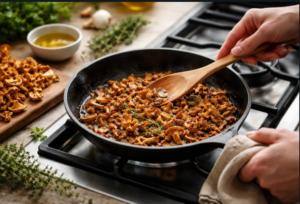
In the same skillet (don't clean it!), add 300g of fresh Yellow Foot chanterelles. Sauté until they release their moisture. Deglaze with 100ml of Red Wine and 100ml of Beef or Game Stock. Reduce until the liquid coats the mushrooms in a glossy glaze.
Stage 5: The Final Assembly
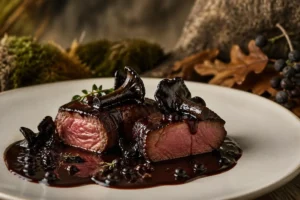
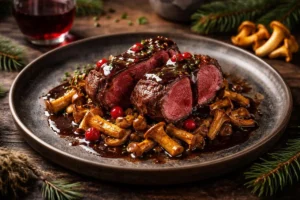
Slice the venison against the grain. Arrange on warm plates and spoon the Yellow Foot mushrooms and the reduced juniper jus over the meat. Garnish with a few fresh Thyme leaves.
Substitutions & Variations: The Luxury Palette
The Protein: Replace Venison with Beef Fillet or Lamb Loin for a less gamey, more approachable profile.
The Deglaze: Use Port Wine instead of red wine for a sweeter, more syrupy jus that emphasizes the mushroom's fruitiness.
The Mushroom: For an extra layer of umami, add a few Dried Porcini (Boletus edulis) to the jus reduction.
Pro Technique: The “Resting Butter” Infusion
While the venison is resting, place a small knob of cold butter on top of the meat and cover loosely with foil. As the butter melts, it will mix with the resting juices of the deer, creating a "secondary jus" that you can stir back into your mushroom sauté for an incredible depth of flavor.
The Umami Secret: Alpha-Pinene and Iron Chelation
The **Venison** is exceptionally high in Heme Iron. The **Yellow Foot** contains Alpha-Pinene and Limonene. When these aromatics interact with the iron on the palate, they reduce the perceived "metallic" taste of the game and instead emphasize a **Crystalline Umami**—a sharp, clean savory sensation that is characteristic of high-altitude forest cuisine.
The Art of Pairing: The Sommelier’s Selection
Sommelier's Choice: A Mavrud from the Thracian Valley. This indigenous Bulgarian grape has the tannins and dark fruit profile to match the venison, with a spicy finish that echoes the juniper.
Non-Alcoholic Alternative:Warm Pomegranate and Rosemary Fizz. The tartness of the pomegranate mirrors the wine's acidity, while the rosemary ties into the forest notes.
Storage & Reheating
Venison is best enjoyed immediately. **Reheating:** If you have leftovers, slice thin and use in a cold salad. If you must reheat, do so very gently in a pan with a splash of stock to prevent the meat from becoming tough and "livery." The mushroom jus can be stored for 48 hours and is excellent over mashed potatoes.
Ancestral Nutrition
Venison is one of the densest sources of Vitamin B12 and Iron with significantly less fat than beef. Yellow Foot chanterelles contribute Vitamin D2 and Selenium. In Balkan tradition, this combination was the "Strength of the Mountain," believed to fortify the blood and the spirit for the coming winter.
Micro-FAQ
Q: Why is it called "Yellow Foot"? A: Because of its distinctive bright yellow-to-orange hollow stem, which contrasts beautifully with its brownish-grey cap.
Q: Can I use regular chanterelles? A: You can, but Yellow Feet (Craterellus lutescens) are more floral and delicate, whereas regular chanterelles are meatier and more peppery.
Q: Is it safe to eat pink venison? A: Yes, venison is best served medium-rare. Overcooking it will make it dry and gamey due to its extremely low fat content.
To provide the best experiences, we use technologies like cookies to store and/or access device information. Consenting to these technologies will allow us to process data such as browsing behavior or unique IDs on this site. Not consenting or withdrawing consent, may adversely affect certain features and functions.
Functional
Always active
The technical storage or access is strictly necessary for the legitimate purpose of enabling the use of a specific service explicitly requested by the subscriber or user, or for the sole purpose of carrying out the transmission of a communication over an electronic communications network.
Preferences
The technical storage or access is necessary for the legitimate purpose of storing preferences that are not requested by the subscriber or user.
Statistics
The technical storage or access that is used exclusively for statistical purposes.The technical storage or access that is used exclusively for anonymous statistical purposes. Without a subpoena, voluntary compliance on the part of your Internet Service Provider, or additional records from a third party, information stored or retrieved for this purpose alone cannot usually be used to identify you.
Marketing
The technical storage or access is required to create user profiles to send advertising, or to track the user on a website or across several websites for similar marketing purposes.