In the unforgiving waters of the North Atlantic, the arrival of Skrei—the migratory Atlantic cod—is a seasonal miracle. For over a millennium, the Icelandic and Norwegian people have celebrated this "Wandering Fish" (Skrei comes from the Old Norse skreið), which travels over 1,000 kilometers from the Barents Sea to spawn. Historically, Skrei was preserved through wind-drying (Stockfish), but the fresh, pearlescent flakes were reserved for the elite winter feasts of the Althing.
The pairing with Yellow Foot Chanterelles (Craterellus lutescens) is a tribute to the "preserved" flavors of the Nordic larder. While the fish is a seasonal fresh protein, the use of Fermented Black Garlic represents the ancient Nordic tradition of slow-transformation—aging ingredients over time to survive the dark winters. The Icelandic chefs discovered that the caramelized, balsamic-like depth of black garlic acted as a bridge, anchoring the saline, lean flakes of the Skrei to the bright, apricot-scented minerals of the mountain chanterelles.
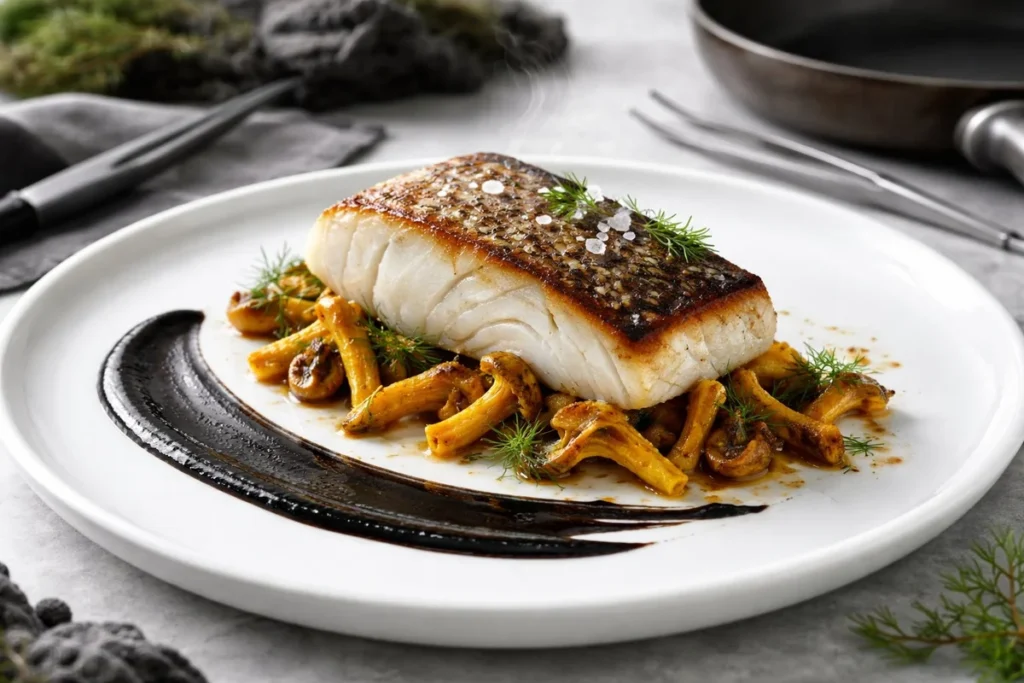
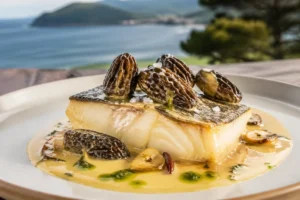
By the 21st century, this dish has become a staple of New Nordic Cuisine in Reykjavik and Akureyri. It represents a masterful study in Chromatic Contrast: the stark white of the cod, the golden-yellow of the mushroom, and the deep, ink-black of the fermented garlic sauce. It is a dish that tastes of the Atlantic spray and the damp, volcanic mosses of the Icelandic highlands.
Narrative Intro: This dish is a "Volcanic Shoreline." Our philosophy for the Skrei and Yellow Foot is to utilize black garlic as a "savory anchor." The fermentation notes of the garlic provide the weight necessary to prevent the mushroom's floral apricot esters from being overwhelmed by the clean, lean salinity of the cod.
Sensory & Foraging Profile: The Volcanic Moss and Basalt Terroir
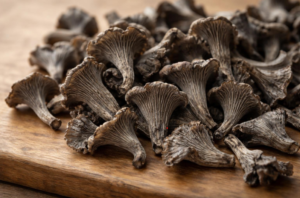
The Craterellus lutescens of the Icelandic and Faroese highlands grows in basaltic, volcanic soils covered in thick Racomitrium moss. This terroir imparts a sharper, metallic minerality to the mushroom's profile. The high UV exposure of the northern latitudes increases the Vitamin D2 content significantly, making these mushrooms a prized nutritional source during the long nights of the Skammdegi (dark season).
Ethical Harvesting & Professional Protocols: In Iceland, we follow the "Tundra Tread" protocol—harvesting only from established volcanic paths to avoid damaging the fragile, slow-growing moss layers. We use bone-handled knives for a clean cut, ensuring the mycelial base remains insulated against the frost. We strictly leave all "Fairy Rings" intact to preserve the spiritual and ecological heritage of the moorlands.
Essential Equipment: The Precision Searing Station
Carbon Steel Skillet: Essential for achieving a "Glass-Like" crisp on the Skrei skin while keeping the flakes moist.
Silicone Spatula: To handle the delicate, large flakes of the cod without fracturing the cellular structure.
Immersion Blender: To emulsify the black garlic into a perfectly smooth, velvet-black reduction.
Fine Tweezers: For the precision placement of the Yellow Foot mushrooms over the white fish.
Master Recipe: Icelandic Skrei & Yellow Foot
Stage 1: The Brining (The “Firming”)
Place a 600g Skrei Fillet (skin-on) in a 10% salt brine for 15 minutes. This firms the muscle fibers and seasons the fish to the core. Pat extremely dry—moisture is the enemy of a crispy skin.
Stage 2: The Black Garlic Reduction
Mash 6 cloves of Black (Fermented) Garlic with 50ml of Dashi and 20ml of Aged Soy Sauce. Simmer for 5 minutes and emulsify with 20g of cold butter. The result should be a thick, black glaze that tastes of balsamic and forest floor.
Stage 3: The Forest Sauté
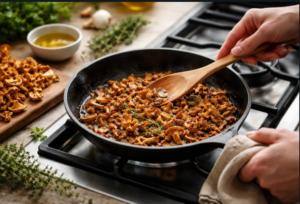
In a hot pan with cultured butter, sauté 300g of Yellow Foot chanterelles. Once they release their liquid, deglaze with a splash of Aquavit. The caraway and anise notes of the Aquavit will amplify the mushroom's fruitiness.
Stage 4: The Unilateral Sear
In a skillet with hot oil, place the Skrei skin-side down. Press firmly. Cook for 80% of the time on the skin side (approx. 5-6 mins). Flip for only 30 seconds to "kiss" the flesh side. The center should be translucent and the skin audible when tapped.
Stage 5: The Plating
Paint a thick stroke of the Black Garlic glaze across a white plate. Place the Skrei on top. Scatter the Yellow Foot mushrooms around the base, allowing their yellow stems to contrast with the black sauce. Finish with fresh dill and a few flakes of Maldon Sea Salt.
Substitutions & Variations: The Luxury Palette
The Fish: If Skrei is out of season, use Wild Turbot for a more gelatinous, rich texture.
The Garlic: If fermented garlic is unavailable, a reduction of Balsamic Vinegar and Roasted Shallots can mimic the sweetness.
The Mushroom: For an ultra-Nordic finish, incorporate Pickled Spruce Tips alongside the Yellow Foot.
Pro Technique: The “Aquavit Deglaze”
When deglazing the Yellow Foot chanterelles with Aquavit, do not let all the alcohol evaporate. Leaving a trace amount of the spirit creates an Ethanol Bridge that carries the mushroom's fat-soluble apricot esters directly to the olfactory receptors, significantly increasing the aromatic "throw" of the dish.
The Umami Secret: S-Allyl-Cysteine and Glutamates
The **Black Garlic** contains S-Allyl-Cysteine, a compound formed during the Maillard reaction of fermentation. This compound acts as an umami-potentiator for the **Yellow Foot's** natural Glutamates. When paired with the Inosinate found in the Skrei, they form a "Triple-Umami" bond that lingers on the tongue long after the fish has been consumed.
The Art of Pairing: The Sommelier’s Selection
Sommelier's Choice: An Assyrtiko from Santorini. The volcanic soil of the wine mirrors the volcanic terroir of the mushrooms, and its high acidity pierces through the black garlic glaze.
Non-Alcoholic Alternative:Smoked Lapsang Souchong Tea. The pine-smoke notes of the tea resonate with the fermented garlic and the forest-scented mushrooms.
Storage & Reheating
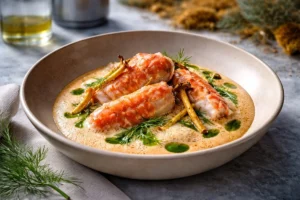
Skrei is too delicate to reheat as a main course. **Pro Technique:** Use any leftover cod and mushrooms to create a Nordic Chowder by adding hot cream and potatoes. The black garlic glaze can be stored in the fridge for up to 2 weeks and used as a marinade for grilled meats.
Ancestral Nutrition
Skrei is a "Lean Superfood," containing massive amounts of Iodine and Omega-3s. Yellow Foot chanterelles provide Selenium and Fiber. In Icelandic tradition, eating the first Skrei of the year was thought to provide "The Seal's Strength," protecting the joints from the damp mountain air.
Micro-FAQ
Q: What makes Skrei different from regular Cod? A: Skrei is a seasonal, migratory cod that has firmer, whiter flesh due to its long journey through icy waters.
Q: Is black garlic just "burnt" garlic? A: No. It is garlic that has undergone a slow fermentation/aging process at low heat and high humidity, turning the sugars into complex, balsamic-like compounds.
Q: Why use a carbon steel pan? A: Carbon steel can reach much higher temperatures than non-stick, which is essential for the "Maillard Crust" required on the cod skin.
To provide the best experiences, we use technologies like cookies to store and/or access device information. Consenting to these technologies will allow us to process data such as browsing behavior or unique IDs on this site. Not consenting or withdrawing consent, may adversely affect certain features and functions.
Functional
Always active
The technical storage or access is strictly necessary for the legitimate purpose of enabling the use of a specific service explicitly requested by the subscriber or user, or for the sole purpose of carrying out the transmission of a communication over an electronic communications network.
Preferences
The technical storage or access is necessary for the legitimate purpose of storing preferences that are not requested by the subscriber or user.
Statistics
The technical storage or access that is used exclusively for statistical purposes.The technical storage or access that is used exclusively for anonymous statistical purposes. Without a subpoena, voluntary compliance on the part of your Internet Service Provider, or additional records from a third party, information stored or retrieved for this purpose alone cannot usually be used to identify you.
Marketing
The technical storage or access is required to create user profiles to send advertising, or to track the user on a website or across several websites for similar marketing purposes.